GRP mould making disaster - advice please!

skyflyer

Well-Known Member
Joined
26 Jan 2011
Messages
1,433
Location
Worcester, UK
Visit site
I have been trying to make a GRP instrument pod for my engine instruments based upon an existing (acrylic?) one which was badly cracked and had holes in all the wrong places.

I removed the pod, filled the holes with GRP patches and faired them with car body filler then sprayed the whole thing with plastic primer (that is, primer for plastics), top coated with car gloss paint (Halfords stuff), used Faricia compound to get a really good gloss and then applied 10 coats of mould release wax, polishing off and leaving 15 minutes (minimum) between coats.

Today I tried to make a mould from this and it is as if the wax wasn't there. the gel coat has dissolved the paint coating and the end result is a sticky glue that makes it impossible to separate the plug from the mould.

I think I will have to start from scratch and make a new plug, from a lump of wood. However what do i then use to give it that gloss finish to make the mould from? Ordinary varnish, 2-pack, lacquer? I really dont want the same thing to happen again. I spent ages fairing and polishing the original plug which I dont think I can recover undamaged now.

I thought this was supposed to be simple - FFS!
 
Was your mould wax for epoxy?
It doesn't specify, but I bought the resin and matting in person from CFS and asked what they recommended for releasing (i.e. PVA or wax) and he sold me the stuff I used, Meguiars Mirror Glaze Maximum 8.

A friend has suggested i can break away the original 'plug' and clean up the mould to use to make another "rough plug" which can be refined to make a better mould etc.

All such a pain though
 
something wrong there either with mould release wax or the resin or conditions.

what you describe is the correct procedure. Indeed you may well have had an excess of release wax. I do wonder if your resin went off - I cant see how contact with dried paint could cause the catalyst not to work at all. So you did it right but somewhere used incompatible paint / wax/resin/hardener. But which?

so next time first of all you do a test or two. test that the catalyst you are using does work and the resin sets properly in your working conditions. then repeat the exercise on a surface covered with whatever paint and wax you intend to use. the most likely issue is that the styrene in the resin has dissolved the paint on the mould
 
No the gelcoat has set fine in the pot (although obviously slightly tacky on the 'open to air surface'. )Its simply the paint that has dissolved in the gelcoat when applied it seems.

I think the problem may have been that i got such a good glaze with the compound, that the wax was just rubbing off as quickly as I put it on. I tried to let it harden before buffing etc but i also wanted to buff to a glaze and not leave any swirl marks from the application.

Or probably something weird in halfords paint!
 
No the gelcoat has set fine in the pot (although obviously slightly tacky on the 'open to air surface'. )Its simply the paint that has dissolved in the gelcoat when applied it seems.

I think the problem may have been that i got such a good glaze with the compound, that the wax was just rubbing off as quickly as I put it on. I tried to let it harden before buffing etc but i also wanted to buff to a glaze and not leave any swirl marks from the application.

Or probably something weird in halfords paint!

Id think the paint is your problem.

Generally you cannot put 2 pack products over single pack products. The ( two pack) resin you have applied has attacked the single pack paint !
 
I think moulds will be made with 2-pack. You don't say what sort of car paint you used, but most of them are no longer cellulose based. Because of elf & safety, they are generally water-based acrylics, designed to have a transparent protective coating baked on over the top.
 
Good point VicS but then what do they use on original wooden plugs? Presumably standard varnish would also be subject to attack?

I think there are special primers ( 2 pack ) which are polyester resins similar to the resins you will use for the mould and the finished article.
 
I think there are special primers ( 2 pack ) which are polyester resins similar to the resins you will use for the mould and the finished article.
VicS is correct. You will need to build up a millimetre or so of material on the bare mould, then sand smooth, polish and wax. I would recommend U-pol Reface, which is not too terrible a price or too violently toxic for an FRP product. It is meant to be sprayed but can be brushed if you are quick. IIRC it can't be thinned with anything common, and it is easiest to use disposable brushes unless you love the smell of acetone in the morning
 
From what's been said it appears that the wax does NOT forms barrier as I had thought but acts as a release agent by some other mechanism/reaction?
 
From what's been said it appears that the wax does NOT forms barrier as I had thought but acts as a release agent by some other mechanism/reaction?

Correct, it is unlikely to provide a barrier capable of keeping the styrene in the resin from attacking the paint. Also the catalyst is probably MEKP, which contains methylethylketone, which attacks lots of things.
Sand off all the paint. If the surface is not smooth enough, use the U-Pol Reface and more sanding to give a smooth continuous surface, wax and polish that, ideally twice, and jobs a goodun.
To be honest though, if the final moulding shape is male, ie gel coat on the sticky out shape, and it is a one off project, I would omit the Reface, wax heavily and put two heavy coats of gel coat on and sand and polish final product.
 
The break-through time will depend on the thickness of the film and type of wax or PVA used, both will be permeable to some extent and I expect that the PVA may be only a little better than the wax.
 
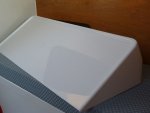
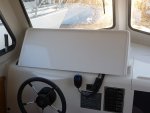
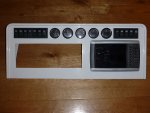
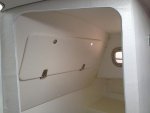
Back to the original question, if you want to make a new mould make a female mould from contiboard. That will be smooth enough, and you can flatten/polish up after. If you want an idea of what can be done here is mine. The femal mould was made from contiboard, radiuses from Plasticene and the large radius was filler (spray can lid as the tool!)
panel1.jpgpanel2.jpgRR Dash.jpgfinished dash.jpg
 

Attachments

  • panel 2.jpg
    panel 2.jpg
    22 KB · Views: 1
Back to the original question, if you want to make a new mould make a female mould from contiboard. That will be smooth enough, and you can flatten/polish up after. If you want an idea of what can be done here is mine. The femal mould was made from contiboard, radiuses from Plasticene and the large radius was filler (spray can lid as the tool!)
Good suggestion. This is much the same way I used to make sign boards in the 80's. The face surface was a huge sheet of plate glass and the returns formed in contiboard. Max size was 3m x 5m IIRC. Demoulding was usually accompanied by tremendous sparks !
 
Top