
capnsensible
Well-Known Member
Hmm, reef fish have "cleaning stations" where large fish go to have small ones eat off their parasites. How do we set up similar for yachts?
Mike.
Bait the boat with frogmen......

Hmm, reef fish have "cleaning stations" where large fish go to have small ones eat off their parasites. How do we set up similar for yachts?
Mike.

Staying down and vertical in a wetsuit is easier with ankle weights or maybe using a shot line.
There is something basically wrong tying weights to your ankles and jumping into water deeper than you are tall!


Bait the boat with frogmen......

What kind of scraper do you use. Hull fouling mostly eaten by fish (just waterline left) but a quick clean from the surface sounds doable to me.

You can't have looked at diving ankle weights, some divers who used 'drybags' used to use them.There is something basically wrong tying weights to your ankles and jumping into water deeper than you are tall!


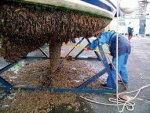
There are places in the Carib where a prop turns into a hanging basket in 3 months and you get almost no prop thrust.