Glueing teak lipping to teak faced ply?

KevO

Well-Known Member
Joined
10 Aug 2011
Messages
2,515
Location
Falmouth
Visit site
Am building a new chart table for the Sadler. 12mm teak faced ply with teak strips on the edges and a fiddle. Best glue?

 
I used polyurethane to glue fiddles to cockpit table and they're still attached after 4 or 5 years out in the weather. Needs good clamping though as the foaming action can push faces apart.


Yep ... PU glue. There are two types ... white (indoor) and light brown (exterior - seawater proof). As DB says - needs clamping as the foaming action exerts significant pressure.
Many people apply very thin smear to one surface - then mist water onto other using a spray ... not wet but damp. Put together and the water triggers the curing - but also increases the foaming volume.
Its perfectly OK to apply simply without the water misting - you get a more dense glue joint. There's enough moisture in the air to set it off.

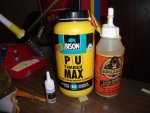
Local builders shop sell generic PU glue ... here's an example : (Gorilla Glue is a branded version of same)

GG vs PU generic.JPG

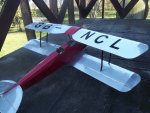
Because of its light weight but strength - its now my glue of choice when building my models. I don't want to have a pride and joy come apart in the air ... this baby is 55" span and a lot of time / effort invested in her ...


Tiggie ready to go.jpg


The PU has the advantage of getting into all the nooks and crannys - does not need perfect face to face contact etc. but make sure you only use a THIN SMEAR ... do not go lavishing gobs of the stuff !!

Best to keep visiting the joint every so often during first hour and after ... to remove any expansion 'foam' from sight. A wet knife blade can slice it away.

Of course Cascamite and its cousins are all candidates and stood test of time.

Epoxy on Teak - one property that makes it unsuitable for resin based such as Epoxy - is the 'fluid content' of the wood being 'oily' makes such as Epoxy unreliable but if only as a glue for non structural can be easier.
The OP's ply and edging could be done with epoxy ...

Just to go back to PU glue ... its a good glue to have around as it fills anything ... can be sanded .. painted ... I've even used the Bison above to bed guardrail bolts etc with. Its amazing stuff.
 
Last edited:
I prefer not to take the risk with anything structural ... non-load bearing OK ... no problem.
Agree, biggest effort was a thin teak deck, epoxied onto the original ply. Put graphite powder in the mix, so it oozed up to look like caulking. The finished job was super. But the clean up was hard work.
 
Am building a new chart table for the Sadler. 12mm teak faced ply with teak strips on the edges and a fiddle. Best glue?

In that application it does not matter a great deal if that's all you want the glue for. I should use what you have.

If you have to buy fresh maybe get waterresist PVA from Trago Mills on the grounds that it keeps very well and is generally useful around the boat and house. If you want PU stuff - which is excellent for exterior work as well- they also do a tiny bottle at a good price. Buying a small bottle means you don't have the crushing disappointment of finding a large bottle of "off" glue in the shed when you next come to use it .
 
Don't use pu glue, ie gorilla glue.. In tests its one of the worst. Absolutely useless at filling voids and falls apart outside.. Pva is very good but not outside... cascamite is great everywhere. Hyde glue is very strong but not for external /damp.
Believe it or not super glue (gel is better, cheap pound shop appears even better) is one of the strongest wood glues going, beating epoxys !
This guy has tested so many different glues.. worth a watch if interested
 
To settle to Graham376's comment above the solution is to look up the ISO number for glue & see what it says about the glue.
For years people were using all sorts of glues for external uses, but as a joinery manufacturer I could not use them as they did not meet the relevant BSS for extenal adhesives. In particular, PVA failed miserably at first. Some modern PVA performs now better. Early formulations of Cascamite did not meet the standard for exterior use, in spite of being widely used in the marine industry. It does now ( Or did 25 years ago).
Just because someone may have used a product for a particular purpose does not mean that it works in all cases or is proven to do so reliably
The same goes for hardwoods. That can be an eye opener as well.
 
Last edited:
Don't use pu glue, ie gorilla glue.. In tests its one of the worst. Absolutely useless at filling voids and falls apart outside..

Total absolute bulls**t .....

PU Glue s in two forms as I mentioned earlier : White Indoor which is not weatherproof. Brown External which is even stated to be Seawater proof. (See my photo earlier).

Believe it or not super glue (gel is better, cheap pound shop appears even better) is one of the strongest wood glues going, beating epoxys !

CA is actually one of the worst to use on such as Teak or any other 'oily' sap wood. Its not only a poor mechanical bonding glue - but it creates a hard joint that suffers stress badly. Its good for tacking jobs or where the joint is a prefect match. Its other bad habit - is that when it fails to hold - its soaked in and forms a rock hard area that then will not take further applications or other glue to make a good joint.

As to CA beating Epoxy ... they have totally different bonding actions and are not comparable in strength apart from the joint itself. Epoxy is nick-named 'Plastic Steel' for good reason because it happens to be one of the strongest glues available. Its strength is in the mechanical face of the joint. CA works completely different by using the action of soaking into wood and creating a chemical bond with virtually no mechanical part at all. In fact if you use gap filling CA (the thicker Gel as you call it ) - initially it will be a good joint, but over time and any moisture will cause the mechanical gap filling part to become crystaline dust literally.

CA (Super Glue) is the Cheats go to glue. There are far better glues designed for specific jobs out there.

For the guys table - Cascomite would be a 100% better choice than CA glue ... PU glue 100% better choice as well ... CA would be the very last glue I would ever consider for it. I might use it to tack the capping in place - but not for overall bonding.

I base the above on over 55yrs of serious model building - where glue choice has a direct impact on use / reliability, as well as repairs on boats etc.
 
Last edited:
I agree PU is the only glue I use outside. I have a ply dingy held together with only PU glue no screws at all.

Cascamite was considered not suitable for immersion when I was building wooden boats I would use cascaphen for boat construction.

There washboards are glued together with PU including the edging fit the ply edges.

35917759232_8964425870_b.jpg


35246653324_9822a554f7_b.jpg


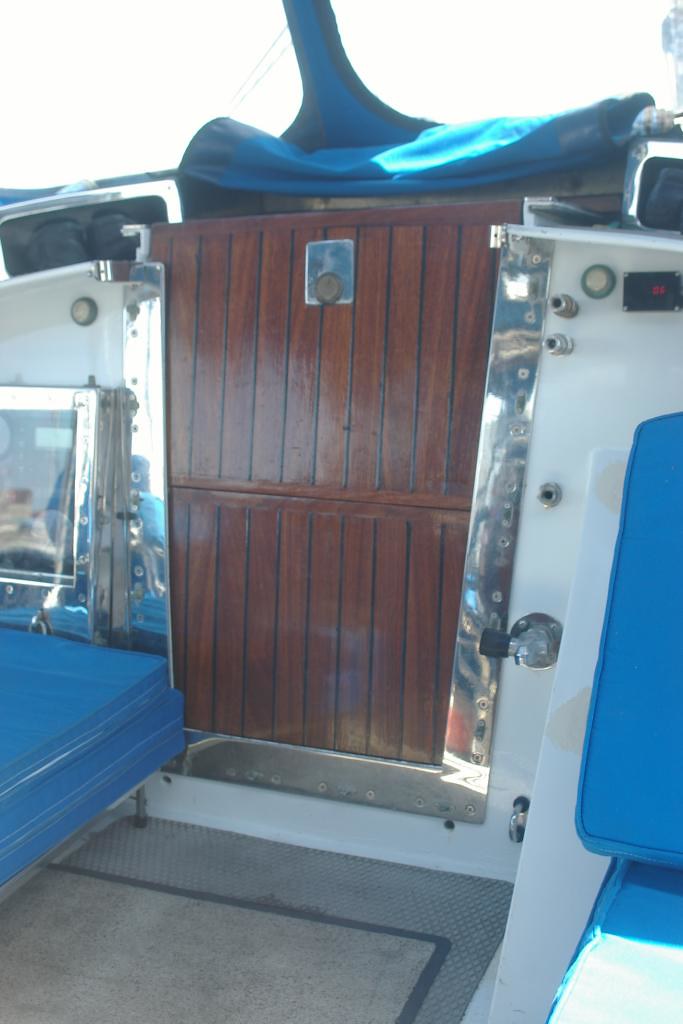
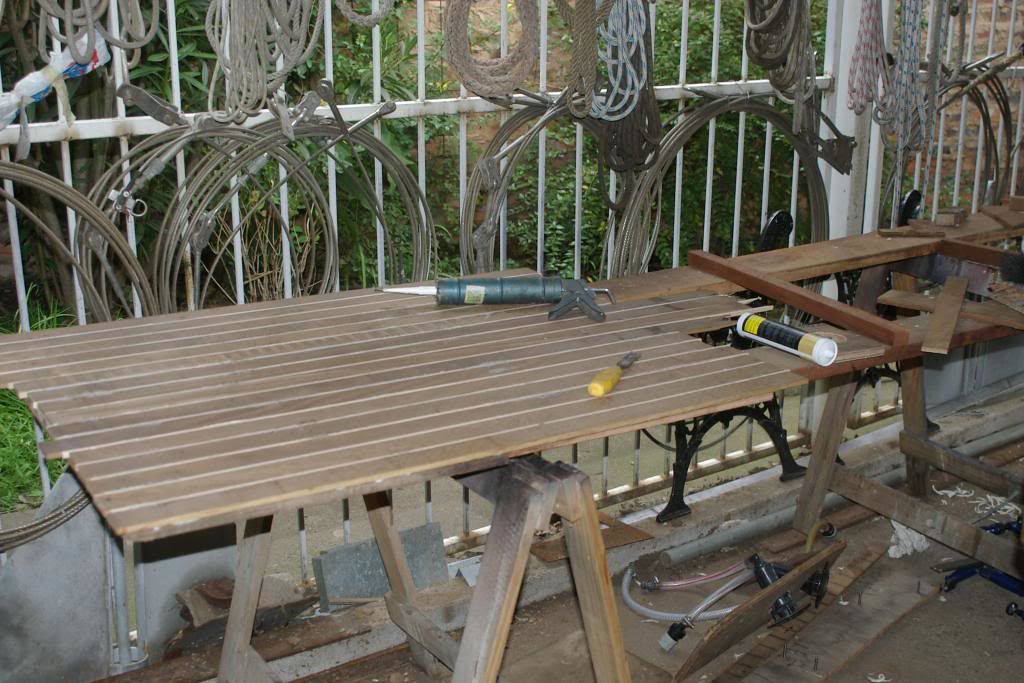
This is one panel of my iroko and jacaranda floor glued with PU. A tube can be seen by local manufacturer.

Also Sikaflex is a PU sealant that I have also used to glue wood to wood where the gaps are bigger than should be.
 
I use mainly PVA for use on cabinet but not outdoors. I've been using Rustins Wudcare ( Fast Grab 30 minute | Rustins ) Pu outdoors and on boats for many years and have found it outperforms Titebond 3. Never had a failure even after many years. Ca has its uses with wood, particularly the two part one on things like picture frame mitre joints but leaves a very brittle joint, not suitable where stress or wood movement due to large humidity changes is expected. There are structural adhesives such as Aerodux which will outperform all of these but overkill for most outdoors or damp environments.

Main problem with Pu is that unlike PVA, squeezeout can't be wiped off with a damp cloth so often best to tape face edges of joints.
 
PU glue is easily removed before set with Nail Varnish Remover ...... go ask the wife to borrow her bottle !!

You can use a sharp knife while its still gooey ... not hard ... for large blobs ... then Acetone (Nail Varnish Remover) for the smear residue.

If its hard - it can be cut / sanded / sawn.
 
Top