getting my back end in ? Tips please

I do - almost always as there is no way of getting off otherwise ;)

View attachment 41152

View attachment 41153

Incidentally, the second photo was taken in August in the Med.

A new take on walking the plank!! "Walking the pole"
Saw a black kitten on the sprit of a Morbihan lugger coming into Vieux Port La Rochelle "left a little, now straight.." in comparison with a Bristol Pilot cutter scale to scale that sprit was about twice as long. And he came in bows-to...
 
Another fan of bows-to. Getting on and off is usually the problem with bows-to. We have quite a long pulpit but have made a boarding ladder as follows.

- One aluminium builders ladder with wooden boards filling the gaps between the rungs (actually attached with a series of electrical cable ties).
- Old fender hung under one end to stop rubbing on pontoons and quays.
- Stainless steel rod through the other end which pushes into a handy slot just under the pulpit grating.
- Extended halyard to fender end to raise and lower it.

It works a treat. Can send/post picture if you are interested. To get off we step over the pulpit rail onto the ladder (which can be deployed either side the boat). The halyard gives a nice handhold if required.

It is so much easier for us to go in bows-to than stern-to. OK we still have to reverse out but by then we will have had a chance to assess the difficulties, get help if required and wait until conditions are benign.

If no lazy lines we use a fortress which is easy to deploy but harder to recover as in a wind it is hard to get the stern right over the anchor to free it.

The other tip I would add is that if we are going into a marina (rare for us) we make sure the marineros are aware we are heavy (20 tons), difficult to manouevre and will damage other boats if we hit them. They are then usually keen to put us somewhere that won't give them any grief! In Teos marina for example they gave us the only alongside berth we could see in the entire marina.

And of course even if you are not heavy, we always use the "as slow as possible but as fast as necessary" approach. If we are in any doubt we will try to anchor off until it is light and/or less cross-windy.
 
If we are in any doubt we will try to anchor off until it is light and/or less cross-windy.

If it is windy, or more particularly bouncy, that is pretty much our reason for going into the marina in order to get a good nights sleep!

I.e. when we go into a marina, the conditions are pretty much guaranteed to be tricky!

Thanks for the tip about telling the marina about the weight. I will try that and see if we get a better parking space.
 
Good morning:

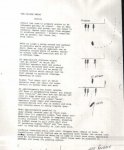
Just to add my two cents worth to the discussion - this is my method of going stern to the quay when I have to use my own anchor. It does require practice.

Caique Swing 1.jpg

Tried to add second image however it indicates I have exceeded my limit by 40 kb however there are no images shown in my profile so don't quite understand what this limit refers to. Will continue to check and load the second image if and when I find the problem.

Cheers

Squeaky
 
Last edited:
We watched a Dutch long-keeler berth like this in Galixhidi, much to the consternation of the Greek harbour staff. Seems to be very tough on the antifouling around the forward end!

We watched a Dutch long-keeler berth like this in Galixhidi, much to the consternation of the Greek harbour staff. Seems to be very tough on the antifouling around the forward end!

No, this is not a problem because when you turn in order to dig the anchor in and begin the turn the anchor chain will be pulled tight between the stem head and anchor which will bring it up clear of the hull. This seems to be the normal complaint when discussing this subject however in reality the chain never touches the hull.

Caique Swing 2.jpg

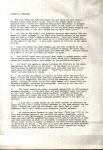
Finally discovered how to delete previously uploaded images leave room for page two. This sheet was written up years ago for an Italian skipper in Skiathos who had seen me arrive and wanted to know the mechanics - it was written from the view point of a skipper with crew however works even better when solo if you have your anchor control switch on a long wander lead and can operate from the helm.

This move allows you to see exactly where the neighboring chains are meaning you never drop over someone elses chain which is difficult to avoid if reversing into a berth as you are never exactly sure where you bow in relative to the other chains.
 
Our boat is long keeled, bowsprit and bumpkin to sheet the yawl. Almost always go in bowsprit first, the wife can stand on the end of the bowsprit and step onto the quay.
I made a free-fall system to launch the chosen kedge, just pull a lever next to the wheel. Works great, I can concentrate on pointing the bowsprit in, pulling the lever launches the kedge with 17 m of chain and 40 m of 14 mm line.
The line feeds from a reel, one turn over the SB winch.
A few yards from the quay, I pull the anchor in just holding the line ( the winch takes the strain ) and even stop the boat just inches from the quay, using the kedge, engine just tickling forward.
If single-handed I just leave the engine in forward, belay the kedge line and can walk on the quay without hurry to belay the landlines.
Same line on reel is used as stern land line anchoring in small coves.
Only moor the other way ( Stern to ) if I expect strong winds onto the quay. In that case experience ( and a bit of luck ) does the trick.
Once or twice I had a harbour master or ormeggio going totally nuts because he wanted me to moor stern to.
I am the captain, he is just a guy in a ice cream seller uniform. I decide how to moor.
 
Free-fall system?

. . . I made a free-fall system to launch the chosen kedge, just pull a lever next to the wheel. Works great, I can concentrate on pointing the bowsprit in, pulling the lever launches the kedge with 17 m of chain and 40 m of 14 mm line.
The line feeds from a reel, one turn over the SB winch. . .
We also favour bows-to mooring, with a kedge anchor box outside the pushpit but I haven't yet mastered a smooth way of handling things - in particular running out the rode: would be most interested to see any sketches/photos of your free fall system if that's possible?
 
I clearly remember the trepidation with which I approached this subject for the first few times. Let me assure you that you will soon mater the techniques - if I cananyone can. I won't repeat the sage advice you have already been given but instead add a few thoughts.

1. One of the reasons we all find going astern so difficult at first is that we have little experience, and when we do try it out, it is in the most difficult and pressured circumstances; the solution is to find a nice quiet bay with a buoy or two that can be used as reference points (imaginary quay sides!) and nothing nearby to bump into and practice controlling the boat going astern at different speeds and dropping the anchor and coming in astern. I found stopping, starting and taking the boat round the buoys in figures of 8, at different speeds taught me an awful lot.

2. In these practices I found these following characteristics
- prop wash dominates until the boat has way on unless I open the throttle very slowly slowly. Once under way she is relatively easy to control
- The boat with the engine astern, left to its own devices, will weathercock stern upwind, bow downwind so it is always easier to take her upwind astern in windy conditions.
- I learned the necessary balance between speed and control

3. When going astern into a berth, the world and his wife will be shouting advice AT you! Once you have established the correct berth and permissions etc just ignore them, they don't know the boat as well as you do - and they are not going to pay for any damage that following their advice causes!

4. Don't be embarrassed, the first time I took my boat in astern it took me three attempts. the first attempt resulted in us missing our target berth by 25 metres! (Later, when safely tied up, my sister in law, said "I thought you were an experienced sailor?" and it wasn't until later and the Swiss skipper in the next boat said he could not have completed berthing in that cross-wind stern-to that any semblance of my reputation was restored!)

5. Be you own man and don't be rushed. If you want to start 200 yards away to establish clear control and momentum then do so. If you know, from practice, that coming in at a 2-3 knots and scrubbing of the speed with a last minute burst of engine is the best technique then do that.

6. Picking a berth upwind of a moored boat and then drifting, well fendered alongside her for a few moments whilst you sort your lazylines out is an accepted technique. (Earlier comments about asking/warning apply)

7. You can never have too many fenders I have 5 each side plus a transom fender. Fenders save blushes and damage.

8. Sometimes a neat trick I use is to keep the engine astern and ticking over to pin the fendered stern to the quay and make it easy for the crew to get ashore and establish the stern lines.

9. Above all, keep calm and do not shout at your crew

10. Know your own limitations. If circumstances are simply too difficult, go bows-to or go somewhere else or spend the night at anchor! Live to fight another day is the motto
 
I am afraid our set-up is not going to work for you.
Our boat ( yacht ? ) is rather “ peculiar.” We carry four kedges suspended in/ under the bumpkin- davits. They have there own short chain ( 5 yards ) witch leads over the short after deck inboard where the chains are stored under the after deck.
The kedge mostly used in harbours ( A Fortress FX 37 ) has 17 m of chain and is lying with the tip of the shank on the aft deck, the flukes hold up with the aid of a SS rod that slides into the bumpkin.
We sail an ex working boat, where the chain rattles over the cockpit coaming I sheeted the wood with brass sheet metal. The deck / stern edge is also covered in brass sheet.
In the corner of each pulpit I build a drum for the landlines / kedge line. One has 40 yards of 14 mm multiplait, the other 60 yards of 10mm.

A pull on the SS rod releases the head of the anchor, it dives away from the stern, taking the chain with it, then the line.

http://s1155.photobucket.com/user/OldBawley/media/DSCN1698.jpg.html

This is a pic of the old bumpkin / davids situation. The new version has three equally thick bearers and has a teak grating over the anchors. On the old pic the SS rod holding and releasing the anchor can be seen.
A you can see, it´s old and self made, yet has done a lot of miles and mooring manoeuvres.
 
My two cruising boats have both had a mind of their own in reverse. Generally I go bows too but in a couple of cases where I knew in advance I wanted to be stern too I used this procedure.

Using the dink I took a long line in and tied it to the desired mooring point, ran it out into the center of the harbor and dropped a weight with a small buoy. Came in with the big boat, picked up the line, dropped the anchor in the desired spot and worked myself back into the mooring with a combination of reverse and winching the line.

In one case I was single handed and this got me in with little drama.

The drama arrived after the storm blew through and divers were required to undo the tangle of anchors in the middle of the harbor.
 
Squeaky - Isnt your technique also called a Turkish Moor ?

I tried it once in Kalymnos when I was single handing our boat which has no power drop on the windlass.
I must say it worked a treat.
When the stern was up to the quayside, I nonchalantly threw the stern lines to the 2 guys waiting and almost got a round of applause.
I'll admit it was a nice open quayside with lots of room to swing but Ive never had the nerve to try it again ;)
Ive had my one moment of triumph and dont want to spoil the batting average
 
Last edited:
Squeaky - Isnt your technique also called a Turkish Moor ?[/QUOTEt

I think it is a technique used at this end of the Med by local working boats where appropriate and as such has probably acquired local names. I first saw caigues using it in the Hydra harbour and for lack of a name to label it I started calling it the "caigue swing". I have not witnessed it being used in Turkey so will just continue referring to it as a "caigue swing". Too old to change now - in fact I will probably forget even that eventually.
 
Squeaky - Isnt your technique also called a Turkish Moor ?[/QUOTEt

I think it is a technique used at this end of the Med by local working boats where appropriate and as such has probably acquired local names. I first saw caigues using it in the Hydra harbour and for lack of a name to label it I started calling it the "caigue swing". I have not witnessed it being used in Turkey so will just continue referring to it as a "caigue swing". Too old to change now - in fact I will probably forget even that eventually.

I prefer "Caique Swing"
:)
 
I clearly remember the trepidation with which I approached this subject for the first few times. Let me assure you that you will soon mater the techniques - if I cananyone can. I won't repeat the sage advice you have already been given but instead add a few thoughts.

1. One of the reasons we all find going astern so difficult at first is that we have little experience, and when we do try it out, it is in the most difficult and pressured circumstances; the solution is to find a nice quiet bay with a buoy or two that can be used as reference points (imaginary quay sides!) and nothing nearby to bump into and practice controlling the boat going astern at different speeds and dropping the anchor and coming in astern. I found stopping, starting and taking the boat round the buoys in figures of 8, at different speeds taught me an awful lot.

2. In these practices I found these following characteristics
- prop wash dominates until the boat has way on unless I open the throttle very slowly slowly. Once under way she is relatively easy to control
- The boat with the engine astern, left to its own devices, will weathercock stern upwind, bow downwind so it is always easier to take her upwind astern in windy conditions.
- I learned the necessary balance between speed and control

3. When going astern into a berth, the world and his wife will be shouting advice AT you! Once you have established the correct berth and permissions etc just ignore them, they don't know the boat as well as you do - and they are not going to pay for any damage that following their advice causes!

4. Don't be embarrassed, the first time I took my boat in astern it took me three attempts. the first attempt resulted in us missing our target berth by 25 metres! (Later, when safely tied up, my sister in law, said "I thought you were an experienced sailor?" and it wasn't until later and the Swiss skipper in the next boat said he could not have completed berthing in that cross-wind stern-to that any semblance of my reputation was restored!)

5. Be you own man and don't be rushed. If you want to start 200 yards away to establish clear control and momentum then do so. If you know, from practice, that coming in at a 2-3 knots and scrubbing of the speed with a last minute burst of engine is the best technique then do that.

6. Picking a berth upwind of a moored boat and then drifting, well fendered alongside her for a few moments whilst you sort your lazylines out is an accepted technique. (Earlier comments about asking/warning apply)

7. You can never have too many fenders I have 5 each side plus a transom fender. Fenders save blushes and damage.

8. Sometimes a neat trick I use is to keep the engine astern and ticking over to pin the fendered stern to the quay and make it easy for the crew to get ashore and establish the stern lines.

9. Above all, keep calm and do not shout at your crew

10. Know your own limitations. If circumstances are simply too difficult, go bows-to or go somewhere else or spend the night at anchor! Live to fight another day is the motto

Excellent advice - try it single-handed with a manual windlass.
It is possible - but I suspect you'll settle for bows-to and developing tightrope-walking skills.
 
I am afraid our set-up is not going to work for you.
Our boat ( yacht ? ) is rather “ peculiar.” We carry four kedges suspended in/ under the bumpkin- davits. They have there own short chain ( 5 yards ) witch leads over the short after deck inboard where the chains are stored under the after deck.
The kedge mostly used in harbours ( A Fortress FX 37 ) has 17 m of chain and is lying with the tip of the shank on the aft deck, the flukes hold up with the aid of a SS rod that slides into the bumpkin.
We sail an ex working boat, where the chain rattles over the cockpit coaming I sheeted the wood with brass sheet metal. The deck / stern edge is also covered in brass sheet.
In the corner of each pulpit I build a drum for the landlines / kedge line. One has 40 yards of 14 mm multiplait, the other 60 yards of 10mm.


A pull on the SS rod releases the head of the anchor, it dives away from the stern, taking the chain with it, then the line.

http://s1155.photobucket.com/user/OldBawley/media/DSCN1698.jpg.html

This is a pic of the old bumpkin / davids situation. The new version has three equally thick bearers and has a teak grating over the anchors. On the old pic the SS rod holding and releasing the anchor can be seen.
A you can see, it´s old and self made, yet has done a lot of miles and mooring manoeuvres.

. Interesting set up 'a kedge for all reasons' I suppose
 
We spend in 15 years of Med less than four months in marina/ harbours.
Anchor summer / winter.
Summer is no problem, in winter it is different. Our main is a CQR, not always reliable, but then witch anchor is.
To have peace of mind a second bower is often set, and on some occasions, I had 5 anchors on the bottom, the hooky Greek fisherman was thrown in a big mooring and I had 4 landlines.
Maybe a bit overdue, better safe than sorrow. Any way I like playing boat. Slept well trough two days of force 10 with gusts up to ????
All of that in a practically hurricane safe bay. ( Kapi creek Turkey )
We ware all right, yachts in a marina´s some 10 miles further suffered lots of damage.

I know of some places, even one ancient harbour where NO single anchor will hold at all times.
We anchored there. Safe. ( Until the others came )
 
Top