getting my back end in ? Tips please

pcatterall

Well-Known Member
Joined
2 Aug 2004
Messages
5,509
Location
Home East Lancashire boat Spain
Visit site
Our first trip into the med this season and we have been considering this stern too malarkey.
Our 10m long keeler pleases herself when going astern, most such manoeuvres start by seeing which way she wants to go then planning accordingly!
For the odd overnight stay we will probably just go in bow first and climb ashore over the pulpit but for longer stays it would be nice to get in stern too.
I guess that with no serious wind we can make a stab at it but I do have some questions.
Although a bit of speed can be a help we tend to err on the side of caution, is it permitted or frowned on to use adjacent boats to help our well fendered boat in/
can we walk on someone's deck to get ashore to pick up our lazy line(s)?
Are there some clever tricks to warp a 'bow too' round to 'stern too' (When in a slot)
Any good tips appreciated.
Concerning Lazy lines we have holes in the low gunwales rather than open fairleads so I guess a loop of the line will have to be pushed through to cleat off? any issues or tricks there?
Thanks for your expert advice!!
 
As the owner of a long keeler and ex med liveaboard here's my two penath. Think very carefully before stern to approach ie do a recce first, most med harbours have ballast walls bang goes the rudder. Lazy lines are horrid wear gloves to prevent pain, you can normally hook them up with a boat hook. If possible sort yourself out with a bow ladder or a step through pulpit before you leave it's cheaper here. If you really want to go stern too(it's a lot less private) you will find that she will run straight in reverse with you hook set.
 
In my experience lazy lines particularly in Greece are a rarity and where they exist someone (taverna owner, marina staff) will be on hand to help you. I personally with a 10m boat would go in bows first every time and if need be rig up a step/ladder to get off the bows or carry a beer crate as a portable step (empty of course) .
 
Last edited:
Bows too is normal in the Baltic, and the rest of Scandinavia. If your freeboard is high there are bow ladders that hook onto the anchor available commercially. You will need a well thought out stern anchoring system for places without lazylines.
 
In a port with lazy lines, I would not be dropping the anchor - it is very likely to get tangled in a nasty way with the chains laid for the lines to which the lazy lines are attached.

I have a 52 ft long keeler with another 15ft of bow sprit sticking out as well. So going bows to is not an option,

This description is for a port with lazy lines as we have in my part of the Med.

The technique is to take into account which way the wind will blow the bow off. You then turn to place the bow upwind of the slot you are aiming for. You may have to do some complicated manoevering to do this - but you must have the bow upwind of the slot.

You then use the wash of the rudder with a heavy blast of forward engine thrust and reverse to push the stern to the entrance of your selected slot. If approaching from upwind, you will need to turn very very early if there is much wind. In my home port, I would normally turn about 4 berths up from mine.

You place the stern with the prop wash and time it with the wind blowing your bows to the right position. If you are too quick getting the stern to the right place, tyou need to be cool and patient and let the wind blow the bows off. You then give a heavy blast of reverse. You will be half way in before your boat has a chance to decide which way it wants to go. Fenders out on the down wind bow side and upwind stern side. You can then relax and take your time for the rest. You use the prop wash over the rudder again to correct the alignment of the stern. By now there is nothing much you can do about the bow apart from relying on the fenders against the downwind boat. Grab the upwind lazy line with the boat hook and get a crew member to run that out. At the same time attach the upwind stern line. Usually some one on the dock will do that for you. Otherwise you will have to back in close enough so you can drop a loop over the bollard. Put the engine slow ahead to hold you about 6-8ft out from the dock. You can at your leisure attach both the bow lines and haul them reasonably tight. Then motor back, hauling in the upwind sternline and then the downwind one as well until the bow lines are tight and the stern is just the right distance off the quay. If needed you can adjust the stern lines with the winches to get your stern lined up in the middle of the berth. You might have to slack off one or other bow lines to get everything perfect.

That all sounds more complicated than it is. In reasonable conditions this is quite straightforward. However, if it is blowing a gale, then you will either need a post at the end of the berth on the upwind side to put a line on, or you will need a bow thruster of some kind to hold the bow in position. In my case, I will need the guy from the port in his rubber dink for that as I have no bow thruster on my boat. I often end up going into Port Rosas in a gale which is always across the berth they would like me to park in. The guy in the dink knows us - and knows what he is doing so we can always easily get into our parking slot regardless of conditions.

The trick is to correctly place the bow allowing for the wind, then use prop wash to place the stern in the right place and then to back in reasonably quickly. If the bow blows off quicker than expected, then don't try to reverse in, but abort right away.
 
I think most of us out in the Med are well aware of how temperamental long-keelers are in reverse. If looking to squeeze in between two moored boats I would suggest you try to hail the owners aboard those boats and explain your problem. We all understand, as long as you are well-fendered few people will mind you leaning against them whilst you get sorted.

Like anywhere else what people don't like are surprises. When I get suddenly woken from my afternoon doze in the cockpit by a poorly fendered yacht banging into the side of me as they moor I'm somewhat less friendly than if I'm woken by a "hello there, can you help me please?". When I get plenty of warning and can make sure my fenders are in the best location for your boat, and I can see that you have plenty of fenders out you'll get every assistance I can give you. :)
 
My boat is not too temperamental astern but will only turn to port. In fresh winds even this is uncertain. My technique for approaching quays, always astern as we don't ever go bows-to, is to be going quickly enough that there is plenty of water flow over the rudder. I usually motor in a wide circle to attain this, as there are few occasions when it is possible to start 100 metres away in a straight line. Once up to speed it is reasonably easy to keep in a straight line and once the anchor is on the bottom the problem ceases to exist, the bows will always be held in the correct orientation.

I avoid lazy lines if possible, particularly when they are laid across the wind. Leaning on another boat is by far the easiest method.
 
Thanks all. Michael's method sounds a good starting point, I guess my 33 feet will be a bit easier to handle than his 52. The bow being blown off when reversing across the wind will probably be what I have to be most aware of. hopefully my first attempts may be into a wide gap so I can get the measure of things and 'practice' a bit.
Thanks again
 
All good advice above but bear in mind that if you are reversing into a berth without a lazy line you will have to drop your anchor straight out from the quay (not upwind of your berth) otherwise you will drop your anchor rode over that of the adjacent boat(s) and wont be a popular bunny !
If, in a cross wind, you try to motor out from the quay, stop, drop the hook, reverse, you will inevitably have been blown down wind of your berth so Vyvs method of taking a long wide arc so as to maintain flow over the rudder/steerage is useful in order to take a course that gets your bow over the anchor drop point.
Re fending off - I take the view that most of us are not professional mariners and we all make mistakes from time to time so, provided you were to drop your anchor in the right place, warn me of your approach, put out appropriate fenders and your crew did not try to push off by pushing on the top of my guard rail/stanchions Id be more than happy for you to fend off my boat if necessary and, once tied up safely, Id probably offer you a beer to celebrate your text-book mooring technique.
We are there to relax and enjoy our holidays so live and let live :)
 
Thanks all. Michael's method sounds a good starting point, I guess my 33 feet will be a bit easier to handle than his 52. The bow being blown off when reversing across the wind will probably be what I have to be most aware of. hopefully my first attempts may be into a wide gap so I can get the measure of things and 'practice' a bit.
Thanks again

The one thing to be emphasised for lazy lines is to reverse in in the direction the boat wants to turn. Leros Marina has lazy lines and at the height of the meltemi I will always prefer berthing with the stern upwind if at all possible. However, If I come straight into the berth so that the boat turns to starboard I know very well that I am not going to make it. In these circumstances I always go past the berth, then reverse while making my turn to port, which the boat will be happy to do.

If I have to go in on the upwind side things are never easy. The answer is to put a big ball fender on the transom, go in fairly briskly until the fender touches, get a stern warp or two on the pontoon cleats and motor hard forward while getting the lazy line on. Hopefully this will prevent the boat from lying sideways along the pontoon, or leaning hard on another boat. We changed our windlass for one with a capstan on top to assist in pulling the bow line hard against the meltemi.
 
Unlike Vyv, I've always used bows to, both with lazy lines (don't forget the gloves!) and with stern anchor.

The certainty of steering into the right spot in a cross wind is one reason, privacy from gawpers into the cockpit is another, and the ability to squish boats apart with the bow wedge (well fendered!) in crowded quays is a useful trick, and it's an easy single handed manouevre. The final benefit, in a place which is disturbed by ferry wash, is that your mast is only very rarely aligned with neighbours. So the chance of mangled aerials and wind sensors is reduced.

To make this work though, a decent means of descending to low quays is needed. A bow ladder at best; an easily dropped plank at the cheap end.

Of course, stern to is easy on many modern boats which steer easily astern, and single handing without lazy lines is possible if you have cockpit control of the anchor winch.
 
Unlike Vyv, I've always used bows to, both with lazy lines (don't forget the gloves!) and with stern anchor.

Our pulpit extends a long way forward which makes getting on and off quite tricky. Jill fell whilst boarding and bruised herself quite badly. Have you ever seen a woman with one blue breast and one flesh-coloured one? We have never gone bows-to since.
 
All good advice here.

Having watched other smaller boats, going bows too would actually seem the easiest option for you and provided you have a ladder to get down to the quay, it is really the most private way to do it.

BUT.

You need to make sure your kedge anchor is of a good size, plus a good length of chain and then MOST IMPORTANTLY, a NON STRETCH rode. Otherwise when ever you get a gust of wind your lovely stretchy nylon rode will bounce you on and off the quay!

If you are choosing a new stern anchor, then I think an Ally Fortress is brilliant (if a little expensive).
 
Ally Fortress is brilliant (if a little expensive).

The Guardian by the same makers is essentially the same anchor but, for example, has a flat bar stock rather than the chamfered stock of the Fortress. Costs about half - two thirds of the Fortress. No help to offer on berthing a long keeled boat, as Rampage is a fin keeled boat and behaves herself going astern (mostly).
 
I can go straight astern in my long keeler.

It needs to be a dead flat calm with no wind. I need about 200m to get moving fast enough. About 4-5 knots is needed. Then I will go dead straight for a while, provided the engine is out of gear.

Obviously not much use for manoevering in a marina.
 
Thanks JVL. We did a bit of stern too on Greek charter and yes, the anchor was a help. I'm thinking of the set up where there are pontoons with lazy lines but no fingers
Being single handed I nearly always go bows-to - I'd certainly not consider it sensible to go stern-to in a long-keeler. Not only does one have the problems of getting in but usually major problems of getting on and off.
It does mean you need to have a sensibly mounted stern kedge anchor.

PS I cannot think of any long keeler of my acquaintance who moors stern-to, though I've agonised with others (and their neighbours) who've I've seen trying.
 
Being single handed I nearly always go bows-to - I'd certainly not consider it sensible to go stern-to in a long-keeler. Not only does one have the problems of getting in but usually major problems of getting on and off.
It does mean you need to have a sensibly mounted stern kedge anchor.

PS I cannot think of any long keeler of my acquaintance who moors stern-to, though I've agonised with others (and their neighbours) who've I've seen trying.

I do - almost always as there is no way of getting off otherwise ;)

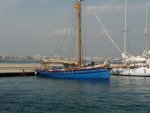
2511.jpg

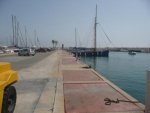
P1010481 (2) (1024x768).jpg

Incidentally, the second photo was taken in August in the Med.
 
Top