Gensets 240V AC at 50Hz or 60Hz?

Alicatt

Well-Known Member
Joined
6 Nov 2017
Messages
5,556
Location
Eating in Eksel or Ice Cold in Alex
Visit site
On reading @JOHNPEET 's thread on building his boat it made me wonder about generators onboard boats:
When we were building our offroad command and control vehicles we always had difficulty in sourcing 240V AC gensets that would deliver the required 240V at 50Hz, we found so many were made to deliver the 240V but at 60Hz which then caused havoc with systems that locked to the mains frequency and if you lowered the engine RPM to get the 50Hz then the voltage was too low.

For the generators on the boats what frequency do they run at?
 
European are 50 Hz . Which mine is set @ .
American 60 Hz . That’s why there is a difference.

Theres a myriad of electrotwackery to enable thus Hz is consistent.Cat skinning exercise .You could waste your life reading up on this stuff .I wouldn’t unless you have a deep understanding of physics.

My Mase 4 .0 works fine .Sometimes i enter port with it running ( Aircon cooling down the interior + device chargers ) berth up , plug in the shore power , Italian 220v and simply flick the 3 way switch over from geny to shore .Everything that was on with ac power just carries on seamlessly .

Let the geny cool down on zero load for a few mins then shut it off .
I think it’s a 3000:rpm or 2600 or what ever ? Not sure tbh .Yamnar 400 cc diesel paddy pump motor .20 yrs old now and still kicking .
 
Interestingly considering it’s a EU 220v set up when we ( via adapters ) plug a U.K. 240 v appliance in they work as if in the U.K. .

This is the same on geny or shore power .

Wether a low draw phone charger , a high output hair dryer, drill ,or hover .

As said you can waist your life tinterneting digging to ascertain exactly how and why ? I haven’t.:)
 
My Kohler 6.5EFOZ is set up for 230v at 50hz and as it’s a 4 pole machine, it runs at 1500 RPM. A 2 pole machine will run at 3000 RPM to give you 50hz
 
Since 2018, EU harmonised voltages have been 230v +10% -6%

so this range accepts the previous EU voltage of 220v and UK voltage of 240v and all appliances manufactured for use within the UK and EU should work within the range
 
Thanks for the replies :)
@Portofino I do know the elctrowhackary that goes on inside the genset, I was a radar technician for Decca Radar way back in my yoof :)

We had a diseasel 4kVA that ran at 1500rpm and a petrol 2kVA that ran at 3000rpm to power our hotel when we got power cuts in the north of Scotland.

When we were building the command and control vehicles we built them for the UK and made sure all was to UK spec. and had no problems, on the power panel there was a frequency meter along with the ammeter and volt meter

When I got poached to an international company (read US HQ) they had already built the vehicles and the alternators they put on them were not quite to UK spec and the video tapes I made would not play back on a VCR as the VCRs took their timing from the mains voltage.
I called in the company and the engineers that built the vehicles to solve the problem and when adjusting the engine driven pto down to drive the genset at 50Hz the voltage was too low and caused a brownout on the equipment as they could not find a tap that would raise the voltage back to spec.
 
Be aware that a 240v 60hz generator will be across 2 phases 180 degrees apart. Many small American generators have 120v outputs and a 240v 2 phase output, that’s why you will never be able to set a 60hz generator to supply a European appliance. Our 240v supply is always single phase.
We all think of USA having a 120v supply but in fact most American homes have a 240 v supply to the house. The 240v is 2 phases and are used for larger power application, the 120 v for outlet sockets, lighting etc.
 
Be aware that a 240v 60hz generator will be across 2 phases 180 degrees apart. Many small American generators have 120v outputs and a 240v 2 phase output, that’s why you will never be able to set a 60hz generator to supply a European appliance. Our 240v supply is always single phase.
We all think of USA having a 120v supply but in fact most American homes have a 240 v supply to the house. The 240v is 2 phases and are used for larger power application, the 120 v for outlet sockets, lighting etc.
Like our house being wired 3phase and 380V, had to rewire some of the house to make sure all the AV equipment was all on the same phase.
Apart from that the house was badly wired and there were floating voltages on the earth, it literally was quite shocking, the ground here is very dry and sandy, when I got the solar panels put in I had to improve the earthing too by driving in another 3 meters of copper rod.

Those gensets were all single phase, just enough out of tolerance to cause problems for use of the equipment, if I could I would plug into the mains supply and use that rather than the engine driven alternator.

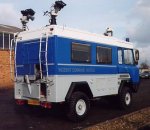
This one had an engine driven 240V alternator driven off the PTO, also a 2kVA genset in the rear where the lower door is open, and a bank of batteries through an inverter behind the two lower doors on the side you can see, the batteries were charged off the engine. I was one of the team that built this in 1992, here we are almost finished with the build and we took it outside to test the pneumatic masts, one 6m the other 8m from the ground.
kXjLpLh.jpg
 
Since 2018, EU harmonised voltages have been 230v +10% -6%

so this range accepts the previous EU voltage of 220v and UK voltage of 240v and all appliances manufactured for use within the UK and EU should work within the range
I'm sat as usual; at work, and on the wall is a monitor of the lab essentials
Lab temperature 23.03C
Humidity 37.34%
Mains voltage 226.61VAC
Mains frequency 50.05Hz
The UK has actually been running at 230VAC Nominal for some years...
 
I'm sat as usual; at work, and on the wall is a monitor of the lab essentials
Lab temperature 23.03C
Humidity 37.34%
Mains voltage 226.61VAC
Mains frequency 50.05Hz
The UK has actually been running at 230VAC Nominal for some years...
You are lucky as there is great variation around the country. For the last few years of my job I had several issues with mains supply fluctuations and ended up buying a mains voltage and frequency data logger to test some systems. I worked on high end laboratory instrumentation needing a clean in spec mains supply but often encountered voltages outside the normal range and that resulted in the high voltage supplies shutting down. Not good when it’s powering a 4kW X ray tube that is running near its melting point and costs £35k.
I have monitored anything between 220 and 268 v supply in the uk at times.
 
I'm sat as usual; at work, and on the wall is a monitor of the lab essentials
Lab temperature 23.03C
Humidity 37.34%
Mains voltage 226.61VAC
Mains frequency 50.05Hz
The UK has actually been running at 230VAC Nominal for some years...

Apologies, I very quickly grabbed the wrong date from the interweb this morning - the harmonisation took place in 2003. But nothing actually happened in reality apart from the legislation being put in place! The wide tolerance band meant that the previous nominal voltages in the UK and the EU were still acceptable
 
Apologies, I very quickly grabbed the wrong date from the interweb this morning - the harmonisation took place in 2003. But nothing actually happened in reality apart from the legislation being put in place! The wide tolerance band meant that the previous nominal voltages in the UK and the EU were still acceptable
I did get a few jobs altering the transformer tappings on our systems when some individual sites did drop to a nominal 230v but as you say nothing really happened nationally. I would say the average voltage measured today is around 243v.
 
Thanks for the replies :)
@Portofino I do know the elctrowhackary that goes on inside the genset, I was a radar technician for Decca Radar way back in my yoof :)

We had a diseasel 4kVA that ran at 1500rpm and a petrol 2kVA that ran at 3000rpm to power our hotel when we got power cuts in the north of Scotland.

When we were building the command and control vehicles we built them for the UK and made sure all was to UK spec. and had no problems, on the power panel there was a frequency meter along with the ammeter and volt meter

When I got poached to an international company (read US HQ) they had already built the vehicles and the alternators they put on them were not quite to UK spec and the video tapes I made would not play back on a VCR as the VCRs took their timing from the mains voltage.
I called in the company and the engineers that built the vehicles to solve the problem and when adjusting the engine driven pto down to drive the genset at 50Hz the voltage was too low and caused a brownout on the equipment as they could not find a tap that would raise the voltage back to spec.
How come you cocked it all up then ,if you are that smart from your “radar tach “ background ?
As said the power del in a modern EU boat is a bit like going for a 8hit you don’t think about it , it just works with a the flick a switch!
 
How come you cocked it all up then ,if you are that smart from your “radar tach “ background ?
As said the power del in a modern EU boat is a bit like going for a 8hit you don’t think about it , it just works with a the flick a switch!
I didn't, I had no hand in making those vehicles, and getting the company that actually made them to fix them was the problem. The company that made them was bought by the company I worked for, these were their first attempts at making them and they were brought into service about 3 months before I joined the company. It was the mismanagement of them was why I was brought onboard.
Finally we got new ones built from the ground up and at least this time I had an input into their design.
 
On reading @JOHNPEET 's thread on building his boat it made me wonder about generators onboard boats:
When we were building our offroad command and control vehicles we always had difficulty in sourcing 240V AC gensets that would deliver the required 240V at 50Hz, we found so many were made to deliver the 240V but at 60Hz which then caused havoc with systems that locked to the mains frequency and if you lowered the engine RPM to get the 50Hz then the voltage was too low.

For the generators on the boats what frequency do they run at?
“ we “ and you wrote it .So that means you in plane Eng ?
Also the “our off road ….” Suggests it’s yours .

If you had substituted “;they “ I wouldn’t have thought it was you . Or not used “ our “
Never mind .
Now it turns out it’s wasn’t you at all .
 
Many small mechanical generators will have a significant 'droop' which means as the load is applied the governor will allow the speed and hence frequency to reduce. Without droop the generator would not be able to take a load. So as long as your output is within the tolerance band of 230 +10% - 6% all should be fine, but do expect to see a loss of several hz as the load increases.

An inverter generator may have zero droop, but often the output is close to a square wave and this upsets plenty of electronic kit, especially microwaves.
 
Top