
Gelcoat polishing advice needed please

Anthony

Well-Known Member
Joined
8 Sep 2003
Messages
1,041
Location
Western Australia
Visit site
Hi,

Unfortunatley the gelcoat on my powerboat had been left to oxodise by the previous owner. The boat is only 10 years old but the gelcoat has gone quite powdery looking, espically on the upper sections, as you can see here:
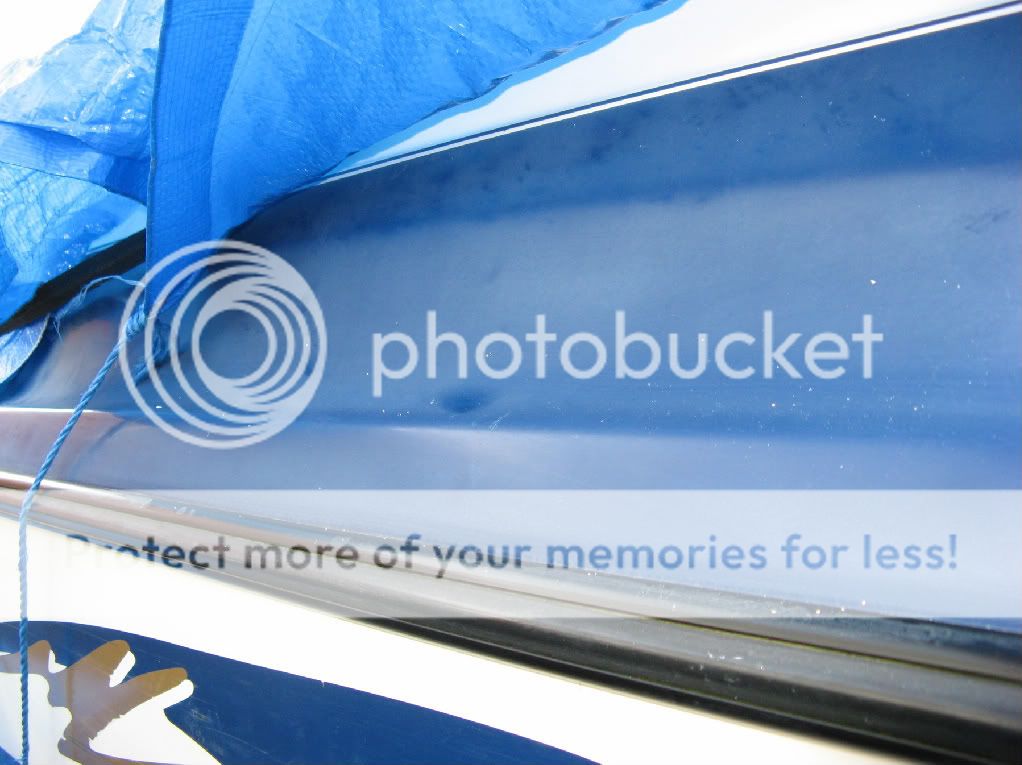
IMG_1593.jpg


I have tried all sorts of ways to revive it, including various combinations of T-cut, 2 types of car wax, cutting compound, 1500 wet/dry, 3M marine reviver&wax; applied both by hand and via a buffing machine with various head densities.

I can get it a little shiney:

IMG_1597.jpg


but its nowhere near as 'deep' as the gelcoat on the lower sections of the hull, which even unpolished looks better than the polished topsides.

IMG_1602.jpg


(the top blue looks better in the pic than it does in real life, however the bottom blue stripe is like new after literally a wipe with some polish)

So what do I need to do to bring the top sections back? I am guessing that it requires a combination of treatments?

Looking very close up there are fine scratches in it, which I guess need to come out; I am not sure if the treatments I have tried so far are not getting them out, or replacing them with other swirl marks.

I did wonder if just repeated buffing with the electric buffing machine would bring back the finish, but I find no matter what polish / compound I use, even at low speed it dries out after about 30 seconds, and if I have to keep adding more polish every 30 seconds its going to be the worlds slolwest and most expensive polishing job!

So what materials and techniques do I need to use to solve this? /forums/images/graemlins/confused.gif

Many thanks,

Anthony
 
When you are using a 'rubbing compound' with a machine you need to use lots and lots of water to stop it 'burning'. Then 'degrease' with red spirit, before polishing and waxing.
 
Look at the Boat sheen website.

If it is worse than appears in the photos you make need something more drastic.
Look at the Farecla website

Blue usually polishes up well. Red is a PITA.

Someone will be along in a moment with details of the 3M alternatives of the Farecla products.

Avoid all those that seem to be too good to be true. They are!
 
If you read This thread you'll see I contemplated using Poliglow. But read Gadriels comments towards the end.

I suspect you will be delighted with the appearance initially but by the end of the season it will look as bad as it did originally.

A thorough job with Farecla or 3M materials will last for several years before it needs doing again but its hard work! The snake oils are easy to apply but in the end are disappointing.

POLYTROL is another
 
I was somewhat sceptical about any 'all on one' type solution that just seems to overcoat, so it was very interesting to read that thread.

I am really looking for the best way to cut it back and refinish it, from what I have read its poss going to be a fine wet/dry and polishing compound of some sort and then a wax.

Question is which ones and how to apply them...

Thanks

Anthony
 
You wont need wet and dry sanding unless it is very bad.
I was very pleased when I did mine with a Farecla rubbing compound on a closed cell foam compounding mop (similar to their G-mops) needs to be kept wet and a slow running machine (I actually used an old two speed drill on its slow speed) A proper polishing machine may have been better but they are very heavy to hold for long.

I turned a dull pink hull into a bright shiny red one! Some people thought it had been spray painted! Yours is going to be a doddle by comparison
 
You need to remove old polish etc with solvent . Then use a proper marine polish, best to leave polish on for a day before buffing to allow it to soak well into gelcoat, then try to buff by hand as a machine will take off to much polish.
 
I did a blue hull in the same sort of condition.

I used dolops of Farecla G3 splattered on the hull about one square metre at a time and compounded off using a slow rotating electric tool (not a drill or buffer) with a sponge head soaked with water from a bucket. You need to wet the sponge every 20 seconds or so.

Polished using AutoGlym.

Immaculate.
 
The gelcoat has obviously suffered from atmospheric abrasion and allowed dust and grit to penetrate the surface. The lasting solution is use 1200 grit wet/dry paper keeping it wet throughout the process, wash thoroughly, when dry use either 'T' cut or medium/fine compound and polish. If using electrical power tool it must be slow running.
The sheen will last for years before you need to tackle it again. There is no quick way!
 
Not too difficult!

Products of gel coat oxidation bond on to the surface, giving the dull chalky effect and whitish powdery-looking surface. The same effect turns red to pink. Atmospheric erosion also dulls the surface.

Our Prewax colour and shine restorer will do the job. It includes detergents and a fine polish that will lift out the dirt and chalky deposits as well as giving it a shine. Follow up with a good wax (preferably one of ours) and you'll be delighted.

Some people will recommend compounding before waxing, but this is only necessary if you have to remove scratches. Also, compounds do vary in what they contain, and generally don't include detergents, so although they will bring the surface back to a shine, they don't always remove the chalky deposit and may result in a patchy colour.

As to application, you can do it by hand or machine.

An orbital polisher (about £32) will do the prewax and wax. Apply the product to the bonnet, hold it against the surface and switch on. The orbital action won't burn the gel coat. Use a fresh bonnet for each product and a good clean woolly one for the final shine.

If you need to do compounding too, you need a machine with a bit more grunt, and a rotary sander-polisher (from £45) will be more suitable. Just make sure you get one with a low speed setting available to avoid burning the gel coat. These are often used with foam pads in place of backing disc and bonnet, and the foam pads are available in various densities for compounding or finishing. There's more info on our web site.
 
This just needs a bit more, 3M High gloss compound worked with lambswool buffing head on variable speed rotary, will be a good start. The simple reason why we pro's buy this brand of compound over any other is because it works the very best.
You will not find any decent (time served) pro using anything else period!
That being said, any compound simply works by abrasion, revealing fresh gel-coat or paintwork underneath, many will do the job, but today this range of compounds are by far the best. You do not need to keep wetting the surface as mentioned on forums a lot and as for fear of 'burning through the gelcoat' or overheating the gel-coat and burning it dont worry, in 15 years of surface correction I have never been close to warming it up or taking off anything more than the damaged part of the gelcoat usually less than 2%. You would need to apply alot of pressure to a rotory polisher and hold in just the same place and using course inferior compounds (ones that didn't contain microscopic diminishing particles MDP) or seperate oils that allowed you to work the product longer for a much longer period of time than most think.
You have tried t-cut rubbing compounds and sandpaper yet still not found a reflection you are happy with... here's why!

Hold a torch on the surface and examine the light bouncing back at you, by the looks of it you will notice surface micro- scratches....these need to be removed for best results as it seems you have polished most of the oxidised surface away and have started to get the colour back a little, but you are doing this by hand, its like cutting the lawn with nail clippers...you are polishing over the defected finish... Boatsheen can sell you a rotary polisher for less than £50!! I suggest you buy one, not only that, they can hook you up with all the relevant polishing and compounding heads you will need to get this job done right.
All surfaces pointing up and facing the sun are going to suffer first with loss of lustre, it's why most hulls stay in better condition for longer than the topsides. Stay with it the perfect reflection is there.
 
Last edited:
The dark coloured gelcoat strips on the late 80's and early 90's USA sportsboats, just above the gunwhale/joining strip, are always a problem with fading and in need of constant attention.

Best solution I saw was a nice 2 pak paint job!
 
Top