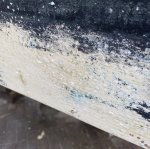
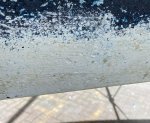
Gel coat pitted from barnacle removal

seaboy

Well-Known Member
Joined
28 Aug 2003
Messages
112
Location
Monmouthshire
Visit site
My son purchased a 1985 Sealine which had been left by the previous owner due to ill health.

The boat was cleaned and scraped free from an excessive amount of seaweed and barnacles being brought out ready for road delivery by a local yard by the broker.

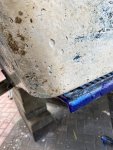
Now cleaned and delivered, there are some parts of the hull/gelcoat showing pits/craters from removal of the barnacles.

Should the gelcoat be repaired or coated with something to seal the skin etc.
 

Attachments

  • Hull corner A.jpg
    Hull corner A.jpg
    502.9 KB · Views: 50
  • Hull left (port) side A.jpg
    Hull left (port) side A.jpg
    739.4 KB · Views: 54
  • Hull right (starboard) side A.jpg
    Hull right (starboard) side A.jpg
    561.7 KB · Views: 54
A perfect opportunity start over with the antifoul type you want.

I'd get it blasted (prefer dry ice) to remove old antifouling and most/all of the primer. Then use a GRP filler, sand it where needed to get it level, apply a 2 part primer and then your desired antifoul, as per the instructions.

Personally switched to a thin film type (doesn't build up layers) and am happy. Washing it at lift out at the end of each season, every other year applying a new coat before launching.

Be aware that outboards and sterndrives need special antifouling due to being aluminum alloy cast
 
Last edited:
Herin lies a problem with trailer type boats that are left in the water. Around here I would give it no more than 2 weeks in summer before weed/barnacles grow if there is no antifouling paint. This will destroy the shiny gel coat of the boat bottom. If you do anti fould the boat then it will always looks tatty when on a trailer
Generally with plenty of a/f paint the barnacles don't do much harm to gel coat. However if left in the water for some years you could damage gel coat.
Are you going to keep it in the water or on a trailer? If in the water as said fill the holes if they are bad with epoxy then give it anti fouling paint. Or do it properly and take of all paint and apply several coats of epoxy. Then a/f.
If you want to keep it on trialer and have it looking shiny then fill holes with epoxy sand down then apint with one of the top side paint systems to get a gloss. ol'will
 
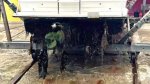
As said earlier the boat had been left at its mooring unused due to the previous owners ill health and no longer able to use the boat. From its previous permits its been lying in a Devon estuary since 2012

This photo shows the condition of the hull on removal to be cleaned ready for delivery to its new destination.
 

Attachments

  • image_6483441.JPG
    image_6483441.JPG
    127.6 KB · Views: 30
Recommend
  1. high pressure wash (to remove as much gunk as possible),
  2. brush/scrub with soap to remove the more stubborn growth
  3. scrape where needed to push barnacles et al away
  4. then blasting and so on as per #3

Thanks, my posts show it's already done before delivery. The last photo is shows as it was when taken out of the water and earlier photos show the results as seen when the boat arrived at its new home.

Looking at blasting/cleaning the remains of the hull free of AntiFouling, Primer and repair the craters/pits etc
 
You will have a polyester based hull and to use an epoxy filler is not essential. A polyester based one like Teroson Gel Coat Filler will be perfectly adequate. It is also a lot easier to sand and get a good finish. It would be wise to use a Dremel to clean the sides of the indents, especially above the waterline, as this will stop any dirty black line round the edge of the hole. Have a look at this PowerPoint presentation I made on gel coat renovation for lots more advice. Although specific to Westerly boats, it can still be used for many other manufacturers. From the photos you have provided it looks like the gel coat was slopped on, not sprayed, due the depth of the indents not showing any glassfibre. A few of the circular holes my be a result of air bubbles trapped in the mix when it was applied and not then not worked out.

https://wiki.westerly-owners.co.uk/images/8/86/Gel_coat_renovation_19May2020.pdf
 
Personally i think that is mild osmosis,
when the barnacles were scraped off it’s taken the tops off some of the tiny blisters ,they only appear to be in the Gelcoat so nothing much to worry about , if you can ,poss get it soda blasted and fill with some international watertite epoxy filler , of course this is only my opinion based on what I can see in the pictures
 
Personally i think that is mild osmosis,
when the barnacles were scraped off it’s taken the tops off some of the tiny blisters ,they only appear to be in the Gelcoat so nothing much to worry about , if you can ,poss get it soda blasted and fill with some international watertite epoxy filler , of course this is only my opinion based on what I can see in the pictures
I agree. In the last photo of the OP, you can see many more ‘incipient’ blisters waiting to open up. Blasting is a good way to open the tops of all (tiny) areas where the gelcoat had essentially delaminated. Otherwise much patience with the die grinder will be required. Or if trailering it only - antifoul and go to enjoy the rest of the summer and sort it another time.
 
Top