Fuel blockage problem

mbird

Well-Known Member
Joined
1 Nov 2009
Messages
137
Location
Norfolk
Visit site
A few weeks ago, we had a very hairy experience in a rough sea resulting from engine failure caused by blocked primary fuel filters, resulting in us being rescued by the RNLI and towed for 3.5 hours back to Lowestoft.

The filters had only been changed a few weeks before, so this all points to crud in the tanks. Having now inspected the tanks, the amount of sediment etc really isn't that bad, so I am thinking of installing some fuel purifiers from MLS that we saw demonstrated at the Southampton Boat Show; here is their website link. http://www.mlsystem.co.uk/fuel/index.html

Has anyone come across these or had any experience with them? The other option is fuel polishing, but with the amount of crud we actually have I am not convinced it would make a huge amount of difference, and one bad load of fuel we'd be back to square one.
 
Bad fuel can occur two ways....

1. Poor fuel maintenance
2. Picking up contaminated fuel.

I fitted a fleet guard filter with water separation as a fuel polisher, it's simply works by taking fuel from the bottom of the tank running it through the filter and returning the fuel back to the top of the tank. It isn't designed to clear sediment off the tank bottom, but only to remove any substance that may cause a problem if left there.

It is a cheap and easy solution to the build up of sediment in the fuel.

In your circumstances I would suggest having the fuel and tanks professionally cleaned and then add a separate polishing system, not one that only works when the engine is running. A separate system can be run whilst at the dock to remove water ect when the boat isn't being used.

Which filter you fit will be another story, but I only wanted to make sure that there was no loose debris and or water in the tanks.

If you want information on what I fitted drop me a PM with your email address and I'll send you details.

Tom.
 
Thanks for the reply Tom. I think a previous owner must have has a bug problem, and what we do have at the bottom of the tank is mainly dead bug. I have done a test for bug which was negative, and we have no water in the fuel at all. The biggest problem I think was that having metal bowls on the bottom of our Separ KWA-50 primary filters it is impossible to see any build up in them (needles to say I am changing them to clear ones and sticking up 2 fingers to the BSS until it's time for a re-test). I didn't know the bowls were getting clogged, as were the turbine parts) and a rough sea was enough to stir up the ****.

The fuel in the tanks is clear (I have inspected it though the sender hole) and so I'm not convinced that polishing would do much good?
d893832bbec260fee785869cc1b09e6b_zps529a3954.jpg

My issue with fitting a polishing system is just what you mention, in that it doesn't clear the sediment off the bottom of the tank. This is why I was interested in fitting the MLS system between the tank and the primary filter so that if the tanks get stirred up at sea, it will take out the vast majority of the crud before it ever reached the primary filters. I've been quoted over £1000 to have the tanks cleaned, which necessitates cutting a hole in the top of each tank and patching after, whereas I can fit 2x MFP6 purifiers for £800 and have a permanent solution.
 
Last edited:
I have 300mm square inspection hatches in the tops of my tanks, once every five years I run the fuel right down, get in there and steam clean, dry out, re-assemble.

A worthwhile activity.
 
A few weeks ago, we had a very hairy experience in a rough sea resulting from engine failure caused by blocked primary fuel filters, resulting in us being rescued by the RNLI and towed for 3.5 hours back to Lowestoft.

The filters had only been changed a few weeks before, so this all points to crud in the tanks. Having now inspected the tanks, the amount of sediment etc really isn't that bad, so I am thinking of installing some fuel purifiers from MLS that we saw demonstrated at the Southampton Boat Show; here is their website link. http://www.mlsystem.co.uk/fuel/index.html

Has anyone come across these or had any experience with them? The other option is fuel polishing, but with the amount of crud we actually have I am not convinced it would make a huge amount of difference, and one bad load of fuel we'd be back to square one.


This is not meant as criticism but was there any reason you weren't able to change one or both blocked filters at sea? I always carry multiple spare fuel filters just in case. On my previous boat, a single engined vessel, I could change the filter and bleed the system in just a few minutes. I had plenty of practice as I too had dirty fuel/tanks.

What I did was to buy a 12v diesel pump and put a long hose on it and basically hoovered the bottom of the tank passing the fuel through a filter before going back into the tank. That fairly quickly resolved the issue of the filter blocking at sea. And all at minimal cost.
 
Not changing the filters at sea was a safety issue. We were rolling around in quite a nasty short swell on one engine, and the primary filters are mounted on the bulkhead just forward of the front of the engines. To get into change them would have put me just inches away from the belts on the running engine. I didn't fancy shutting down that engine and having no way of keeping the boat from broaching around, so it was simply a judgement call. Having said that, I have since discovered I can just about change the filters from above without actually getting into the engine bay, so if there were a next time, it is just about feasible.

I like the idea of "hovering" hoovering the bottom of the tank, but the same question remains as to how you got around the baffles? Our tanks have baffles about every 16", so it's easy to get to the section with the hole for the sender unit, but there is no access into the rest of the compartments?
 
Ah, I see. The problem I have is that the port tank is half under the fridge and cupboard in the corner of the saloon and is not accessible without ripping all the cabinetry apart.
 
Having blocked the newish fuel filters the crud is bad enough.

You need to give the fuel a strong dose of biocide such as Grotamar 82, leave for a few days then clean the tanks out thoroughly or get them cleaned out.

Fuel bug grows on the interface between water in the tank and the diesel itself. A biocide will kill it but not remove it.

Get the crud and water out of your tank and develop a routine of draining off the tanks of water ( I have sumps in my tanks so easy) every year, treat religeously with a biocide every time you fuel. Keep several sets of spare pre filters on board.

The fuel line pick ups are quite small and it does not take much to block it a few bits of hair, some swarf and some fuel bug is all it takes. Its worth while blowing down the fuel lines into the tank to dislodge ant crud with compressed air or a dinghy pump.
 
I like the idea of "hovering" hoovering the bottom of the tank, but the same question remains as to how you got around the baffles? Our tanks have baffles about every 16", so it's easy to get to the section with the hole for the sender unit, but there is no access into the rest of the compartments?

I drilled a 10mm hole in the centre of the top of the forward and aft sections of the tank, i.e. forward and aft of the baffle.
I then poked a 10mm copper pipe down to the bottom of the tank and pumped out all the crud, through a Fleetguard filter, returning the filtered fuel to the tank through either the breather hole or the filler hole (whichever was easiest to get to) as they were on top of the tank.

By using clear hose on the inlet side between the copper pipe and the filter I could see if I was picking up black crud or not.
I just kept moving the copper pipe around the bottom of the tank until it came through clear.
Then repeated for the part of the tank on the other side of the baffle.

To seal the 10mm holes in the top of the tanks afterwards I tapped them, then screwed a bolt in with an O-ring to seal.

My polishing kit cost less than £100, no need to spend £800 or £1000.

See this thread for more info & photos http://www.ybw.com/forums/showthread.php?314108-Fuel-Polishing&highlight=fuel+polishing

There are lots of other posts on the subject, search for "fuel polishing"
 
OK lets get down to basics what engines do you have?

Looked at the MLS stuff and yet to understand exactly how it will benifit you over and above what Tom is suggesting.

On one hand you say you have been tested for the fuel bug which proved negative the next comment you make is that tank is full of dead fuel bug, debris is not dead bug but actually their faeces.

Anyway please tell us what engines and describe your current filteration set up.
 
Very interesting project you made up there! I am pretty sure my tanks have more than just the one baffle, though I may be wrong, so it would require more holes drilled and as I've mentioned previously, the aft section of the port tank is completely inaccessible (the stdb on is easy!).

Back to my original post though, the engine fuel system is in itself a polishing system (ie a pump to suck the fuel up and a return back to the tank) but the problem is filter blockage. By installing the MLS system, would this not do exactly the same job every time the engines were running? When at sea, the fuel would be nicely agitated and all the muck caught in the MLS without any danger of the filters getting blocked. All it requires is the MLS purifier to be drained regularly.

Any thoughts as to why this wouldn't work?
 
If you found the filters to be dirty, then why not remove the bowls and clean out?? after all that is where the crud gathers. Do it as a matter of course.
 
The polishing system Trundlebug shows is almost the same as the one fitted on Little Ship, the only difference being mine is permanent and can be used whenever I feel like. That means every time the engine is running or when she is in the dock. It can be set up to run on a timer during long periods of no movement.

Fuel polishing isn't to remove large amounts of contamination from fuel (although it will) it is to remove small amounts of contamination and water before it becomes a problem. Hence "polishing".

I also use Marine 16 every time I add fuel.

If you search on the trawler sites mainly USA you will find lots of information on polishing fuel, something that many serious cruisers have added to their systems.

The filter you posted will under high contamination still present blockage. It uses a spinning motion to remove sediment ect, something on a low fuel flow as on LS would be useless. Good fuel management is the answer, there is no one stop fix to the bug.

Tom.
 
OK lets get down to basics what engines do you have?

Looked at the MLS stuff and yet to understand exactly how it will benifit you over and above what Tom is suggesting.

On one hand you say you have been tested for the fuel bug which proved negative the next comment you make is that tank is full of dead fuel bug, debris is not dead bug but actually their faeces.

Anyway please tell us what engines and describe your current filteration set up.

Sorry, I think our replies must have crossed.

We currently have no bug contamination, nor water present. Tests have confirmed this. The tanks are 21 years old, and I have been told that the sludge in the bottom of the tank is probably bug that has been treated in years gone by. I must admit that the suggestion it is their faeces is a new one on me, but I stand to be corrected!

The current setup is KAMD42A engines, each with a Separ KWA-50 primary filter.

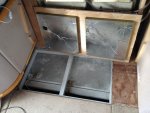
I fully understand the benefit of having the fuel polished, either with a DIY system or visiting professional. However, the port tank is almost impossible to access more than about 40% of it's length as shown in the photo below:
IMG_0921.jpg

Consequently I do not think it will be possible to stir the fuel up enough to get all the sediment out of the tank. You can see the sender in the photo, and there is a baffle just top the left of it, meaning the aft section of the tank is not accessible in any way (awful design!) nor do the tanks have any drain down point. I could of course sort out a polishing system, but just circulating the fuel in one end of the tank I don't think is going to be of much benefit.

The reason I like the look of the MLS unit is that as the tanks are stirred at sea, the unit catches all the muck before it ever reaches the filters. It's also an ongoing process that is working all the time the engines are running. Just seems like a very simple fit and forget solution doesn't it?
 
If you found the filters to be dirty, then why not remove the bowls and clean out?? after all that is where the crud gathers. Do it as a matter of course.

Yes, that will now be part of regular maintenance. Having the metal bowls though, I didn't know we had a problem until it was too late. The clear bowls I am now fitting will be easy to inspect (thanks to the damn BSS for insisting on metal bowls!)
 
Yes, that will now be part of regular maintenance. Having the metal bowls though, I didn't know we had a problem until it was too late. The clear bowls I am now fitting will be easy to inspect (thanks to the damn BSS for insisting on metal bowls!)

even though you cannot see through metal at least you stand a fighting chance of removing the drain cocks, this will allow a sample of the crud to come out, with the see through bowls drain removal is at best dodgy and at worst you can cock it right up and crack the bowl. Removing drain cock on a regular basis is the best idea, Ok I know this is in the ideal world and we all promise to do these things, but generally forget until the engine stops.
 
we have racor filters with clear bowls. thad to fit a metal flame deflector metal bowl and metal drain nut, which still allows viewing of the clear bowl to meet bss. perhaps separ do a similar item.
 
Top