
Fridge using lots of amps in the hot weather

Jokani

Well-Known Member
Joined
21 May 2014
Messages
840
Visit site
I have a Dometic/Waeco CRX 50, up until the weekend I thought it was fairly frugal with amps. But the weekend was hotter than usual, and the fridge compressor seemed to be on most of the time, even when turned down to the minimum setting.
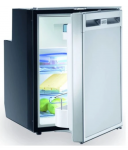
1597738106543.png

Would adding insulation to the sides, back and top help?

Is there anything else, other than insulation, that I should be looking at?

Would a top loader with plenty of insulation perform better?

TIA
 
I have a Dometic/Waeco CRX 50, up until the weekend I thought it was fairly frugal with amps. But the weekend was hotter than usual, and the fridge compressor seemed to be on most of the time, even when turned down to the minimum setting.

View attachment 96923

Would adding insulation to the sides, back and top help?

Is there anything else, other than insulation, that I should be looking at?

Would a top loader with plenty of insulation perform better?

TIA


Two thinks

1) Water cooled condenser will increase efficiency especially where it is hot like we have in the subtropics.
2) As much insulation as possible I have 75mm of closed cell polyurethane foam all around and 50 mm in the door.
 
I have a Dometic/Waeco CRX 50, up until the weekend I thought it was fairly frugal with amps. But the weekend was hotter than usual, and the fridge compressor seemed to be on most of the time, even when turned down to the minimum setting.

View attachment 96923

Would adding insulation to the sides, back and top help?

Is there anything else, other than insulation, that I should be looking at?

Would a top loader with plenty of insulation perform better?

TIA

Extra insulation will help, if the cold doesn't escape you won't need to spend power replacing it :)

Bare in mind though, insulation a cabinet fridge like yours has to be done bearing in mind that you still need to keep the compressor and condenser cool.

Top loading fridges can have some benefits, it can be easier to add insulation, you can keep the compressor and condenser remote and that makes it easier to cool them, plus, when you open the lid, all of the cold doesn't fall out on the floor.
 
If you are insulating, put in reflective material. A surprising amount of heat gets in by radiation, and something like metallised mylar film - several layers - will cut that down.
 
Similar experience to me this weekend, refrigeration compressor was cutting in frequently. I don't have a freezer compartment, just a refridgerator as volume was more important than ice, remote to fridge compressor. Once the beer had chilled, I moved it from the bottom section to the top section where the thermostat is and that helped. I guess the cold beer acts a store of coldness which helps reduce temperature faster after door opening / in hotter weather.
 
Extra insulation will help, if the cold doesn't escape you won't need to spend power replacing it :)

Bare in mind though, insulation a cabinet fridge like yours has to be done bearing in mind that you still need to keep the compressor and condenser cool.

Top loading fridges can have some benefits, it can be easier to add insulation, you can keep the compressor and condenser remote and that makes it easier to cool them, plus, when you open the lid, all of the cold doesn't fall out on the floor.
I’d agree with almost all of this - particularly with the wise words about remote compressor and condenser being remote - which is why we went for keel cooled, so finding a way to cool the back of your fridge is key.

Just one small caveat, the specific heat capacity of air compared to water (by volume) is just 1/5000 so the cold lost by air falling out is immeasurablely small compared to the mostly water based contents of a fridge, so the front loading part doesn’t matter.
 
With an air-cooled condenser it is important to ensure that air circulation is as good as possible, up from the bilge and out to the top of the locker, or even outside. On many boats fridge cooling relies on small openings to the rear, which don't give it much of a chance. Additional cooling in the form of a fan can help a lot.
 
With an air-cooled condenser it is important to ensure that air circulation is as good as possible, up from the bilge and out to the top of the locker, or even outside. On many boats fridge cooling relies on small openings to the rear, which don't give it much of a chance. Additional cooling in the form of a fan can help a lot.

Following on from Vyv's comment. There a number of recent and probably lots of threads historically on this problem and if you make a search I am sure you will turn some up. From memory there was thread about 1 month ago.

We have wired 'computer' fans into the existing fan circuit to enhance the flow of air. One fan draws air from the bow locker through ducting to the compressor and another fan draws air from the compressor into the engine bay and it then vent outboard. When at anchor the bow locker faces the prevailing wind which is normally the freshest and coolest. Because we have wired into the existing fan circuit our fans only come on when the fridge cycles. I had to drill some big holes for the ducting - so you would need some decent holes saws.

It depends on your yacht - but we have plenty of room for ducting and I simply used normal domestic stove extractor ducting. I know smaller ducting exists and is used, for those who have airconditioning on their yacht , I recycled computer fans from discarded computers - but you can buy them new if you are so flush :). Typically fans are about 100mm square but you can source them as small as 25mm square (maybe smaller).

A problem with adding extra insulation might be that you reduce or close the air gap round the fridge - which may compound the problems if you do not introduce another way for the warm air to be removed.

Taking note of an earlier comment - make sure the fridge is full, even it its only water and when you start the fridge up - try to fill any spaces with ice, freeze water at home - rather than cool down bottled water. So - stick the bottle of gin/vodka (or both) in the freezer at home and then get it to the fridge ASAP. :)

Jonathan
 
Nothing works as well as replacing an air-cooled system with a water-cooled one.

I think that depends on the average ambient temperature. In the UK, air-cooled systems generally work well. If you look at the specs of air-cooled vs water-cooled compressors, there's little difference in energy usage.
 
As Paul says, all the cold falls out of a front opening fridge every time you open the door.
You could try making a 'washboard' to fit across the bottom to hold back the cold when the door is open.
The best solution is a well insulated top loader.
As stated above the air falling out doesn’t matter as it‘s heat capacity impact is immeasurably small compared to the contents.
 
I used to think the air falling out of a front loader fridge/freezer would be significant but if you only opening a couple of times a day I wouldn't worry. Anyway it is only a bit of cool air that is lost as most of the coolness is retained by the cool/frozen goods.

The more insulation the fridge has the less time the compressor will have to work. My fridge is custom built and has 4 inch insulation. As others have said it is vital that air is able to circulate. My unit is a Waeco and they said not to install the unit in a compartment less than 100 cu ft.

Just looking at your fridge (with minimal insulation) your compressor is going to be working overtime in hot weather.

Here is an excellent article on marine fridge/freezers.

MARINE REFRIGERATION
 
Last edited:
I think the idea of a top loading fridge, or water cooled fridge (or both) are very sensible but expensive - you have what you've got and replacing the fridge (to my mind) is unrealistic as the location of a front opening fridge is unlikely to be suitable for a top loader and dumping a perfectly good Waeco CRX50 just because it cycles on too much in hot weather (inconvenient though it might be) is possibly a short term problem.

Look at adding insulation, look at adding some form of reflector (as Jumble Duck suggests) add some fan(s), manage the use of and contents of the fridge first - they are cheap options and ones you can try - tomorrow. It will be autumn soon and you will have worries about keeping warm not worrying about cold beer.

Our fridge gave up the ghost about 12 months ago and we replaced it with an identically sized Dometic/Waeco but I think slightly bigger than yours. We manage with the insulation - as supplied and have simply added fans - and we live in Sydney (though we do have a big house bank, solar and wind). We do have a custom built freezer, for the tuna etc, and it has 150mm of insulation all round (its built into the bilges) - but that's something you plan from the outset - much more diffcult (think expensive) to retrofit. It also has extra fans, cooler air ducted from the bow locker and exhausted air to the engine bay and is top loading, lift up galley floor to access.

Jonathan
 
Fill the fridge, even with bottle of water (or beer...) reduce the amount of cold air lost or warm air gained each time you open the door
One can of Coke in an otherwise empty fridge will still have over 30 times the specific heat capacity of the remaining 50 litres of cold air so it really doesn’t matter,
 
I don't see any reason why an air cooled "out of the box" fridge could not be converted to water cooled condenser.

This could be a submerged condenser of a onboard tube in tube heat exchanger a I posted in an early thread.
 
I don't see any reason why an air cooled "out of the box" fridge could not be converted to water cooled condenser.

This could be a submerged condenser of a onboard tube in tube heat exchanger a I posted in an early thread.

This usually requires an electric pump to circulate seawater, so additional electricity consumption.
 
Top