Fridge - Test how well insulated?

Tim Good

Well-Known Member
Joined
26 Feb 2010
Messages
2,888
Location
Bristol
Visit site
Is there a given temperature increase test you can use to determine how well insulated a fridge is? I appreciate this depends on the external temp, internal temp at star of test and what is in the fridge.... so those parameters would need to be fixed. Like test at 15c with the fridge empty starting at 3c inside.

Anyway I turned my fridge off last night around 10pm to test. It started at around 4c and by 10am it was 10c. So 12hrs = 6c increase from 4c starting. Internal temp was about 17-19c.

Is my fridge well insulated or crap?
 
Is there a given temperature increase test you can use to determine how well insulated a fridge is? I appreciate this depends on the external temp, internal temp at star of test and what is in the fridge.... so those parameters would need to be fixed. Like test at 15c with the fridge empty starting at 3c inside.

Anyway I turned my fridge off last night around 10pm to test. It started at around 4c and by 10am it was 10c. So 12hrs = 6c increase from 4c starting. Internal temp was about 17-19c.

Is my fridge well insulated or crap?

Nigel Calder (I think its him) has a test in which you put a known weight block of ice in the fridge and see how much it melts over a given period. I think the details are in one of his books. I can't look it up as the books are on the boat, and the boats in France at the moment.
 
I seem to remember being told by someone who knows this stuff that the temperature of the outside of the fridge cabinet should not be more than 2 degrees cooler than ambient, and preferably less. This should apply over the entire outside area.
An infra-red thermometer from Amazon, cost about a tenner, will do the rest.

For the Calder ice-block test, you'd presumably need to know the starting temperature of the ice (although latent heat of freezing would usually be much the bigger factor). Wouldn't the volume/gross area of insulation also be a factor?
 
Is my fridge well insulated or crap?

Where are you going?

My home made thermostat shows percentage of compressor running of the past 2 hours. If the locker next to the fridge is about 20 odd deg then usually something like 25/30 %. On a hot day (talking well hot high thirties, not yer slightly above cold Scottish summer day :) ) the temp next to the compressor might get up to near 40deg and the run time more like 80%.

I need more insulation :)
 
Is there a given temperature increase test you can use to determine how well insulated a fridge is? I appreciate this depends on the external temp, internal temp at star of test and what is in the fridge.... so those parameters would need to be fixed. Like test at 15c with the fridge empty starting at 3c inside.

Anyway I turned my fridge off last night around 10pm to test. It started at around 4c and by 10am it was 10c. So 12hrs = 6c increase from 4c starting. Internal temp was about 17-19c.

Is my fridge well insulated or crap?

This is my thinking based on what I did with my fridge when it was not cooling as I thought it should.

Mine is a normal Danfoss compressor fridgboat with sea water cooled hull mounted heatsink.

For a particular thermostat setting and ambient temperature with a constant load when at steady inside temperature, I measures the total compressor running time over a 24 hour period. From this you can calculate the duty cycle. This will give you and indication of the efficiency of the total insulation. You must of cause not open the fridge during this test period as this will increase the effective cooling load.

IMGP2720_zpslanyfp7s.jpg


This is what I used to measure on time and running time with a common reset so I can run the test for any period I wish.
 
Mine is a normal Danfoss compressor fridgboat with sea water cooled hull mounted heatsink.

Out of interest....

1. Do you find the keel cooler (hull mounted heatsink) makes a big difference? I have one but have not installed it yet. Current running on a fan coolers Frigoboat compressor.

2. What were your findings and what made you think it wasn't cooling properly?
 
Out of interest....

1. Do you find the keel cooler (hull mounted heatsink) makes a big difference? I have one but have not installed it yet. Current running on a fan coolers Frigoboat compressor.

2. What were your findings and what made you think it wasn't cooling properly?

Answering your 1). Water cooling makes a huge difference when it gets warm, by which I mean over 30C saloon temperature for much of the day. Ours runs for about 30% of the time with seawater cooling, water temperature 26C plus, whereas we know of air cooled fridges that run something like 80% of the time. Partly depends on the age of the fridge and the insulation but water cooling is far more effective in our experience.
 
Do you find the keel cooler (hull mounted heatsink) makes a big difference? I have one but have not installed it yet. Current running on a fan coolers Frigoboat compressor.

Not addressed to me, northcave, but I fitted one last winter, largely because of the pretty unanimous experience of others (both face-to-face and on t'interweb). I also added extra insulation at the same time, which somewhat clouds the experience, but the two have made a huge difference in power consumption: now about half of what it was despite now including a freezer compartment. Quiet, too.

The main downside, which won't bother many, is not easily being able to use it on the hard, according to the suppliers, Penguin. (Although some people do without obvious ill-effects.)

That's in the Med. It might be just a little different in the North-West Passage ;)
 
Out of interest....

1. Do you find the keel cooler (hull mounted heatsink) makes a big difference? I have one but have not installed it yet. Current running on a fan coolers Frigoboat compressor.

2. What were your findings and what made you think it wasn't cooling properly?

Never has air cooled but where I sail air cooled would not be very efficient with mid day in the summer 35 C.
My previous boat had a pumped water cooled fridge which was OK but need power for the pump where the keel cooled doesn't need the pump so uses less power.

When my fridge was first installed I was not present but I found that during the summer the fridge would run all the time and in winter never below about 60% on time. There was also condensation on the outside of one of the outer panels.

I opened the panel that had condensation and found a big void so sprayed foam into the void. Now I find in winter the duty cycle is about 25% and in summer between 30% to 40% on very hot days.
 
Never has air cooled but where I sail air cooled would not be very efficient with mid day in the summer 35 C.
My previous boat had a pumped water cooled fridge which was OK but need power for the pump where the keel cooled doesn't need the pump so uses less power.

When my fridge was first installed I was not present but I found that during the summer the fridge would run all the time and in winter never below about 60% on time. There was also condensation on the outside of one of the outer panels.

I opened the panel that had condensation and found a big void so sprayed foam into the void. Now I find in winter the duty cycle is about 25% and in summer between 30% to 40% on very hot days.

Our fridge ( that I fitted in preparation for warmer waters) has a keel cooler but no pump. I was offered a pumped water one but I rejected it on power consumption grounds. If the OP needs a water-cooled compressor/condenser then non pumped ones are available from Frigo. We have to be careful with ours as if I accidentally knock the thermostat the whole fridge can turn into a freezer very quickly. Obviously this is as much to do with the insulation as the compressor efficiency, but we still occasionally freeze the milk and everything else!
 
Thanks all.

I have a new frigoboat one and it is air cooled but because the coolant connectors are plug n' play I was told I can just add the keel cooler later. As air cooled I was told it was board line powerful enough which is what I'm finding even in Scotland now. It's on thermostat 6 of 7 to keep it below 5c.

I'm hoping to keel cooler will sort that out but it is interesting what you say about using it on the hard... I'd never considered that but that will be possible for me even after I convert it to keel cooler as it will, at that point, be both air and keel cooled.
 
My coolant is once through seawater, originally using a Jabsco Par Max 3 pump, which was secondhand. The pump runs on 6 volts via a Frigoboat transformer. I replaced it with a Par Max 1 which I thought would reduce the electrical consumption but in fact it made no difference. The fridge uses 3-4 amps, varying through its cycle, the pump uses less than 0.5 amp.

The coolant exits through a small skin fitting in the transom. On the hard I hang a bucket beneath it, catch the water and pipe it back to the skin fitting inlet. It will run like this for several days, topping up occasionally to replace splashes, without increasing in temperature. One suggestion, used quite widely, is to circulate the fresh water tank. This avoids the fouling that is a minor problem with mine.

Rogershaw - as I understand it your waters are pretty cool, at least on the Atlantic side. In Greece we are currently enjoying seawater at 27C and have seen 30C earlier in the season.
 
Thanks all.

As air cooled I was told it was board line powerful enough which is what I'm finding even in Scotland now. It's on thermostat 6 of 7 to keep it below 5c.
We fitted a new air cooled fridge (isotherm) last year and have to keep it turned down to 1-2 to avoid freezing everything. We are berthed on the Dutch coast, so not exactly swealtering, so I am surprised that your fridge struggles in scotland. Our fridge is around 100l, with an evaporator plate suitable for up to 120l.. Not tried it anywhere warm yet.......
 
Contrary to most opinions I find my air-cooled fridge compressor perfectly effective.
It takes 4 amps, after startup and in Greek summer temperatures of 33C runs about 15% of the time.
It does benefit enormously by having a ducted air-supply.
The top-entry box is well insulated, taking about 24 hours, in an ambient of 28-30C to go from 4C to 18C.
I suspect that heat-exchange methods are of secondary importance to insulation-effectiveness. I used closed cell ?polystyrene? 55mm thick with a reflective backing, up to two thicknesses, filling the inaccessible voids with builders' polyurethane foam.
For really large units (mine is for <50 litres) I suspect water-cooling may show heat-transfer advantages over ducted air - at the expense of added complexity and consequent power/reliability problems.
 
Thanks all.

I have a new frigoboat one and it is air cooled but because the coolant connectors are plug n' play I was told I can just add the keel cooler later.

I'm hoping to keel cooler will sort that out but it is interesting what you say about using it on the hard... I'd never considered that but that will be possible for me even after I convert it to keel cooler as it will, at that point, be both air and keel cooled.

As yours is 'plug and play' I would see no reason that you might be able to place the compressors close enough to switch between the two as necessary. We went the whole hog and fitted a completely separate compressor with our keel cooler with a 'spill over' fan between the freezer and the fridge. Works well and independently if required so we now have freezer/fridge, two fridges or small freezer/one fridge (original set up) capability. Oh and the keel cooled compressor is much more efficient and nigh on silent.
 
Rogershaw - as I understand it your waters are pretty cool, at least on the Atlantic side. In Greece we are currently enjoying seawater at 27C and have seen 30C earlier in the season.

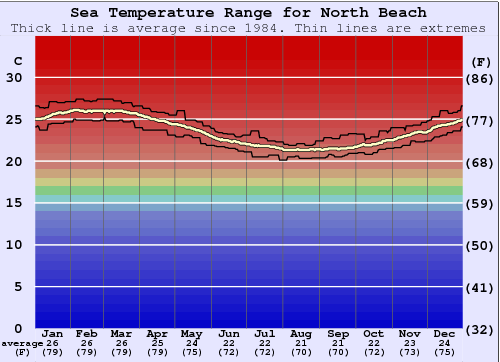
Hi vyv I am on the indian ocean side so we have the warm agulhas current flowing southwards from the tropics. The atlantic current is the Benguela current that is the cold current from antarctica.

300px-Benguela_and_Agulhas_Currents.jpg


https://en.wikipedia.org/wiki/Agulhas_Current

Not quite as high temperatures as you have but these are out at sea not in the marina/mooring which may be a little higher

North-Beach_1.png
 

Attachments

  • North-Beach_1.png
    North-Beach_1.png
    34.9 KB · Views: 0
Last edited by a moderator:
Ok so I did a test today from 9:30am to 9:30pm. In total the fridge used about 25amp/hrs over a 12 hours period. So call it 55 in a 24hr period. The fridge is around 170Litres and the temp is about 20 inside and say 17/18 outside.

How does that compare to everyone else?
 
Top