Flush Mounting a Device with no Mounting Holes

Joined
20 Jun 2007
Messages
16,234
Location
Live in Kent, boat in Canary Islands
www.bavariayacht.info
I still haven't got round to installing my Matsutec HP-33A AIS Transponder...
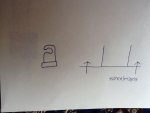
No replies to the thread above, perhaps it was too specific. I want to flush mount this device, but it has no flush mounting holes:
HshosiZb.jpg


I figured I could glue an upstand either side and use the holes that the bracket uses, but I really need some way of tightening it onto the front surface.

Any suggestions?

[Edit] I don't want to use sealant. It's getting a bracket I can tighten that is the issue. I have full access to the rear, it's on a removable panel.
 
Last edited:
Use black Sikaflex under the edge of the faceplate. It'll not come off and it will be waterproof A Stanley knife under the edge will release it.
 
Had the same problem mounting a Furuno GP 32. I made a couple of plates about 15mm thick, each with a slotted hole. Assembly is a bit fiddly; presented the unit into the panel cutout, then reaching behind, fitted the plates using the mounting bracket holes. Once the screw fixings were engaged, could press the unit tight to the panel, and then tightened the plates in position
 
Remove the bracket but retain the round "knobs" drop the unit into the recess, place wedges between the underside of the mounting surface and the top of the "knobs", if you use rubber type wedges they will stay in place better.
 
Last edited:
The flush mounting kit on a Navman 27200 VHF I had was basically 2 right angle brackets. one side attached onto the side of the radio, the other side had a captive thread. This took a bolt/ pad which could be tightened up to bear on the reverse side of the surface to which the radio was being flush mounted.
 
Do you have access to the rear?
If so get some aluminium angle.
Drill hole in the angle so you can bolt it to the unit using the existing bracket bolts.
On the front of the angle have some rubber or draught sealant.
Then its straightforward to trap the unit in place with the angle from behind.
Where you drill the hole in the angle will depend upon how thick the mounting panel is.

(Very similar to GrahamHR posts above but DIY.)
 
Again, if you have access to the rear, this worked for my Garmin.
a short length of threaded rod screwed into the knob fittings each side. [studding or cut the head off a bolt]
Cut a circle of wood about 25mm and drill an off centre hole and fit over the studs. This can then be twisted and acts as a cam.
I did this as a temporary fix for my GPS and it lasted for many years, couldn't see the need to upgrade it.
 
(Very similar to GrahamHR posts above but DIY.)

Not quite the same - Graham's description includes a second pair of bolts which bear on the back of the mounting surface and pull the whole assembly down into position. This is exactly what my Standard Horizon VHF uses, and is what I was going to suggest Nigel makes. Personally I would tap the holes in the bracket, but if you don't have a set of taps then a similar effect (albeit a little more fiddly) could be obtained by putting a nut on the screw and doing that up against the bracket.

Pete
 
You just need 2 L brackets with elongated fixing holes. Mount them on the back of the panel so that the elongated holes line up with the holes for the knobs on the unit. Stick a bolt through and tighten as required using a wing nut.
 
Suitable mounts are made for VHF radios (at least from Icom) so they may well work for you. Just have a look at the accessories advertised for a fixed radio and you should find them.

Rob.
 
Get some threaded bar that fits the mounting holes. Cut two lengths and bend it into L shapes. Put a nut on the short side to lock it to the device and a long nut on the long side to press down against the mounting panel. The long side would need to be cut so that you have a few mm of clearance when winding it into the device in situ.
 
Again, if you have access to the rear, this worked for my Garmin.
a short length of threaded rod screwed into the knob fittings each side. [studding or cut the head off a bolt]
Cut a circle of wood about 25mm and drill an off centre hole and fit over the studs. This can then be twisted and acts as a cam.
I did this as a temporary fix for my GPS and it lasted for many years, couldn't see the need to upgrade it.

I love this Idea simples :)
 
You could make eccentric cams to pivot on the existing bolts.I've done it successfully with marine ply. Simples!
 
You could make eccentric cams to pivot on the existing bolts.I've done it successfully with marine ply. Simples!

Amazing that the OEMs don't base their flush mounting hardware on this concept, it must be pretty cheap and universally applicable ( no cynicism intended) Is there a downside?.
 
Amazing that the OEMs don't base their flush mounting hardware on this concept, it must be pretty cheap and universally applicable ( no cynicism intended) Is there a downside?.
Yes. To cover the range of panel thicknesses they would have to supply a number of eccentric cams to cover the range of the gap left between the panel and the fixing knob hole. Circular eccentric cams have a limited effective range. If they are rotated too far (or not far enough) the clamping force acts at an angle to the fixing stud causing the eccentric to rotate and loosen
 
Top