Fitting After Market Gauges to Yanmar 3 YM30

tgpt21

Well-Known Member
Joined
4 Apr 2007
Messages
104
Visit site
I had a moment whilst running the engine at full revs during this last summer when the high temperature alarm sounded. It has not done so since or before, although I admit that I rarely give the poor thing "the beans". There was a lot of rubbish in the water and the intake may well have been momentarily blocked.

I would like to fit a temperature gauge and an oil pressure gauge while maintaining the service of the warning lights to my Yanmar 3 YM30.

I have changed the coolant this week and whilst the manuals state that the engine holds 5 litres I have only managed to stuff in 3.7. Yes, I have burped and burped. So, anyway, I would like to keep these systems monitored so any information would be appreciated.

I have searched the internet but most of the information comes from "the cousins" across the pond and I am completely confused with their talk of threads 3/8 npt and the rest. But they do seem to be able to buy 'T' pieces and sensors from Walmart and the like.

Out of principle I would like to use non Yanmar parts. I never realized just how expensive is a clear polythene bag with red writing thereon.

Thanks in advance.
 
Ok, so Npt is national pipe thread as specified by Uncle Sam. The 3/8 does not specify the diameter of the thread but that of the nominal pipe size. the pitch being 18 threads per inch as measured with a thread gauge. Similarly, British Standard specifies BSP (British standard Pipe) which is also sized by the pipe size rather than the outside diameter of the thread. ISO metric also have a range.
The first thing to do is identify the thread which may be parallel or tapered and purchase relevant fittings to suit. have just kitted out 2 5.9 Cummins with after market gauges from VDO. Furneaux Riddal are worth a call 023 9266 8621.
 
You can get alloy inline sensor holders on ebay but don't know wether they would be any good for salt water?
 
Is your 3YM30 an early 2004/5 one? If so has it's heat exchanger been swapped under warranty for the new version with more tubes? The first 5,000 or so of these engines were fitted with an inadequately specced heat exhanger: the importers grudgingly swapped them for a better one FOC after lots of complaints of overheating at high revs. What annoyed me is that knowing of the problem they did not do a recall or even inform all their dealers.

I met someone the other day with one of these early engines who had not known of this and never had overheating - "..... I never run over 2200 rpm" he said. I suggested he try 3200 for 10 minutes, just in case he ever needs the power in a hurry in bad weather or to tow something large.

It could be your coolant volume issue is crud taking up space in the heat exchanger. Different Yanmar dealers have different opinions on what coolants are safe to use - one saying that unless the yellow Havoline stuff is used you will damage the heat exchanger.
 
Is your 3YM30 an early 2004/5 one? If so has it's heat exchanger been swapped under warranty for the new version with more tubes? The first 5,000 or so of these engines were fitted with an inadequately specced heat exhanger: the importers grudgingly swapped them for a better one FOC after lots of complaints of overheating at high revs. What annoyed me is that knowing of the problem they did not do a recall or even inform all their dealers.

I met someone the other day with one of these early engines who had not known of this and never had overheating - "..... I never run over 2200 rpm" he said. I suggested he try 3200 for 10 minutes, just in case he ever needs the power in a hurry in bad weather or to tow something large.

It could be your coolant volume issue is crud taking up space in the heat exchanger. Different Yanmar dealers have different opinions on what coolants are safe to use - one saying that unless the yellow Havoline stuff is used you will damage the heat exchanger.

I believe it is cavitation erosion of cylinder liners (q.v.) that is the issue affecting choice of antifreeze for YM series engines .... follow the official recommendation from Yanmar which I believe is Texaco, Havoline, Dex-Cool or Prestone long/ extended life antifreeze. Maybe many other brands of OAT/long life type antifreeze will be suitable ????
 
I believe it is cavitation erosion of cylinder liners (q.v.) that is the issue affecting choice of antifreeze for YM series engines .... follow the official recommendation from Yanmar which I believe is Texaco, Havoline, Dex-Cool or Prestone long/ extended life antifreeze. Maybe many other brands of OAT/long life type antifreeze will be suitable ????
Two elements ot the coolant issue - one is correctly identified by VicS, the other is that certain other coolants coagulate in the heat exchanger and forma gel which bungs everything up.

The heat exchanger issue was on early engines before serial number ~5000 which were fitted with a 76 fins per inch, these should all have been replaced by now with the newer fix of 38 fins per inch. The symptom is indeed 15 minutes at 3500rpm or higher will overheat the coolant and set off the alarm.

You will have problems getting the Texaco Havoline coolant as most of the Texaco garages in the UK don't stock it, in favour of another row of sweeties.

However, the coolant standard to all General Motors cars, Vauxhall, Opel, Chevrolet in UK is the correct grade (it actually is Havoline) and isn't fortunes even from the main dealers.

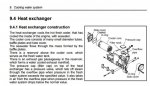
Here is my heat exchanger after 12 years, 1100 hours, I change my coolant every 2 years which comes to about 4 quid.
IMG_1943_zpsyuqkt1fv.jpg
 
Last edited:
Two elements ot the coolant issue - one is correctly identified by VicS, the other is that certain other coolants coagulate in the heat exchanger and forma gel which bungs everything up.

The heat exchanger issue was on early engines before serial number ~5000 which were fitted with a 76 fins per inch, these should all have been replaced by now with the newer fix of 38 fins per inch. The symptom is indeed 15 minutes at 3500rpm or higher will overheat the coolant and set off the alarm.

You will have problems getting the Texaco Havoline coolant as most of the Texaco garages in the UK don't stock it, in favour of another row of sweeties.

However, the coolant standard to all General Motors cars, Vauxhall, Opel, Chevrolet in UK is the correct grade (it actually is Havoline) and isn't fortunes even from the main dealers.

Here is my heat exchanger after 12 years, 1100 hours, I change my coolant every 2 years which comes to about 4 quid.
IMG_1943_zpsyuqkt1fv.jpg
I'm puzzled reading this thread;
Does the 3M30 have wet cylinder liners?
Where are the very finely spaced fins, @ 38 or 76 /inch on the H/E?
Why does this engine turn normally satisfactory coolants to a gel?
Doesn't the image show the sea-water side of the H/E, not the F/W side?
Genuine questions, since I've never owned one.
 
I'm puzzled reading this thread;

Does the 3M30 have wet cylinder liners? I've no idea as I've never looked that closely at mine.

Where are the very finely spaced fins, @ 38 or 76 /inch on the H/E? Ditto

Why does this engine turn normally satisfactory coolants to a gel? I don't believe that it does

Doesn't the image show the sea-water side of the H/E, not the F/W side? Yes, it does, so not very relevant

Richard
 
I'm puzzled reading this thread;
Does the 3M30 have wet cylinder liners?
Where are the very finely spaced fins, @ 38 or 76 /inch on the H/E?
Why does this engine turn normally satisfactory coolants to a gel?
Doesn't the image show the sea-water side of the H/E, not the F/W side?
Genuine questions, since I've never owned one.
If you mix the 'ordinary' green/blue coolant with the Yanmar spec coolant, it turns to lumpy gel. The engine only provides the transport.
The fins are on the exchanger when you withdraw it from the casing.
I don't know about the wet liners or not.

Capture.jpg
 
If you mix the 'ordinary' green/blue coolant with the Yanmar spec coolant, it turns to lumpy gel. The engine only provides the transport.
The fins are on the exchanger when you withdraw it from the casing.

View attachment 60515

Have you any source for this "lumpy gel" thing? I reckon that over the years I've mixed every possible form of antifreeze and I've never seen a single example of "lumpy gel".

I've still no idea where on the diagram the fins at 38/in or 76/in are situated?

Richard
 
Can anyone answer the OPS question about fitting temperature gauges and oil pressure meters. I would also be interested .
 
Can anyone answer the OPS question about fitting temperature gauges and oil pressure meters. I would also be interested .

My understanding is that by the time the engine temp alarm goes off, it might be too late to save the engine! I fitted an alarm to the exhaust as the exhaust temp will go up before the engine temperature is high enough to trigger the alarm. Of course the alternative is to fit a sensor to the water intake that lets you know if the flow stops.
TS
 
Can anyone answer the OPS question about fitting temperature gauges and oil pressure meters. I would also be interested .

Thought the question had been answered, you have the contact to source the parts, just a matter of inentifying the threads, purchasing T piece, senders and gauges bit of wire and you are away.
 
Can anyone answer the OPS question about fitting temperature gauges and oil pressure meters. I would also be interested .

I did it with a 3GM.
Merlin Motorsport were very helpful with senders and adaptors.
There was a tapping on the hot side of the thermostat already, with a plug in it.
Oil pressure was done with a tee'd adaptor.

This was a while back, probably all on ebay now.
 
My understanding is that by the time the engine temp alarm goes off, it might be too late to save the engine! I fitted an alarm to the exhaust as the exhaust temp will go up before the engine temperature is high enough to trigger the alarm. Of course the alternative is to fit a sensor to the water intake that lets you know if the flow stops.
TS
The exhaust temperature will only go up if the problem is lack of seawater flow.
There are other routes to an overheating engine, such as loss of coolant, circulating pump failure, overloading etc etc
 
My understanding is that by the time the engine temp alarm goes off, it might be too late to save the engine! I fitted an alarm to the exhaust as the exhaust temp will go up before the engine temperature is high enough to trigger the alarm. Of course the alternative is to fit a sensor to the water intake that lets you know if the flow stops.
TS
Not in my experience. My engine temp alarm has gone off several times, but the engine is still fine, I just shut it down as soon as I could when the alarm went.
 
Not in my experience. My engine temp alarm has gone off several times, but the engine is still fine, I just shut it down as soon as I could when the alarm went.

I think I have the same engine as you and have had alarm many many times. Slowing to 1500 rpm or so for 30 seconds shuts it off. And the engine IS overheating, have had engineer with laser temp gauge on board when it happens. On the original undersized heat exchanger I could guarantee overheating within 10 mins above 3200 rpm, on the new one it can still happen, but only very occasionally. Engine still runs very well, starts almost instantly, smooth, no smoke.
 
Is your 3YM30 an early 2004/5 one? If so has it's heat exchanger been swapped under warranty for the new version with more tubes? The first 5,000 or so of these engines were fitted with an inadequately specced heat exhanger: the importers grudgingly swapped them for a better one FOC after lots of complaints of overheating at high revs. What annoyed me is that knowing of the problem they did not do a recall or even inform all their dealers.

I met someone the other day with one of these early engines who had not known of this and never had overheating - "..... I never run over 2200 rpm" he said. I suggested he try 3200 for 10 minutes, just in case he ever needs the power in a hurry in bad weather or to tow something large.

It could be your coolant volume issue is crud taking up space in the heat exchanger. Different Yanmar dealers have different opinions on what coolants are safe to use - one saying that unless the yellow Havoline stuff is used you will damage the heat exchanger.

The engine number is 5278 so I may have crept in under the wire as far as the heat exchanger is concerned. I emailed Yanmar in the summer but they did not get back to me. I will do it again to make sure. I gave the engine the beans after changing the coolant to get rid of any air pockets as I was left with a litre of diluted coolant. But none appeared.

I contacted Yanmar importers in the UK the service manager says it is nigh impossible to get all the coolant out of the engine block. Hence I suppose why I have the litre left over. I flushed the engine with water 7 times believing the orange colour was rust but now I realise it is diluted coolant from the crypt.

I am ashamed to say that I believe the coolant was the original from 2005 and I feared that there would be all sorts of horrors awaiting me but the coolant came out bright and clear with only a few bits of gritty material, less than a dessert spoonful.

The fact that there is coolant left in the block no matter what (I even tried a wet vacuum cleaner to suck out the dregs) means that the coolant is not as strong as I planned. Fortunately, we are in Croatia and the chance of frost is minimal but next year I will be pouring in two litres of straight coolant and filling up with distilled water to get the correct ratio.

As to the type of coolant I used Total Glacelf which tallied with all the API (and all the similar organisation numbers) recommended in the Operator/Service manual.

Also, I too keep the revs at 2600 which I feel gives optimum speed and fuel return. I will run it more often at high revs to decarbonise the cylinders. I know I should.
 
I'm puzzled reading this thread;
Does the 3M30 have wet cylinder liners?
Where are the very finely spaced fins, @ 38 or 76 /inch on the H/E?
Why does this engine turn normally satisfactory coolants to a gel?
Doesn't the image show the sea-water side of the H/E, not the F/W side?
Genuine questions, since I've never owned one.

I am puzzled too by this what is in any coolant which could damage metal? That is the point it protects it. What chemical reaction takes place to form this gel?
 
Just a thought but did you drain coolant out of both the drain tap near the oil filter and the allen key headed drain bolt in the lower large hose on the other side of the engine?

It took me a while to find the hose drain and to realise that it needs an allen key (3mm or 4mm, I can't remember). Even so, I reckon I have another 2 litres of coolant in the calorifier coil and its hoses which probably stays in unless you disconnect the hoses and I couldn't be bothered. However, I did flush through with plain water by getting the engine up to temperature a few times and then draining again before adding 4 litres of concentrated OAT coolant (including some in the expansion tank) and then topping up to full with softened water.

Richard
 
Top