
Fitted new fit & forget battery charger, would recommend

Tammany

Well-Known Member
Joined
24 Oct 2015
Messages
694
Visit site
Fitted as part of my new mains install a Paco 7 stage fit & forget battery charger and if your in the market for a charger that doesn't cost the earth it seems ideal. It has led indicators on the side that shows what it's doing in the 7 stages. I have a dual VSR so it connected it to the house battery but it then charges both through the VSR. It also has a fan, on/off switch and is screw mounted. I don't know the long term reliability as of yet but it's doing it's job nicely while the boat is in the yard. It's also negative isolated. They come in 10A & 20A. I opted for the 10A version.
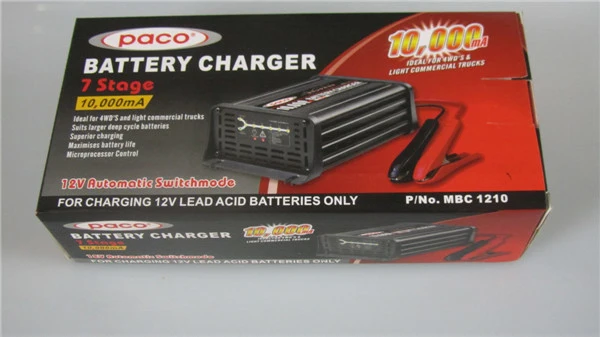
HTB1Eqz1GFXXXXbpXXXXq6xXFXXX9.jpg
 
Hmmm, 10,000mA - that's a lot of mAs. I see it can only cope with up to 200Ah of batteries. Are you worried about the 16v "recondition" stage?
 
Yes, even a bit high for eq. my T105s. Capacity is a bit low for me as well, I might wait until they bring out a 10,000,000,000pA model (fA version would be even sweeter).

In some places it is suggested that Trojan recommend 16.2V for equalising their T105s. It has been suggested that only equalising at 15.5V is what might have killed my T105s :(

10A and even 20A is a bit low for a decent sized bank, unless on permanent shorepower.

I'd be interested to know what the 7 stages are... I thought you got Bulk, Absorbtion and Float, plus Equalisation, (by one name or another).
 
In some places it is suggested that Trojan recommend 16.2V for equalising their T105s. It has been suggested that only equalising at 15.5V is what might have killed my T105s :(

10A and even 20A is a bit low for a decent sized bank, unless on permanent shorepower.

I'd be interested to know what the 7 stages are... I thought you got Bulk, Absorbtion and Float, plus Equalisation, (by one name or another).

Not difficult to find out what they are .......... ask on the forum and some mug will find the info for you ! :)

Desulfation, soft start, bulk, absorption, test, recondition and float
 
There is no need for a charger for the engine start as that is always fully charged in normal use. If you have only one output connect it to the house battery as that is the one that needs the charge. As suggested 10A will only cope with a small bank, but I guess would be adequate for your needs.
 
Not difficult to find out what they are .......... ask on the forum and some mug will find the info for you ! :)

Desulfation, soft start, bulk, absorption, test, recondition and float

I was kind of hoping that the OP might respond.... I am wondering how desulfation differs from recondition, and I dont really know what soft start is, and what can test achieve? Sounds a bit like exaggeration and snake oil to me :)
 
In some places it is suggested that Trojan recommend 16.2V for equalising their T105s. It has been suggested that only equalising at 15.5V is what might have killed my T105s :(

10A and even 20A is a bit low for a decent sized bank, unless on permanent shorepower.

I'd be interested to know what the 7 stages are... I thought you got Bulk, Absorbtion and Float, plus Equalisation, (by one name or another).

Don't think I've seen the 16.2V figure, I'll keep it in mind. I seem to have been lucky so far and never required an eq. charge. I've seen 2 figures indicating when eq. required. First was when SG difference between cells exceeds 0.05 and second was 0.03.

Did temp. corrected SG differences drift past 0.05 fairly often with your batteries? Or did you just do eq. charges from time to time in case?

In the last 5 years the max. difference on my batteries has been 0.025 twice, usually nearer 0.15 and last figures were 0.01.
 
My house battery is a single 110ah and we have no shore power so its only for occasional use. My main source of charging is 200w of solar. It only has one output connected to house but as their is already a vsr for engine charging it also charges the engine battery as vsr works both ways. I'm not worried about high recondition as batteries are probably on way out by then anyways.
 
Why does this charger have a different sequence of processes and parameters from e.g. Ctek, who seem to know what they are doing.

Does it restart automatically if there's a power cut or brown-out ?
 
Does it restart automatically if there's a power cut or brown-out ?

That's a good question. :)

I have a recondition function on my Ctek which I tend to use once a year on my car batteries but I've never been sure whether it actually does very much as the batteries are generally in good condition anyway. However, I'm currently storing an old car for my Son and the battery looks rather old and the starter motor sounds a bit laboured.

A couple of weeks ago I put the battery on normal charge with the 7A Ctek and it showed full charge in about 15 minutes. I thought that was strange as the battery certainly didn't sound like it was virtually fully charged, so I switch the Ctek to recon and ran it again. It went through the recon cycle in 30 minutes or so. I then switched it to normal charge again. This time the minutes turned to hours and it was getting dark until after at least two hours it finally showed fully charged. Remember that this was a battery which was flipping into float voltage a few hours ago and had not be used since that first 15 minute "full" charge.

I tried to start the car and it sounded like a different starter motor as it whizzed round.

I'm a convert to "reconditioning". :)

Richard
 
That's a good question. :)
Almost certainly restarts after a power interruption. There is no "mode" to select manually as there is with some chargers ( the snag with the popular little Lidl one) and it could hardly be described as "fit and forget" if it required some human intervention


I have a recondition function on my Ctek which I tend to use once a year on my car batteries but I've never been sure whether it actually does very much as the batteries are generally in good condition anyway. However, I'm currently storing an old car for my Son and the battery looks rather old and the starter motor sounds a bit laboured.

A couple of weeks ago I put the battery on normal charge with the 7A Ctek and it showed full charge in about 15 minutes. I thought that was strange as the battery certainly didn't sound like it was virtually fully charged, so I switch the Ctek to recon and ran it again. It went through the recon cycle in 30 minutes or so. I then switched it to normal charge again. This time the minutes turned to hours and it was getting dark until after at least two hours it finally showed fully charged. Remember that this was a battery which was flipping into float voltage a few hours ago and had not be used since that first 15 minute "full" charge.

I tried to start the car and it sounded like a different starter motor as it whizzed round.

I'm a convert to "reconditioning". :)

Richard
In the case of the Ctek reconditioning appears to be "equalising" at 15.8 volts. The same as the Paco's step 6.
 
Last edited:
Step 1: removes harmful sulphate deposits before charging starts...

From the diagram it seems to be a process of rapidly changing the voltage and Amps drawn for a period. I've never heard of this, and thought that charging at a high voltage once full was the process to remove sulphation, (equalising).
 
Step 1: removes harmful sulphate deposits before charging starts...

From the diagram it seems to be a process of rapidly changing the voltage and Amps drawn for a period. I've never heard of this, and thought that charging at a high voltage once full was the process to remove sulphation, (equalising).

A well known technique i thought!
 
Sorry for the silly question, how does the VSR work exactly ?

Do you simply connect this charger to your starter battery and connect the VSR across both and then forget about it ?
 
Sorry for the silly question, how does the VSR work exactly ?

Do you simply connect this charger to your starter battery and connect the VSR across both and then forget about it ?

It is a device ( relay) that allows charging of two battery banks from the same source without the volts loss associated with a diode splitter.

The charging source is connected to the battery you want it to give first priority to. The VSR sits between thatone and the other,

When the first reaches a pre set level of charge the VSR operates and connect the other as well.

There are bidirectional VSRs that allow you to connect one source to one battery ( eg alternator to starter battery) and supplementary charging devices, eg battery charger , solar charger etc, to the other.
When either battery reaches the set level it operates and connects the other as well.
 
Sorry for the silly question, how does the VSR work exactly ?

Do you simply connect this charger to your starter battery and connect the VSR across both and then forget about it ?

You could, but it would make more sense to connect the VSR between the two battery banks, but connect the mains charger to the domestic bank and the alternator to the engine battery. You need a dual sensing VSR to do this.

The have separate engine and domestic circuits, if not already fitted.
 
Top