Fishing buoy campaign

Concerto

Well-Known Member
Joined
16 Jul 2014
Messages
6,587
Location
Pwllheli Marina, N Wales
Visit site
This incident of my sheared P bracket (Broken P bracket) has caught the eye of Katy Strickland, editor of PBO, as part of their campaign alongside the RYA and Cruising Association. I have submitted my thoughts on how fishing buoys should be marked.

Have a brightly coloured square flag of dimensions of 400x400mm and with the bottom of the flag at least 1.2 metres above the water.
The main marker buoy should not have a recovery line longer than 2,5 metres with a floating line or 4 metres with a sinking line.
It should have a small white light to illuminate it during the hours of darkness.
Each buoy must be marked with the fishing boat’s registration and contact details.

Any unmarked buoys and fishing gear should be removed by a Fishery Protection Officer and confiscated. This would cost many fishermen a fortune as long lines of lobster pots can be laid between two fishing markers. The new cost of each lobster pot is £60 to £80. I found this out by chatting with many fishermen around the country.

Does anyone have any additional thoughts.
 
Having an AIS beacon would be good, but let’s face it - it’s unenforceable so never going to happen with any reliability.
 
What’s the quid pro quo - if you still manage to hit it and damage it you must pay for the repair?

Scotland has laws. The aren’t as strict as in the OP. Im not totally convinced by flags. The bouys tend to be smaller when flags are used but in high winds they blow flat(ish) in low winds go limp (but could be rigid). More visible in some directions than others. Brightly coloured today can be a bit dull in a few months and almost white in a few years. I’ve never seen a pot marker with lights - even if feasible it seems like “noise” in busy areas and perhaps false confidence against other lights. Solas tape or bike pedal style reflectors could probably help.
 
I personally don't give a damn that they are visible: that puts the onus on us, not the person who deploys them. I want them to be constructed and deployed in such a way that they aren't an entanglement hazard.

It's not too difficult; no floating lines to pick-up buoys, have weighted lines attached well below the surface from substantial floats and the danger would be much reduced imho. But this aspect is always traduced by people worrying about visibility: have they never actually sailed short-handed on a dark and rainy night?
 
On the Chesapeake the problem is crab floats:
  • Every trap has its own float. No strings. So there are more of them.
  • They are small, about 6" x 8". No flag, just a rod about 1" x 10" used to wrap the extra rope.
  • They can be any color. Dark green, blue, black, and brown are local favorites, which pretty much match the dark water. Add some marine growth and they are ... obscure.
We watch for them. They are seldom set in more than 20 feet or less than 5 feet, but that is a lot, since the Chesapeake is pretty shallow. At night it's a real problem. You are only safe(ish) when you approach from deepwater through a channel, since they are not permitted in channels. They are permitted in most common anchorages.

Good luck. You are playing, they are working.
 
It might be small beer to the cray fisherman but if you fall foul of his buoy you are going to cut it off. He loses his cray pot and buoy (and the catch). We sold a regulation second hand craypot for Stg75 (at variance with Concerto's UK prices).

It would be to the fisherman's advantage to mark and deploy the pots clearly and safely.

Our buoys are about 50cm in diameter, polystyrene white with the licence holder's licence # clearly marked. Easy to see when the waters are calm - but impossible to see at night in breaking waves (though I'm not sure a simple, short, flagpole with flag is much use at 2am in breaking waves in the rain).

Considering the cost of crayfish a simply srobe light is, part of, the answer.

Rectangular buoys, solar panel on the top face, strobe light. In Pittwater the yacht club has some permanent markers for the races. They have flashing lights, not plugged into the mains :) (so I assume solar panels and battery). These buoys are tallish, maybe 0.5m and like narrow based pyramids.

It is surely not beyond the wit of man, or woman, to fashion a cheap, reliable, solar, flashing light for the application

Not required for pots deployed within 20m (choose you limit) of shore). Non commercial pots tend to be in the rocks close to shore (and if you're within 20m of a rocky shore - best approach with caution and in daylight). Cray pots can be laid well offshore in Tasmania - on fairly deep rocky reefs.

Jonathan
 
Last edited:
It might be small beer to the cray fisherman but if you fall foul of his buoy you are going to cut it off. He loses his cray pot and buoy (and the catch). We sold a regulation second hand craypot for Stg75 (at variance with Concerto's UK prices).

They are not a single pot, they are a string of many pots. The string is marked at both ends.
 
This incident of my sheared P bracket (Broken P bracket) has caught the eye of Katy Strickland, editor of PBO, as part of their campaign alongside the RYA and Cruising Association. I have submitted my thoughts on how fishing buoys should be marked.

Have a brightly coloured square flag of dimensions of 400x400mm and with the bottom of the flag at least 1.2 metres above the water.
The main marker buoy should not have a recovery line longer than 2,5 metres with a floating line or 4 metres with a sinking line.
It should have a small white light to illuminate it during the hours of darkness.
Each buoy must be marked with the fishing boat’s registration and contact details.

Any unmarked buoys and fishing gear should be removed by a Fishery Protection Officer and confiscated. This would cost many fishermen a fortune as long lines of lobster pots can be laid between two fishing markers. The new cost of each lobster pot is £60 to £80. I found this out by chatting with many fishermen around the country.

Does anyone have any additional thoughts.
You could buy a Kraken. Apparently they are immune to picking up ropes, nets, and all kinds of flotsam and jetsam. 😉
 
I've always had long keeled boats , driven right over them . I just don't understand why someone doesn't make some sort of guard. Like you see on some safety boats outboards.
 
I've always had long keeled boats , driven right over them . I just don't understand why someone doesn't make some sort of guard. Like you see on some safety boats outboards.
They (or at least the one model I’ve used) handling and control on the safety boat heavier, less responsive so I image the average yottie will not appreciate the drag. If you do get something tangled it fiddlier to get it out.
 
They are not a single pot, they are a string of many pots. The string is marked at both ends.
Our commercial pots are the same, a string of pots.

Private pots are one pot, for each owner, and you cannot sell the crays you catch.

The marking of the private pots is the problem area for us, commercial pot markers are much bigger

Jonathan
 
It might be small beer to the cray fisherman but if you fall foul of his buoy you are going to cut it off. He loses his cray pot and buoy (and the catch). We sold a regulation second hand craypot for Stg75 (at variance with Concerto's UK prices).
It is a bit of a balance: mark it with “expensive” gear and it may be less likely to get fouled but more painful for the fisherman when it does. Get lots of fouled gear - mark it with the cheapest floating rope and empty milk bottle so it costs less. If the neighbouring fisherman is using cheap tat he makes more profit than the responsible one. The bigger the gear or spiky / dangly bits make storing and deploying harder.
It would be to the fisherman's advantage to mark and deploy the pots clearly and safely.
In some areas they suggest there is concern about theft of gear or catch. I’m not sure that’s a real issue but there is at least a perception that making a pot very obvious is counter productive for the fisherman - otherwise simple evolution would have made effective pot markers.
Our buoys are about 50cm in diameter, polystyrene white with the licence holder's licence # clearly marked.
I suspect the real issue is you probably have some enforcement officials?

Considering the cost of crayfish a simply srobe light is, part of, the answer.
Do we trust the people who can’t deploy the right length of rope, a clearly visible Bouy etc to select and use a strobe that won’t conflict with nav marks? Do we trust the people who deploy faded bouys covered in weed/slime to check the lights still work? Do we really expect any manufacturer to produce a light which lasts a long time in a very harsh environment, indefinitely at an affordable price? Do we think yachties would still get entangled and complain either the light wasn’t working or wasn’t visible against the background? Do we think the public would report to CG who would need to deploy to confirm it’s not a MOB with strobe?
 
Nice though all of that would be, without enforcement nothing will change, and this isn't ever going to be a priority for the MCA and certainly they won't be resourcing removal of gear unless it has been put somewhere really, really stupid. There are existing recommendatons/regulations in place such as https://assets.publishing.service.gov.uk/media/5a748822e5274a7f9c586bc9/Fishing_Gear_2008_A3.pdf and I think they already have the power to remove anything that is a hazard to safe navigatyion

I'm lucky to be sailing a leisure 17 with an outboard. The biggest issue is sailing at night when it is near impossible to see even well marked gear. If you're lucky you spot it a couple of metres in front of the bow, more often as it goes past the cockpit after a near miss! Then I think about how many must have gone right past that I didnt see at all! I try to avoid going anywhere under engine at night and lift the engine/prop out the water if I can. Then I've got a pretty good chance of just going over the top of it.

Its a hazard, but so are all the floating trees, timber, lost nets and other junk in the sea. Just a risk we have to take and be ready to deal with as best we can if we go to sea, unfortunately. I think a discussion/guidance on what to do if you get caught would achive more than further regulation. On that, I think the main thing would be just to ask for help if you need it and not do anything that puts you in further danger. Boats can be fixed.

My closest run in was in my old boat (with inboard) under power on a windless day off the coast of Jersey with a strong tide behind me, I went over the top of a line, just about saw it in time to get the engine into neutral. It caught on something (probably the pick up buoy was stuck between the prop and rudder skeg), the tension came on the line, the boat swung round and was held fast for about 30 seconds. Then it all came free with a bit of a bang, I saw the buoy pop up behind me and I realised I owed my guardian angel a big favour.
 
Last edited:
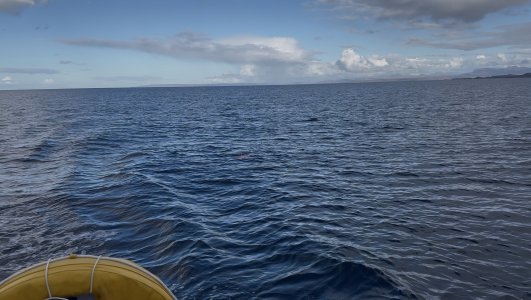
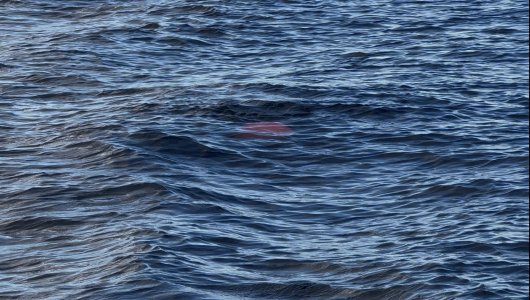
There was a post on the CA or PBO (I don't recall which now) facebook a few months back asking for info / experiences with entanglement. I posted a video showing a pair of bright orange marks, about 30cm under the surface. Not a ripping tide, not very windy (I needed to motor!) and not springs... just a line to the gear that was too short for the location!

Decent lookout running and I was able to spot them in time. had there been chop, swell, darkness etc, I'd probably not have seen them.

A load of "professional" fishers promptly jumped in and moaned about leisure sailors and the cost of lost kit etc...


Best of luck!

IMG_5902.JPEGIMG_5901.JPEG
 
Last edited:
Pot markers are a hazard that can be controlled, and the risk of running over reduced, debris floating about is not mitigated, two potentially different risk profiles that should not be mixed up. These days a lot of scientific instruments are placed in our waters, floating, submerged at some depth, on the seabed, and all are communicated to mariners and the ones considered a hazard to surface navigation marked by a buoy, usually with a flashing yellow light.

Creel markers were originally proposed to be marked in a manner similar to that discussed, it was to be mandatory, however, the fishing industry (in Scotland) lobbied to make proposals voluntary. They are supposed to mark the buoys with the vessel number, the only actual requirement in this context, but that doesn’t always happen.

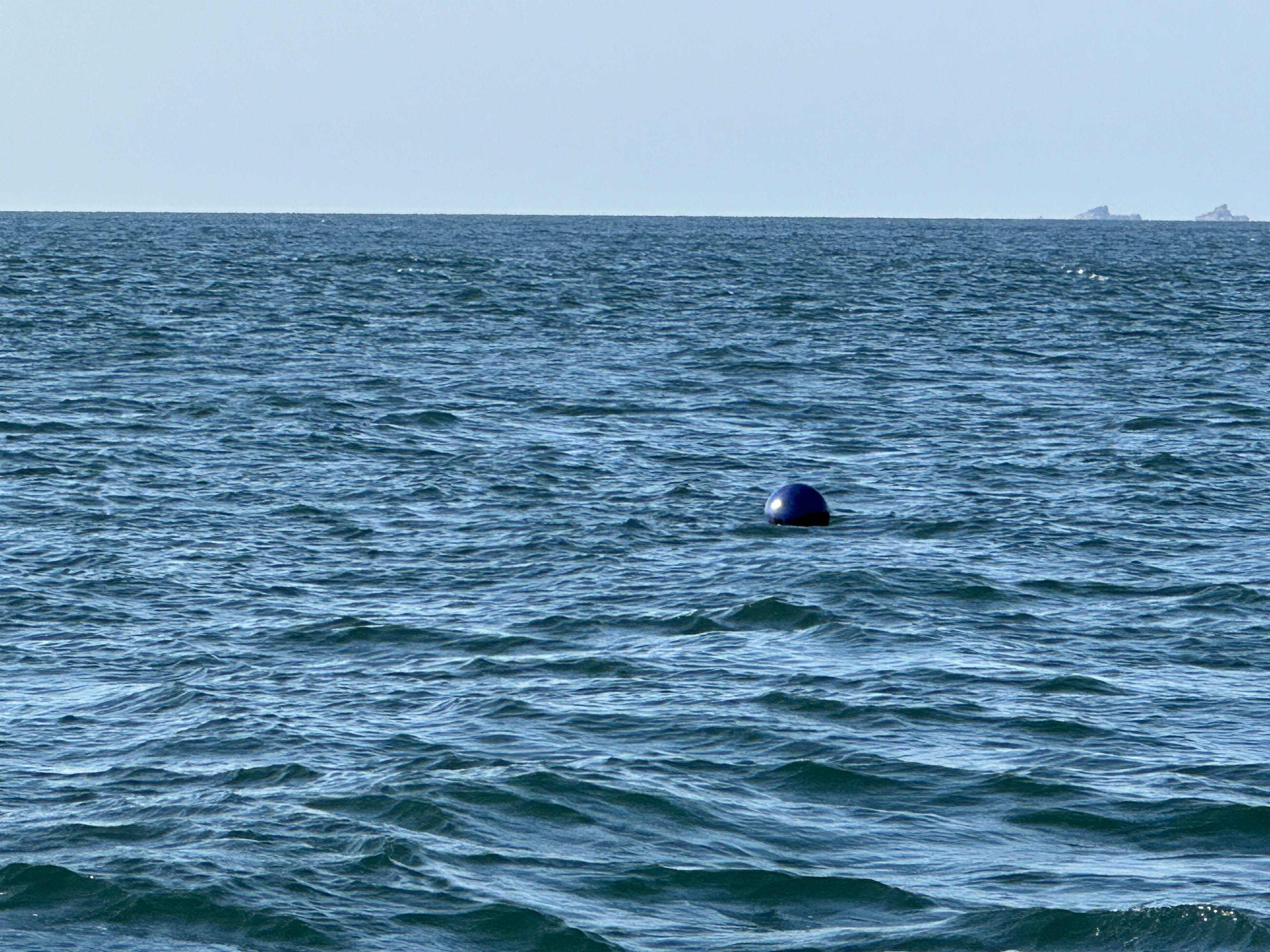
The picture below is from 2024, on Sunday I sailed by the same area, similar pot markers that are unmarked were spotted. No attempt at marking, no attempt to increase visibility. This is in an area of strong current, hence weighted line might not work.

It’s deliberate behavior, and having seen the damage done to a protected area, deliberately by a scallop boat, and how they have behaved over decades, I generally have little respect for fishermen in Scotland.

54012119635_3945b2b1e9_4k.jpg
 
Quite a few years ago sailing past St Vaast we noticed lots of small lights. As we got close found out that they were lights on pot markers. I don't know whether it was a trial by the French as I now try to avoid night sailing.
I've also seen quite large pot buoys, some in deep water, being dragged under by the tide, so trying to keep them visible all the time, regardless of tide is a problem.
 
Top