First cross channel trip

Good point, and the Needles Golf Course is not bad I’m told :)

Trouble is, a peep waiting for the right wind, the right tide, and the right day of the week might end up Waiting for Godot :whistle:
Exactly, plus if you want a couple of mates to come with you, there will always be more organisation.
The whole point of Cherbourg is that you can yot there regardless of tide, assuming you can get out of your own berth.

Yarmouth is a fair 'plan B' is the weather is a bit much.
 
I’ve crossed the channel quite a few times in the distant past.
Never as skipper of my own boat. So you will be one up on me.
Take some back up, have at least one other crew member who’s judgement you trust. You will find it’s nice to have someone to talk to. Particularly about your voyage and plan. Discuss with the whole crew, they will be more confident if they are involved.
It will be more enjoyable all round, if everyone has some involvement and impute. Particularly if conditions turn out to be less than ideal. Be prepared to change goals, in order to keep everyone happy.
 
I seem to detect that one or two here are a bit too keen to demonstrate how rufty-tufty they are, rather than giving sound advice to someone making a first trip.
 
I seem to detect that one or two here are a bit too keen to demonstrate how rufty-tufty they are, rather than giving sound advice to someone making a first trip.
That may be how you imagine it. But if you read the whole thread Im sure you will agree there is a lot of good advice from people with a lot of experience of doing this trip a fair few times. By giving examples of their practical knowledge in order to help, it establishes their credentials rather than some flowery armchair wish list stuff. And becomes meaningful.

I reckon its great. An adventure, going foriegn and enjoying not just being somewhere different but the joy of sailing too. As I said, it might go outside of some peoples comfort zone but pushing oneself a bit never really does harm.

I would say to the OP relax and enjoy, dont get bogged in details. Its a thrill not a trial! Worked for me. (y)
 
So, there you are in Yarmouth, Friday 7:00pm. Say the ebb that night runs from 11:00pm to 4:30am. First light 5:30am.

What is to be done? :unsure:
That says to me " head down 6 hours kip & get going. Pick up a couple of hours or so ebb & you are out the bottle . Plenty of flashing lights about to show the way" Be light by the time you encounter any traffic. Use the engine whilst waiting for the breeze
Personally, I think that the biggest challenge to overcome on one's first Channel crossing (in fact any channel crossing, or longer SH trip) is nerves. generally, once one is underway, that tends to disappear. There is a that attitude of being " marina bound" & getting underway & actually starting is always the hardest bit.
Just think things through, have plenty of nibbles ready, Work out all the nav options, try to have a get out destination including turning back ( there is no shame in that). What to do if it gets a bit choppy. Make sure you are happy that everything works. IE. That means not going if you have been having issues with the engine until you know it will start. Are nav lights Ok etc. Have plenty of fuel.
Charts easily to hand. Is the compass OK? Study & make notes of the destination. Strong tides on the other side so arrive well up tide or up wind. Have a couple of small torches in your pocket. Have some warm clothes in a bag that are easy to grab & put on without having to delve into lockers.
I have a main VHF but use my hand held one most of the time. Take sea sick pills. If you are worried about being tired arrange the cockpit so you can catnap in it whilst underway without going below. I have a lump of sponge for a pillow to rest my head on the cabin top - I get seasick at least 25% of trips so have to work round that.
An autopilot is essential. Make sure that you can reef easily.

You will feel really great when you arrive, then start panicking about how you are going to get home, when you lay in the bunk listening to the wind in the rigging. ( starts to whistle at 15kts, but 15kts inside Cherbourg is 20+ outside the harbour!!)-- You have only done half of it & the wind is rising !!!! "Oh what the h..ll have I done?":unsure:
Then you start worrying about how to get back through to Yarmouth if you catch the tide wrong at the Needles. What end of the IOW should you go?
Oh No:unsure:
It is all part of it.
Enjoy. Because it will become addictive & as soon as you get back, you will be planning your next trip there
 
Last edited:
  • Like
Reactions: dom
I seem to detect that one or two here are a bit too keen to demonstrate how rufty-tufty they are, rather than giving sound advice to someone making a first trip.

On the contrary. To put this in context, I have completed this crossing with at least a dozen forumites with winds ranging from F1-2 drifters, through gentle F3-5 broad reaches, up to F7-9 windward slogs with cockpit glugging greenies coming over the bow.

For comfort I'd say wind strength, sea state, wind direction, warmth, and sunniness are the most important factors (in that order), factors which are in turn functions of nature’s moods, the seasons, the lunar cycle and so on. They have nothing whatsoever to do with our preferred sleeping patterns, desire for a 6am departure, work schedule, traffic on the M27, and so on.

No surprise that experience implores me to advise a first-timer to up sticks and get going when mother nature is smiling; if that means leaving in the middle of the night, fine, you might have a wonderful dawn, be accompanied by dolphins, watch the glow of the sun far beneath the horizon; and if it means arriving in the middle of the night, just be careful watch the lights, and enjoy.

You'll awaken in France, pleased to bits with yourself at completing this 60/70 mile mini-trip, rather than dicking around in Yarmouth, fretting over the dirty weather forecast for Bailey late that night!
 
Last edited:
Quite often I will anchor in Alum Bay for the night before crossing. You're then already through Hurst and so the tidal gate is less of an issue, and all you have to do when you leave is lift the anchor and go.
 
A lot of the advice on tidal timings is aimed at minimizing time on passage. For small boats and small crews fatigue is a real danger (as Seajet noted above) so the quicker the passage the better.
Steering 200 degrees from Bembridge Ledge with 2 knots of tide running at 050 degrees is a slow and depressing start to a long passage, especially if there is a west or southwest wind blowing and you're only making 5 knots through the water. My first crossing was in a Sadler 29 with two adults and two young children so I was keen to make the passage as short as possible. Now we have a bigger boat and a lot more experience things are a bit easier.
 
I keep my boat permanently in France so the Brittany Ferries Captains take care of my Channel crossings, however when I used to sail across I used to spend the first night on a club mooring off Priory Bay, leave around dawn and arrive in Cherbourg in the evening, anchoring just outside Chantereyne marina. Next morning, after a good nights sleep, plenty of berths become available as people leave so you can choose one that suits you.
 
Quite often I will anchor in Alum Bay for the night before crossing. You're then already through Hurst and so the tidal gate is less of an issue, and all you have to do when you leave is lift the anchor and go.
I do similar things if I'm starting a fortnight's two-up cruise going West. In that scenario, a short hop on the Friday eve works well for us. Different constraints because two up we mostly prefer to day sail and timing is heavily influenced by W or E tide.
 
My first crossing was in a Sadler 29 with two adults and two young children so I was keen to make the passage as short as possible. Now we have a bigger boat and a lot more experience things are a bit easier.
My first crossing was the shorter Ramsgate-Calais, but the problems may have been greater, being in a <26' boat with no radio or electronic aids and limited weather forecasting, not to mention a 2-stroke petrol engine. Although it was foggy much of the way, we were younger then and rather enjoyed it. Even forty years later, in a modern, fully-eqipped boat with GPS, radar and AIS, I still spend much of the winter fretting about the problems of a proposed North Sea or Channel crossing and it is only when out there that I relax.

A major step forward is always going to a matter of concern, but if you have done your homework and the proposed trip is within your competence, there is no reason why it should not be an enjoyable and satisfying experience.
 
TBH I can't be bothered to anchor and wait for daylight to cross. I don't sleep well because I'm thinking about the crossing, I would rather get going as I quite enjoy night sailing, arrive in the early hours or at dawn, tie up on the waiting pontoon and then have a kip, then when I wake up, the boats that are going have gone leaving me a choice of pontoon spaces to go on to and I save myself a nights pontoon fees ;)
 
Timing, Is very much personal preference,
Some people, love to set of early and get their early. Doing it all in one go.
I find it usually takes the best part of a day to get ready to set off, by the time we have all done all the buggering about we
usually require to get ready for anything, Even so I like to get going. I’m not keen on 0400 starts, feels kind of like work. When I go sailing, I switch to island time.

I don’t like spending the first night on the boat in my home port. I like to get somewhere. After all the messing about getting ready, I like to get going. Even if it’s just across the bay and round the first corner. Into the next pub, Then it feels like I am on a voyage.

When I used to charter a boat for a trip. I would often have specific goals. Places to be and of course how far could I go and be sure to get back. I used to want to make as much of the time available as possible. 50 60 even 100 mile days

Now I have my own boat, I don’t achieve nearly as much,. I just go with the flow as I feel like it. 5, 6 even 10 mile days are quite normal.

I quite enjoy night sailing, setting of after lunch and getting there when I get there. The night sky and sunrise at sea are both quite special.
One particular feature of the Channel at night I remember and enjoyed. The Looms of the light houses.
We just don’t have lights like them here.

The night particularly the early hours before sunrise, have a tendency to be long, cold and weary.
When I do a night sailing, those are my hours.
 
Last edited:
And if the weather goes duff, take an extra day or two off or go back by ferry; more people get in bother with ' have to be back at the office on Monday ' than anything else.

This is probably the most important tip yet. Don't feel under pressure to get back just 'cos the boss will be grumpy if you don't turn up on Monday. If he's that grumpy, take the ferry - or change bosses

I've only taken Jissel (Snapdragon 24) across once; we anchored in Luccombe Bay overnight then set of at yawn of sparrow - more because we were awake than because the passage plan said so. We motorsailed because what wind there was was almost on the nose and, TBH, the crossing was pretty boring. Land behind us, ships from the left, ships from the right, land ahead. In through the planned entrance, found a spot on the outside pontoon and, as the fenders kissed the pontoon, Milady stepped ashore with a line. Our arrival provoked a serious meerkat moment because we were the smallest visitor by at least 6 feet, so it was gratifying to get it right. Two minutes later, we were sorted, one minute after that, we had a rather smug aperitif in our hands.

Coming back, we had an uneventful sail to Poole harbour. It was gratifying to watch a coaster alter course to pass behind us, as I never rely on them having anyone on the bridge paying attention.
 
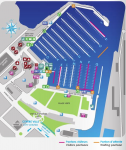
When people refer to " waiting pontoon"( noted in an earlier post but cannot find it now) in Cherbourg. I always thoughtthat the outer non connected pontoon was for very large yachts & not a "waiting pontoon" as such. In fact small boats stuck half way along it could be a real pain in the rear to a large yacht wanting to get on to it.
Am I correct?
 
........experience implores me to advise a first-timer to up sticks and get going when mother nature is smiling; if that means leaving in the middle of the night, fine, you might have a wonderful dawn, be accompanied by dolphins, watch the glow of the sun far beneath the horizon; and if it means arriving in the middle of the night, just be careful watch the lights, and enjoy.

...... dicking around in Yarmouth, fretting over the dirty weather forecast for Bailey late that night!


All for going when matters suit, but

Spending a day at work, driving down to the boat, rigging it and setting off on your first cross channel passage, overnight. Is a poor option.


.
 
Last edited:
1578228410434.png

That is not correct. There is nothing to stop small craft using it. Large yachts usually berth on the East side of Q.

The waiting pontoon is also used when the fishermen are staging a protest and have stretched a rope the end of Q to the end of E. :)
 
All for going when matters suit, but

Spending a day at work, driving down to the boat, rigging it and setting off on your first cross channel passage, overnight. Is a poor option.


.
It's not a poor option if you and your crew are capable of running a reasonable watch system.
If there's 3 of you, you can have 2 on deck at any time and all get sufficient sleep.
Different people prefer different watch systems. That could be a whole different thread.

Personally I'd struggle to get real quality sleep on an unfamiliar boat moored somewhere knowing I was going to be setting off at comedy-AM. Even on a daylight trip I'd be wanting some time off watch.

If you've never done night sailing with watches, then a little nocturnal jaunt west could be worthwhile, it's a useful step to a far more versatile mode of sailing.

If you want crew to come back, it's worth investing time in developing their skills and confidence and showing some trust in them by being prepared to get your head down while they're in charge.
IF you're not going to do that, you're really just either day-sailing or pushing your luck with singlehanded endurance.
 
Top