
Fids for splicing dyneema

On uses of shackles and soft shackles.

If I was buying a new yacht I would have a different view and look more critically but for an existing yacht my thoughts are.:

I have expensive stainless shackles that do the job for which they are intended. I have had one shackle fail in the last 20 years and I have dropped one shackle pin. If I replace existing shackles then I have a pile of expensive shackles collecting dust and soft shackles do not come free. Consequently to use a soft shackle it must have advantages over stainless shackles. I would save weight - but I really don't think I will notice the difference.

I already sew the headsail sheets together using hollow dyneema tape and cow hitching to the sail (so I have a perfectly smooth interface which slips over forestays with nothing, not even a diamond knot to hang up). This application does not replace a stainless shackle -the idea of using a shackle fills me with horror - but replaces a bowline.

So which are the applications where soft shackles are factorially better than stainless?

The suggestion from. LadyInBed to use a common braid to make shackles where strength is not required has logic - but I prefer equipment not to offer any mistakes - I would not want someone using a 'weak' soft shackle thinking it is dyneema in a strength critical application. So all my stainless shackles and my gal shackles are to the same specifications and I would want the same for soft shackles. If I could make my 'weak' soft shackles with, say, blue cover, that would be different (and strong ones with a red cover?) - instant differentiation. Is there are YouTube vid where they make soft shackles with an integral outer cover as part of the shackle? - So not a loose sleeve (which would be one option)? The problem with using the braided cover from the end of a sheet - how do you neaten the ends of the sleeve - easily and quickly.

No-one has mentioned use of dog bones?

Jonathan
 
On uses of shackles and soft shackles.

If I was buying a new yacht I would have a different view and look more critically but for an existing yacht my thoughts are.:

I have expensive stainless shackles that do the job for which they are intended. I have had one shackle fail in the last 20 years and I have dropped one shackle pin. If I replace existing shackles then I have a pile of expensive shackles collecting dust and soft shackles do not come free. Consequently to use a soft shackle it must have advantages over stainless shackles. I would save weight - but I really don't think I will notice the difference.

I already sew the headsail sheets together using hollow dyneema tape and cow hitching to the sail (so I have a perfectly smooth interface which slips over forestays with nothing, not even a diamond knot to hang up). This application does not replace a stainless shackle -the idea of using a shackle fills me with horror - but replaces a bowline.

So which are the applications where soft shackles are factorially better than stainless?

The suggestion from. LadyInBed to use a common braid to make shackles where strength is not required has logic - but I prefer equipment not to offer any mistakes - I would not want someone using a 'weak' soft shackle thinking it is dyneema in a strength critical application. So all my stainless shackles and my gal shackles are to the same specifications and I would want the same for soft shackles. If I could make my 'weak' soft shackles with, say, blue cover, that would be different (and strong ones with a red cover?) - instant differentiation. Is there are YouTube vid where they make soft shackles with an integral outer cover as part of the shackle? - So not a loose sleeve (which would be one option)? The problem with using the braided cover from the end of a sheet - how do you neaten the ends of the sleeve - easily and quickly.

No-one has mentioned use of dog bones?

Jonathan

The tang for the mainsheet at the end of our boom has a thin area worn through by using a steel shackle. On the delivery trip for our boat, we used the snapshackle that the mainsheet was supplied with, at one point the snapshackle jammed in the tang and forced itself open. Using a soft-shackle here eliminates both of these problems.

re: cost
In the UK, you can mail-order 100m of 6mm hmwpe for £180. That makes it less than £1 per soft-shackle. I'm not suggesting that you replace all your existing shackles, until you see a direct benefit for each replacement, but bear in mind, the cost of your stainless shackles is already a sunk cost.
 
I have used dog bones. I've seen them on Volvo boats.

  • Slightly stronger
  • Easier to make consistently strong
  • Easier to handle if you can't get complete slack (sail clew, for example) or with gloves on
  • The noosing eye can be dispensed with in some applications
  • And though not terribly important, easier to remember. Just a pass-through and two eye splices.
But they do have metal, you have to either buy or be able to fabricate the dogbone (pretty easy), and they are slightly bulkier.
 
I have used dog bones. I've seen them on Volvo boats.

  • Slightly stronger
  • Easier to make consistently strong
  • Easier to handle if you can't get complete slack (sail clew, for example) or with gloves on
  • The noosing eye can be dispensed with in some applications
  • And though not terribly important, easier to remember. Just a pass-through and two eye splices.
But they do have metal, you have to either buy or be able to fabricate the dogbone (pretty easy), and they are slightly bulkier.

Are they stronger?

I would prefer not to have bits of metal in the clew in case it hits me.

I know I keep banging on about it, but the overhand knot soft shackle is very easy to remember, which is why I like it. It's a sliding loop, 2 buried ends and an overhand knot.
 
Are they stronger?

I would prefer not to have bits of metal in the clew in case it hits me.

I know I keep banging on about it, but the overhand knot soft shackle is very easy to remember, which is why I like it. It's a sliding loop, 2 buried ends and an overhand knot.

I find Allen Bros innovative and like much of their kit. They tend to focus on dinghy sailing but a lot of what they make can be upsized for our applications. If they like dog bones (and they have some of the right size for a yacht, they are used on Volvo yachts - then I would not discount them.

I'd rather not be hit by a clew at all, the ring itself is a significant hazard as is to a lessor extent, even, an overhand knot (which is one reason we use a Dyneema braided hollow tape and cow hitch). The problem with a cow hitch (they are all a compromise) is that it tightens and I use pliers to free it up. Once its loosened its easy as the Dyneema is very slippery. You then need 'unthread' both sheets, which can be a major inconvenience.

My application is a bit like Antal's sector rings 12mm SectoRing spinning ring and I am using the soft shackle to secure/retain the ring (the LFR) and hold the retaining guide which is being 3D printed.

I am going to use a overhand knot (you have sold them to me :) ) in my next soft shackle - its easier (and I'm not a purist).
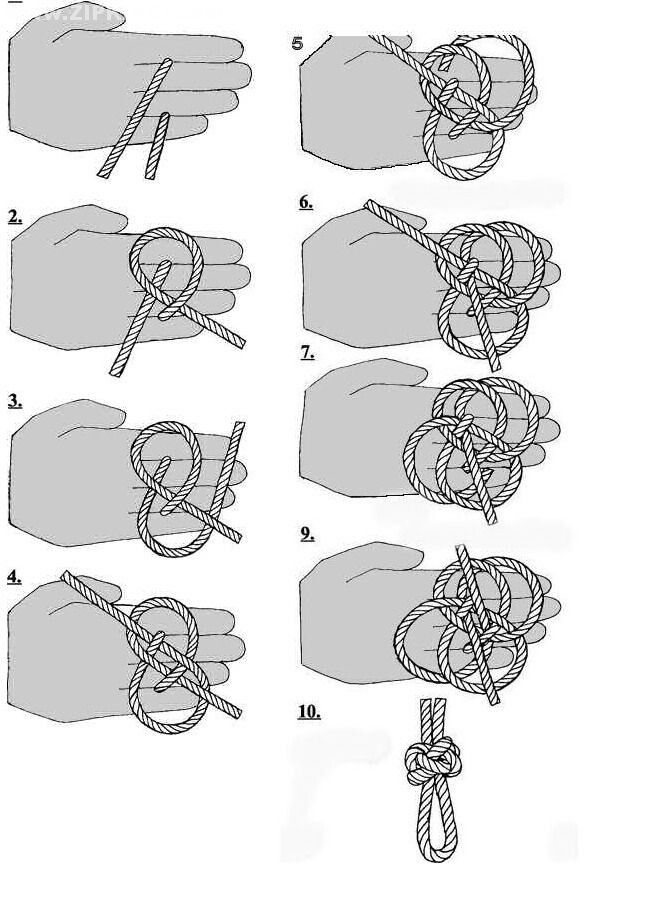
I don't think there is any one right way of attaching a component to something else, stainless shackles have their place as do soft shackles - it depends on the application. I'd guess there are a number of ways of making soft shackles - I don't think any are more right than others - dog bones will have their place. I would have used dog bones, as they seem to offer a more secure closure, but I don't have any nor have any aluminium rod (so cannot easily make some). So overhand knot it is. I wonder if a dog bone might be better to secure a soft shackle for a snubber/bridle to chain connection.....? More secure, easier to apply and disengage.

Jonathan
 
My ‘lock down‘ project was learning to make soft shackles.
I bought reel end dyneem, so not expensive and after some experiments decided the ‘improve’ soft shackle using a Button Knot, where the ends are buried was best and not particularly difficult. I used my existing Selma Fids- not as good as a needle splicer , but not difficult.
Very satisfying once you’ve mastered it.
 
I recently did a delivery trip on a 72ft racer cruiser. They didn't use stainless steel shackles at all. Everything was done on on soft shackles.
I have recently made a load of soft shackles to take back to the boat.
Another copy I will be doing from the race boat is changing how my preventer works. Often we won't rig the preventer before we leave, thinking we won't need it. As a result, one of us ends up hanging over the guard wires trying to attach the preventer to outer end of the boom. Not really a great solution and probably one of the riskier moves on the boat. Instead, we will now have the preventer permanently attached at the outer end of the boom but it will be a short line that ends at the kicker attachment to the boom. Here it will be attached to the kicker with a short strop and toggle. When we need the preventer we simply attach the additional part of the preventer at the kicker with a soft shackle rather than at the outer end of the boom. The preventer will be two piece or three piece if you have rigged both forward sections for both tacks. We use low friction rings and dyneema strops where the forward end of the preventer attaches through the aluminium toerail. Always room for improvement
 
I recently did a delivery trip on a 72ft racer cruiser. They didn't use stainless steel shackles at all. Everything was done on on soft shackles.
I have recently made a load of soft shackles to take back to the boat.
Another copy I will be doing from the race boat is changing how my preventer works. Often we won't rig the preventer before we leave, thinking we won't need it. As a result, one of us ends up hanging over the guard wires trying to attach the preventer to outer end of the boom. Not really a great solution and probably one of the riskier moves on the boat. Instead, we will now have the preventer permanently attached at the outer end of the boom but it will be a short line that ends at the kicker attachment to the boom. Here it will be attached to the kicker with a short strop and toggle. When we need the preventer we simply attach the additional part of the preventer at the kicker with a soft shackle rather than at the outer end of the boom. The preventer will be two piece or three piece if you have rigged both forward sections for both tacks. We use low friction rings and dyneema strops where the forward end of the preventer attaches through the aluminium toerail. Always room for improvement
That's exactly how I have my preventer rigged. In its first iteration the strop went to the kicker, but I still found myself leaning out a bit, so it now runs all the way to the gooseneck (why not?!) so I can attach it at my leisure!
 
After trying many I ended up using this graphic to tie the diamond knot. Still need to have a look but can tie one quick now.


dbd2ab19b5f31be252aaa55e8ce18716.jpg


Then to test/ bed in the knot , chaffed section was left deliberately. Still couldn't break it >
kkS0ZI9.jpg


And a shackle >

51yn4EZ.jpg


V0.0.1 load test rig which should work on deck eventually. Maybe with some kind of load cell.

6I9LRoq.jpg


Never seen a dog bone on a boat yet, no point going that way for a more secure join, soft shackles just don't come undone. ?
 
That's exactly how I have my preventer rigged. In its first iteration the strop went to the kicker, but I still found myself leaning out a bit, so it now runs all the way to the gooseneck (why not?!) so I can attach it at my leisure!
Same here! But with permanently rigged preventer each side, dyneema terminating in a "chinese finger" rope clutch all in dyneema so moments to deploy & tension, also the rope clutch makes it easy to easy the tension under control even with huge load on it, like after an uncontrolled gybe...
 
That's exactly how I have my preventer rigged. In its first iteration the strop went to the kicker, but I still found myself leaning out a bit, so it now runs all the way to the gooseneck (why not?!) so I can attach it at my leisure!
My gooseneck area gets a little crowded. We have a reefing line bag suspended under the boom just back from the gooseneck. I saw that on another boat some time back and really liked the idea so we copied it you just stuff the reefing lines in the bag rather than coiling them.
Bringing the preventer back to the gooseneck would foul the bag. On our boat I don't think it will be a problem coming back to the kicker. If I was to attach the preventer at the gooseneck then half the time it would be on the wrongside of the kicker so I would have to reroute it around the kicker anyway.
 
My gooseneck area gets a little crowded. We have a reefing line bag suspended under the boom just back from the gooseneck. I saw that on another boat some time back and really liked the idea so we copied it you just stuff the reefing lines in the bag rather than coiling them.
Bringing the preventer back to the gooseneck would foul the bag. On our boat I don't think it will be a problem coming back to the kicker. If I was to attach the preventer at the gooseneck then half the time it would be on the wrongside of the kicker so I would have to reroute it around the kicker anyway.

My strop is actually two, one for each side, it has to be because of where the mainsheet attaches.

Permanently rigged preventer line on each side led to midships cleats. When the pole is out to windward, the redundant preventer becomes the foreguy.
 
I recently did a delivery trip on a 72ft racer cruiser. They didn't use stainless steel shackles at all. Everything was done on on soft shackles.
I have recently made a load of soft shackles to take back to the boat.
Another copy I will be doing from the race boat is changing how my preventer works. Often we won't rig the preventer before we leave, thinking we won't need it. As a result, one of us ends up hanging over the guard wires trying to attach the preventer to outer end of the boom. Not really a great solution and probably one of the riskier moves on the boat. Instead, we will now have the preventer permanently attached at the outer end of the boom but it will be a short line that ends at the kicker attachment to the boom. Here it will be attached to the kicker with a short strop and toggle. When we need the preventer we simply attach the additional part of the preventer at the kicker with a soft shackle rather than at the outer end of the boom. The preventer will be two piece or three piece if you have rigged both forward sections for both tacks. We use low friction rings and dyneema strops where the forward end of the preventer attaches through the aluminium toerail. Always room for improvement
Ran the preventer like that for years on Dad's boat. It works brilliantly. We ran 2 dedicated lines to the pole down fitting on the foredeck, and back to clutches at the companionway. If you were careful about rigging them (i.e thought carefully about where the boom would be after the gybe relative to the shrouds etc) you could run both simultaneously, so that through a gybe you just eased one then took up on the other after the gybe without even having to leave the cockpit.
The only modification we made was that originally we used 2 spare harken ball bearing blocks. After blowing one up in an accidental gybe (no I wasn't driving) we bought some good old fashioned lewmar solid pin blocks for that purpose.
 
Ran the preventer like that for years on Dad's boat. It works brilliantly. We ran 2 dedicated lines to the pole down fitting on the foredeck, and back to clutches at the companionway. If you were careful about rigging them (i.e thought carefully about where the boom would be after the gybe relative to the shrouds etc) you could run both simultaneously, so that through a gybe you just eased one then took up on the other after the gybe without even having to leave the cockpit.
The only modification we made was that originally we used 2 spare harken ball bearing blocks. After blowing one up in an accidental gybe (no I wasn't driving) we bought some good old fashioned lewmar solid pin blocks for that purpose.
When mr (faulty, now fixed) Hydrovane was steering we had a huge accidental gybe that exploded the preventer snatchblock on the bow and ripped the kicker off the mast. We don't use a block on the bow any more, we lead the preventer through a low-friction ring soft-shackled to the pad eye on the bow instead.
 
When mr (faulty, now fixed) Hydrovane was steering we had a huge accidental gybe that exploded the preventer snatchblock on the bow and ripped the kicker off the mast. We don't use a block on the bow any more, we lead the preventer through a low-friction ring soft-shackled to the pad eye on the bow instead.
We set up that system in about 2006, and sold the boat 5 years ago.... If starting again now I probably would go for low friction rings, and soft shackles instead of the snap shackles we had...
 
Ran the preventer like that for years on Dad's boat. It works brilliantly. We ran 2 dedicated lines to the pole down fitting on the foredeck, and back to clutches at the companionway. If you were careful about rigging them (i.e thought carefully about where the boom would be after the gybe relative to the shrouds etc) you could run both simultaneously, so that through a gybe you just eased one then took up on the other after the gybe without even having to leave the cockpit.
The only modification we made was that originally we used 2 spare harken ball bearing blocks. After blowing one up in an accidental gybe (no I wasn't driving) we bought some good old fashioned lewmar solid pin blocks for that purpose.
I also have a permanent boom length preventer. I stitched a meter of bungee as a core into 6 mm dyneema with slack over it so its sprung tight when stowed and will have a little give when in use. All the strength of the dyneema but with some give.
 
I also have a permanent boom length preventer. I stitched a meter of bungee as a core into 6 mm dyneema with slack over it so its sprung tight when stowed and will have a little give when in use. All the strength of the dyneema but with some give.
That's a very good idea. Definitely something I'd implement if setting a similar system up again.
 
Top