Fenestrated rudders

doris

Well-Known Member
Joined
19 Jun 2001
Messages
2,265
Location
London
Visit site
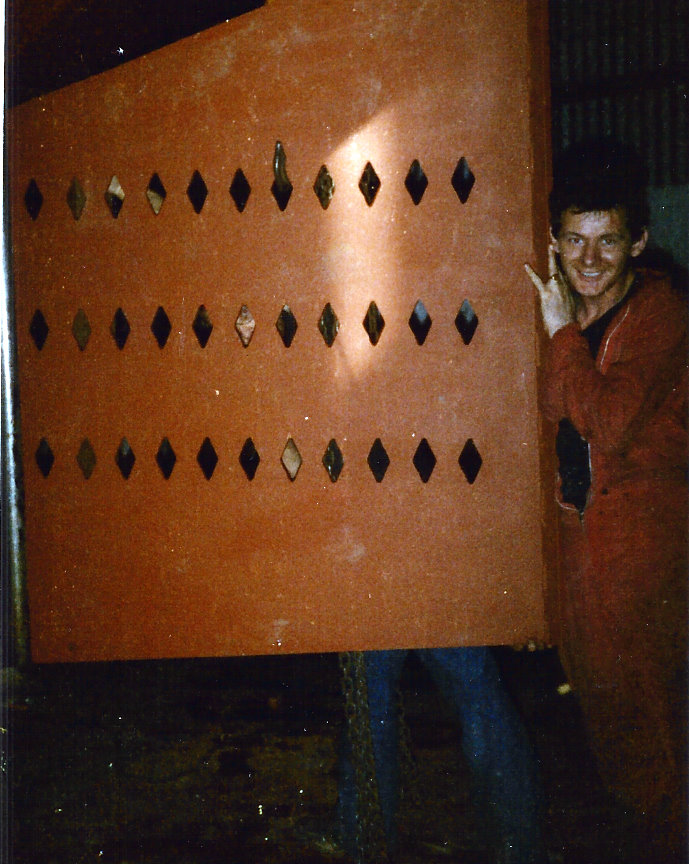
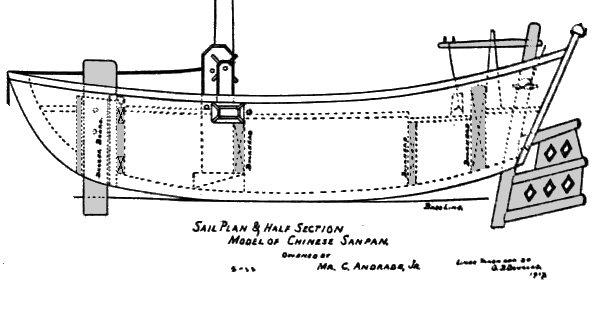
A sailing mate with an engineering background, who happens to own a delightful Gunter rigged trailer sailer, raised the question of why junks used fenestrated rudders. The, usually, diamond shaped holes were discovered to ease the pressure on the helm with no loss of steering efficiency.
This concept also appeared in the first half the 20 century iron freighters.
Has it ever been used in yachts? Would it have benefits to a modern design? It's seemed illogical but worked so the chinese stayed with it.
We rarely see a junk rig despite it being a very good cruising set up, does the same apply the rudders with holes?

Monday morning pondering.
 
never heard of them until your post

Rudder.jpg


l2691-003.jpg


sampan_profile.gif
 
Not clear to me what the benefit is of holes in the rudder, which couldn't be more easily achieved by simply having a smaller rudder. Or same overall area, but closer to the stock.

All those holes must add up to lots of unnecessary drag. Surely the rudder only works by the sideways-deflection of water moving past the hull...putting holes in it can't help that.

I nearly defenestrated my rudder last year when I couldn't fix the cracks in it. :rolleyes:
 
Not clear to me what the benefit is of holes in the rudder, which couldn't be more easily achieved by simply having a smaller rudder. Or same overall area, but closer to the stock.

All those holes must add up to lots of unnecessary drag. Surely the rudder only works by the sideways-deflection of water moving past the hull...putting holes in it can't help that.

I nearly defenestrated my rudder last year when I couldn't fix the cracks in it. :rolleyes:

Conventional wisdom is that stearing effort comes from pressure on the rudder face, thus reducing that reduces turning effort. One thought though is that the les of pressure is proportional to the effort required thus at higher speeds through the water you need less effort for the same turning efffect but at low speeds you lose less effort from the holes.
 
The holes are probably to let the devils out, or a bad case of teredo.

I can't imagine that the junk goes fast enough for the rudder to suffer from aeration problems, which the holes would help to re-attach the waterr flow.
 
Presumably the Chinese invented the holes because they hadn't thought of inventing a balanced rudder.
 
Fascinating design quirk - I'd never heard of it before now.

On a modern boat the rudder provides a certain amount lift. Presumably making holes in it would equalise the pressure on either side of the foil and reduce the effect? I am no hydrodynamics expert so please correct me if I'm wrong.

Edit - it goes without saying that a well balanced boat, and even better one with a balanced rudder obviously negates the need for this kind of thing.
 
Last edited:
When Slocum built the Liberdade to get home from S. America, he incorporated the diamond holes in her rudder. Not one to waste effort, he clearly thought they were worth it.

We have a chinese model of a war Junk, well over 100 yrs old. Naturally, it has the holes.
 
Edit - it goes without saying that a well balanced boat, and even better one with a balanced rudder obviously negates the need for this kind of thing.

Or, to look at it th eother way around, if this is effective it negates the need for a balaced rudder! (e.g you can have a transom & keel hung rudder without complication.)
 
I read somewhere that on some smack´s a big hole was made in the forefoot of the keel. Big enough to put your arm through.
It had something to do with going trough the wind. Loose some vacuum behind that huge keel.
The hole was not to pull the boats up the beach although it could be used for that purpose.
 
Top