Exhaust Bellows Come off

Bigplumbs

Well-Known Member
Joined
7 Nov 2015
Messages
8,161
Location
UK
Visit site
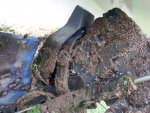
Sad day as I pulled my boat out for the end of the season. When cleaning up the hull etc I noticed that the exhaust bellows had come off at the leg end. You can see it in the attached pic. The leg is an Alpha 1 Gen 2. These bellows are quite new (2 seasons) and the rubber is good. Is there a way I can get these back on without having to take off the whole leg. Also anyone know the Jubilee clip size as I lost that. I think they came off when I put the gear full up once the boat was on the trailer

Thanks

Dennis
 

Attachments

  • DSCF8532 (Medium).jpg
    DSCF8532 (Medium).jpg
    96.5 KB · Views: 3
Also be aware that aftermarket bellows have a reputation of being too stiff so they tend to pull off. Genuine mercruiser ones are softer and more pliable so stay in place better. I struggled for weeks to get mine to stay in place until an engineer advised to buy the real part.
 
I'm guessing two seasons = two years.

Bin it, replace. Potential hull loss for the sake of a few quid....

Why do you say potential hull loss this is the exhaust bellows not the UJ Bellows. How would water get in the exhaust bellows.

And it is not just a few quid when you consider what is needed to do the job

Dennis

Dennis
 
Also be aware that aftermarket bellows have a reputation of being too stiff so they tend to pull off. Genuine mercruiser ones are softer and more pliable so stay in place better. I struggled for weeks to get mine to stay in place until an engineer advised to buy the real part.

Thanks Mike the problem is I don't know if mine were genuine or after market
 
Its Martin, not Mike :)

There is quite a considerable difference in feel and thickness of the rubber. Basically if the bellows is difficult to bend onto the exhaust flange then it is more likely to be aftermarket, the real ones are much softer.

On the "hull loss" comment. It is quite common to not have bellows at all on Mercruiser set-ups. Mercruiser produce an exhaust "trumpet" which is a standard part and, whilst usually fitted to the big V8s, does exist for the alpha drive on the 3 litre. This is not a sealed part at all so Mercruiser do not seem to consider hull loss an issue on the exhaust side. I guess that if there was a failure elsewhere in the raw water side it might be an issue. Our V8 on a Bravo 3 drive has the trumpet as standard.
 
Just ditch the bellow altogether, or as I did use the exhaust bellow from a bravo3 ( it's a straight rubber tube which only attaches on one end) yes it fits the earlier alpha drive
 
Its Martin, not Mike :)

There is quite a considerable difference in feel and thickness of the rubber. Basically if the bellows is difficult to bend onto the exhaust flange then it is more likely to be aftermarket, the real ones are much softer.

On the "hull loss" comment. It is quite common to not have bellows at all on Mercruiser set-ups. Mercruiser produce an exhaust "trumpet" which is a standard part and, whilst usually fitted to the big V8s, does exist for the alpha drive on the 3 litre. This is not a sealed part at all so Mercruiser do not seem to consider hull loss an issue on the exhaust side. I guess that if there was a failure elsewhere in the raw water side it might be an issue. Our V8 on a Bravo 3 drive has the trumpet as standard.

Sorry Martin got confused. Thanks for you help. I am still learning about inboards I am more of an outboard sort of guy

Dennis
 
Just ditch the bellow altogether, or as I did use the exhaust bellow from a bravo3 ( it's a straight rubber tube which only attaches on one end) yes it fits the earlier alpha drive

So are you basically saying that if the bellows is not connected at the outer end (the opposite end to the transom) all that will happen is the exhaust will come out here and not lower down.

If I don't have to connect it it would be much better as it looks a right pain to do

Thanks

Dennis
 
So are you basically saying that if the bellows is not connected at the outer end (the opposite end to the transom) all that will happen is the exhaust will come out here and not lower down.

If I don't have to connect it it would be much better as it looks a right pain to do

Thanks

Dennis

Yes that's right.
The bravo bellow does just about reach the exhaust inlet on the leg when it's fully trimmed down/steering straight so some exhaust still exits through the prop. In all other situations the gases escape at the end of the bellow.

On a side note it makes checking the condition of the retaining clips on the UJ bellows each year much easier!
 
Yes that's right.
The bravo bellow does just about reach the exhaust inlet on the leg when it's fully trimmed down/steering straight so some exhaust still exits through the prop. In all other situations the gases escape at the end of the bellow.

On a side note it makes checking the condition of the retaining clips on the UJ bellows each year much easier!

Many thanks for that. It could be that mine was never connected. Nice to know I have not got a horrible job to do. I have got to replace my trim gauge sender though but I think I will do that the easy way through the transom at high level. Why mercruiser put them through where they did is a mystery to me.

I am pleased for your comment as when I read the comment about hull loss I was a little depressed

Regards

Dennis
 
I just thought however. With the bellows not connected is it not possible if you stop suddenly or in a chop that a wave/Water could go in the bellows and up and over the manifold into the engine ?

What is there there to stop that ?

Dennis
 
No problem.
The uj bellow & gear shift cable bellow are the ones that let the water in!

The uj bellow has metal earth tabs which clip on each end underneath the jubilee clips, which reduce corrosion to the jubilee . Oddly there isn't an earth clip for the gear cable bellow! So the jubilee can corrode quite rapidly

I'd change that jubilee every year or make up an earth clip like I did
 
As others have said,it's not a major problem if the exhaust bellows comes off the drive, the exhaust gases just exit at the bellows rather than out of the prop.

I had similar happen to me a few years ago
 
Top