Excellent New Drone for Boating - DJI Mini 2

Actually, P, none of the avoidance sensors would be able to pick out a boat's shrouds.
So sensors wouldn't have helped in that case.

My Mavic Air 2 sensors randomly pick up shrouds, aerial whips etc. which is actually a problem on a smaller boat. Recovering it back to the boat it keeps stopping and reversing away. I have to turn off the sensors or approach sideways to prevent any sudden unintentional backing off by the drone.
 
Just a few points about drones which doesn't seem to be discussed ...

The Mini 2, and the Mavic Mini are both under 250g - this is quite important with regard to flying in urban areas - when compared to drones over 250g - and this is take-off weight (MTOM Maximum Take Off Mass), so the floats will take the drone over 250g and put it in the next category. This has been confirmed by the CAA in the UK - it is take-off weight under 250g that matters.

The Mavic Mini 1 is 249g - so be careful even with motor covers, landing legs, and any other accessories you add to the drone, the Mini 2 is actually around 242g so there is some scope for accessories.

The following are the EU EASA Drone rules which are going to come into force across Europe (and the UK CAA has said they will adopt EASA rules even with Brexit) from 01.01.2021

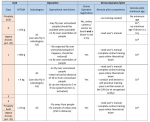
All drones used for leisure use are flown in the "open" category - max altitude 120m, visual line-of-sight at all times, or using a spotter if flying FPV. Drones are further divided into sub-catagories A1,A2,A3 of the "Open" category which determines how close to people you can fly - this is where drone weight is important.


1605000035166.png
If you are flying for non-commercial, hobby use then in the open category.

A1 is the under 250g (Mavic Mini, Mini 2)

Rule: You are required to minimise flying over uninvolved people.

A2 is 250g-900g (Mavic Air 2)

Rule: In subcategory A2, which means in urban environments, you are required to keep a safe distance from any uninvolved people. As a rule, this minimum distance should be equal to the height at which the drone is flying (e.g. if you are flying at a height of 30 m, make sure that the closest uninvolved person is at least 30 m from the position where the drone would vertically fall in the event of an incident). In any case, this distance must never be less than 5 m. In addition, you can also fly in the conditions defined for subcategory A3.

1605002721675.png

What are the requirements under the subcategories of the ‘open’ category? | EASA

So, with the Mavic Mini or Mini 2 as of 01.01.2021 they will be Open A1 .... this has a few formalities ....

1. You will need to register as a drone pilot with the relevant authority in your country of residence. Once you have UAS operator registration number it is unique within Europe and applcable to all EU countries.

Exemptions to pilot registration are ...

1. Drone weighs less than 250g and has no camera or other sensor able to detect personal data; or​
2. even with a camera or other sensor, weighs less than 250g, but is a toy (this means that its documentation shows that it complies with ‘toy’ Directive 2009/48/EC);​

Unfortunately, while being under 250g, the Mavic Mini and Mini 2 probably do not qualify as toys under Directive 2009/48/EC - there is some debate but the consensus at the moment is that they are not marketed as children's toys so are unlikely to qualify.

2. The country where you fly your drone may require compulsory third-party insurance. This is true of Germany where I live and insurance here costs anything from €26-€100 Euros.

3. Once registered, you will need to attach an identifying plate to your drone (in Germany it must be fireproof) with your UAS operator registration number - the UAS operator registration numbers are unique across Europe so once you have one, it is valid across Europe.

Obviously you also need to acquaint yourself with the no-fly zones and any local rules in the country where you want to use the drone.

Drones (UAS) | EASA

PS: Obviously out at sea there will not be any "uninvolved" persons, but I use my drone for landscapes, and aerial photos of harbours, towns etc. so for me <250g is essential. I have also been accosted by angry people threatening to call the police, demanding that I don't photograph them, and complaining about the noise of the drone (basically the last argument once the rest has been explained with relevant web links) .... so <250g gets you out of potential legal usage problems around urban areas or people.

PPS: .. and then on top come privacy laws which are another nightmare in themselves.
 
Last edited:
Out of idle curiosity, did you possibly refit/change the settee arrangement on the flybridge?
In some other F165 that I've seen, I don't think there were those facing seats on port side.

Nope, all original - however the forward settee can be rotated to face forwards or aft. I suspect some second owners didn't realise this was possible
 
Anyway, FWIW, this is a short video that I made this summer in the marina...
...before someone else crashed the Mini on the big sailboat, that is! :giggle:
Thanks
That brought back some lovely memories.
Its been a strange year.

BTW - there should be a write up on the first phase of the teak replacement in next months MBY (January edition)
 
good points, another important reason to stick to under 250g then!

Another pain in the a$$ for 250g-900g is that you must complete online training and pass an online theory test - not difficult but required. ? ... for over 900g - basically Phantoms etc, you also need to take a written exam at an authorised CAA training facility. ?
 
With regards to the care package...you have to be able to give them back the drone...so I bought the care package and these:

View attachment 102588
Effects the stability a bit and not great to land in water.....but

A: Better than fair chance of recovering the drone.
B: Makes a great handle to catch the drone on a moving boat.

Shot the following video of my friends trader...with floats attached:

Thats a neat idea.
But I think you would need the care package as well.
When my Mavic Pro went in, we recovered it within seconds but the water damaged it immediately.
I'm sure that those floats would work but the drone would almost certainly get wet or even flip over.
That said, as a handle to grab it - sounds good.

BTW
Catching any of the DJI drones.
Apparently, if you just grab it and turn it upside down (in one movement), it switches its motors off.
It requires some confidence - I've only done that once - didn't hurt either.

One last comment about my Mavic Mini.
It regularly complains of a motor problem - always its port aft prop (you can tell - because it "twitches" that prop after it has landed).
I'm sure that those particular props are getting bent in the case - if I change those props it is fine for a while - then it complains again after it has been back in the case for a while.
I think that the case might need some editing!!
Anyone else with the same problem?
 
Another pain in the a$$ for 250g-900g is that you must complete online training and pass an online theory test - not difficult but required. ? ... for over 900g - basically Phantoms etc, you also need to take a written exam at an authorised CAA training facility. ?
The online/test course is easy.
Open one window with the questions and another window with the answers.
Then Copy/Paste - simple.
Oh yes - I got one wrong :oops:

I suppose thats not the point - its about getting you to read the code and the online test just forces you to do that.
 
Thats a neat idea.
But I think you would need the care package as well.
When my Mavic Pro went in, we recovered it within seconds but the water damaged it immediately.
I'm sure that those floats would work but the drone would almost certainly get wet or even flip over.
That said, as a handle to grab it - sounds good.

BTW
Catching any of the DJI drones.
Apparently, if you just grab it and turn it upside down (in one movement), it switches its motors off.
It requires some confidence - I've only done that once - didn't hurt either.

One last comment about my Mavic Mini.
It regularly complains of a motor problem - always its port aft prop (you can tell - because it "twitches" that prop after it has landed).
I'm sure that those particular props are getting bent in the case - if I change those props it is fine for a while - then it complains again after it has been back in the case for a while.
I think that the case might need some editing!!
Anyone else with the same problem?

The addition of the floats takes the MTOM over 250g so you need to have completed the online training and test to fly with them legally.

Yes ....bent DJI props happened to my Mavic Mini on a number of occasions. After some research, I bought some Chinese replacements - was very nervous about trying them, but they are a bit stiffer and worked a treat. Never had another motor error. The new Mini 2 has stiffer props, and they are NOT compatible with the Mini 1
 
My kids have drones (£50/£80).

I would not trust myself with an expensive one. How much easier are they to fly ? They have a lot of automation etc.

I have more drones than I could count and have had them all. There is a world of difference between the cheap ones and DJI. I can honestly say that anyone can fly a DJI drone. All you need to do is watch some of the many videos on You Tube and start in an open space and take you time. They are 100 % stable and you can put the controller down and it will just hover there till the battery runs out
 
Ok, I agree all that.
Otoh, there are other drones that you can't "fly into something", because their onboard sensors prevent that from happening, automatically.
Which imho is a very convenient feature, particularly for beginners but not only.
My guess is that sooner or later they will find a way to squeeze those sensors in a 250g drone.
But not yet on the Mini 2, based on what I read.

If you want this one it is the DJI Mavic Air 2 you would get. I have that one also and it is amazing and does indeed have sensors which can be a pain when landing on a boat. The MA2 is about £950.

The Mini 2 has no sensors so you fly it. If you are sensible you will not fly into an obstacle any more than you would walk into a wall or similar
 
WHat are peoples views on whether the fly more kit for the mini/mini2 is worth having? Do you often use more than one battery in a session etc?
 
Actually, P, none of the avoidance sensors would be able to pick out a boat's shrouds.
So sensors wouldn't have helped in that case.
I have had a few drones in my time - and lost some as well!!
I have the original Mavic Mini which IS dead easy to fly.
It flies without GPS as well - indoors for example.
You just take off and it will hover without moving unless you move one of the joysticks - it is that simple.

The Mavic Mini is as good as any of the others because, I can just throw it into a case and head off somewhere on holiday.
I have the "fly more" combo which has a small case with everything inside it.
Just like cameras, the best one is the one that you have with you.
The results from this little drone (even with the lower resolution camera) are really great.
I've flown it out of range several times and it has returned on its own so the new one with the better Ocusync feature will be a real bonus.
A small drone that can fly as far as my Mavic Pro - should be great.

That said, I won't be upgrading to the Mini 2 because the best results are taken much closer up than you would think.
Think of it more like a remote "selfie" camera.
It needs to be quite close to get useful images.

Here is a video made with the Mavic Mini (old one)
It is about the only boating drone video that I took this year!!!

EDIT
When you run this video - click the little square to go full screen.
And then click the little red cog and select the highest resolution.
I think you will be impressed.


And this is a photo taken using the same drone.
The image size has been reduced so that it will upload to this forum's stupid photo uploader.
But, I think you will agree that even with its 2.7K camera, it is perfectly acceptable.
Especially for a drone that you can sling in your case when yo go away.

View attachment 102586
The resolution on the drone footage is amazing. Pin sharp!
 
Nope, all original - however the forward settee can be rotated to face forwards or aft. I suspect some second owners didn't realise this was possible
Interesting. Just FYI, this is the alternative layout that I've seen on a couple of sisterships of your boat.
Not sure if it was changed through the production years, or if the builder offered both to chose from...
208-16.jpg
 
If you want this one it is the DJI Mavic Air 2 you would get. I have that one also and it is amazing and does indeed have sensors which can be a pain when landing on a boat. The MA2 is about £950.

The Mini 2 has no sensors so you fly it. If you are sensible you will not fly into an obstacle any more than you would walk into a wall or similar

The mini and the mini 2 have downward facing sensors - this causes it to rise unexpectedly if it encounters an obstacle below it - mine occasionally ascends coming over the guard rails.
When bringing it back on board I always ensure it has a metre or so of free space above it.

 
Top
