
Ever been let down by a metaphor?

Bertie1972

Active Member
Joined
16 May 2016
Messages
68
Visit site
When new to sailing years back, I was once caught by a strong gust in between reversing and moving forward. In a quick bit of action and mild panic, memory provided me with something I'd been told re boats 'weather cocking' when not under power. An associated mental image as below came to mind and you can probably imagine the horlicks of a manoever that followed. (I imprinted the words 'stern seeks the wind ' on my mind thereafter).
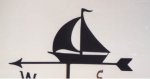
simple yacht.jpg

I'm currently writing an article about the use of analogy and metaphor in teaching - I realise by definition they are self-limiting, but the weathercock metaphor wasn't very helpful.

Arguably most of our language is built on metaphors and in a study a few years back the use of metaphor was a key feature in students rating their professors highly.

But I wondered if forumites have any experiences of one which let them down that they might like to share? (Other walks of life would be helpful too)
 
Years ago in St Peter Port I was run into by an Etap named "Metaphor" and a neighbouring boat was damaged.

The Etap skipper was pursued by H/M whom he told he would return to face up to what he had done.

Never saw him again.
 
I was told that with sailing, every time you do something positive - learn something, do preventative maintenance, improve safety etc. - a metaphorical coin gets dropped in a metaphorical money box. When something negative happens a bunch disappear. The trick is to keep it topped up enough for when the sticky stuff really does hit the fan.
 
Weather cocking is not a metaphor, it’s sort of a verb applied to some boats. I think what you experienced was really a case of an ill wind that blows no good i.e. your metaphor idea let you down as a solution but in the end you learned how the boat responds to wind.

Time and tide wait for no man. This is a universal truth and difficult to be in a position that proves this wrong. I was waiting to round the Mull of Kintyre at anchor in Gigha. It was spring tides, strong westerly wind. We need to leave at xx o’clock to catch the tide around the Mull I proudly announced, wisely pronouncing, “time and tide wait for no man.” We arrived at the Mull as expected and proceeded to surf standing waves for about 3 to 4 hours making zero knots over the ground having cocked up my tide, time calculation.
 
The lab were working with an 18-degrees-of-freedom test rig. One of the senior management asked why it was taking so long to get a test completed, finishing his question with "It isn't rocket science."

He was correct in a way, it was more a case of three rockets at once science.
 
Metaphors are built into our language, such as my use of the word 'built', or even my use of the word 'use'. I'm fond of metaphors but find that they lead to failures of comprehension. There is a gross example current in the Lounge at the moment. It is said that those with autism don't get the point of metaphors (get, point), and I am led to conclude that half the country has Aspergers. Fortunately, I have never gone foul of a weathercock, but I think that, being a visual sort of person myself, it is because I don't generally think verbally in such situations.
 
When I was sailing in Greece some years back, I was charmed to see a delivery truck on the quayside on tide of which was writ large: ΜΕΤΑΦΟΡΈΣ. I know philosophy's a big deal in Greece, but it seems they go in for bulk delivery of the stuff.

(Yes, I do know what it translates as!)
 
Plenty of us ‘aspies’ do get the point of metaphors, in the same way that many neurotypicals don’t. Often it is simply down to whether the reference used for the metaphor is relevant to the individual. For the weathercock example, how many people particularly of a younger generation, even know what a weathercock is?
 
Top