
capnsensible
Well-Known Member
I must be really lucky. None of the catamarans with Hull hatches that I've sailed have ever leaked. 


They usually have a little sign warning you to keep it shut at sea, to avoid the worst of that problemI must be really lucky. None of the catamarans with Hull hatches that I've sailed have ever leaked.

Yeah! Like a little sticker will repel a full-on Atlantic winter storm!They usually have a little sign warning you to keep it shut at sea, to avoid the worst of that problem
Well in a may storm of winds around 55 knots and liquid elephants in mid Atlantic on an FP Lavezzi, the stickers worked.Yeah! Like a little sticker will repel a full-on Atlantic winter storm!
'Pass me the Sikaflex cartridge!'

Talk about 'papering over the cracks....'Well in a may storm of winds around 55 knots and liquid elephants in mid Atlantic on an FP Lavezzi, the stickers worked.

This subdivision,and resultant flotation, like the escape hatches fitted, are mandated by ISAF OSR.It does. Every part of ours floats independently, just about. Main hull, amas, akas (beams) rudder and centreboard all have flotation, plus as you say, no ballast.
If it happens, they are intended to be your liferaft. It's not exactly common, even on grand prix multis though. They usually break something first.This subdivision,and resultant flotation, like the escape hatches fitted, are mandated by ISAF OSR.
Eg see 3.05, 3.07.
https://www.sailing.org/tools/documents/OSR2010Mu4101209-[8163].pdf
Hatches are required to be above inverted waterline.
The "keep closed..." signs are mandated too.
I'm no multihull sailor... but always assumed that ISAF required these arrangements due to the liklihood of capsize/inversion and the very stable state that these craft settle into once inverted?

I know that it’s mainly the waves that capsize boats, but isn’t the rig supposed to come down before the wind pressure can start to lift one hull of a cruising cat?If it happens, they are intended to be your liferaft. It's not exactly common, even on grand prix multis though. They usually break something first.
Depends what you classify as a cruising cat these days. In my experience, the skippers inability to control his bowel functions is a good indicator that enough is enough.I know that it’s mainly the waves that capsize boats, but isn’t the rig supposed to come down before the wind pressure can start to lift one hull of a cruising cat?

???I know that it’s mainly the waves that capsize boats, but isn’t the rig supposed to come down before the wind pressure can start to lift one hull of a cruising cat?
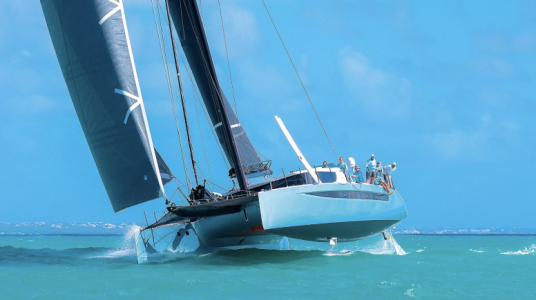
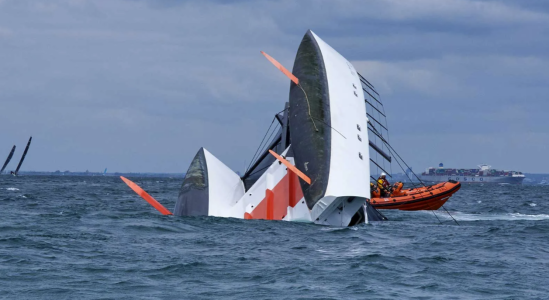
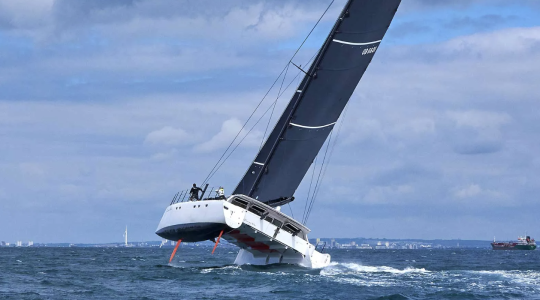
Often they’re not written off, but hopefully a sharp, expensive lesson is learned. Thing is, you’re going really quickly when ypu need to reef. Racing, that’s a good thing, sure. Cruising, often it’s just uncomfortable and wearing on the nerves. On Chiara, when you put the first reef in the main, you’ll go from 9 knots to 8.5, hard on the wind, yet be vastly more comfortable. You probably know this from experience, it’s a revelation to people new to multis. Those photos ate if course ‘Coco de Mer’ on the RTI race a couple of years ago, demonstrating exactly where the point of no return lies, and how to get there. That boat has been turned into a motor cat now, I’ve heard. Very wise, if you’re going to generate those kind of headlines for us multihullers. We operate under the maxim ‘to finish first, first you must finish’. And we don’t have the kind of money where we can just burn 2 million quid.Simply take time to read the builders recommendations for sail plan in different winds peed and angles and follow them. Worked for me.
Also once got to deliver the multihull punchline.
'How many times do these things capsize'?
'Just the once'.

Maybe they are glued shut. Did you try opening oneI must be really lucky. None of the catamarans with Hull hatches that I've sailed have ever leaked.
Yes. But not at sea. A prudent check that they work before setting off. Plus the other several million things.....Maybe they are glued shut. Did you try opening one
Yeah I'm all for taking risks when racing....well when I had more teeth.Often they’re not written off, but hopefully a sharp, expensive lesson is learned. Thing is, you’re going really quickly when ypu need to reef. Racing, that’s a good thing, sure. Cruising, often it’s just uncomfortable and wearing on the nerves. On Chiara, when you put the first reef in the main, you’ll go from 9 knots to 8.5, hard on the wind, yet be vastly more comfortable. You probably know this from experience, it’s a revelation to people new to multis. Those photos ate if course ‘Coco de Mer’ on the RTI race a couple of years ago, demonstrating exactly where the point of no return lies, and how to get there. That boat has been turned into a motor cat now, I’ve heard. Very wise, if you’re going to generate those kind of headlines for us multihullers. We operate under the maxim ‘to finish first, first you must finish’. And we don’t have the kind of money where we can just burn 2 million quid.

What kind of a man are you ? Reading the instructions indeed.Simply take time to read the builders recommendations for sail plan in different winds peed and angles and follow them. Worked for me.
Also once got to deliver the multihull punchline.
'How many times do these things capsize'?
'Just the once'.
One who doesn't get paid if I wreck a quarter of a million quid boat.......What kind of a man are you ? Reading the instructions indeed.