Engine mounts rust

Applied some rust converter to the engine mounts , certainly looks much better, but probably only a temporary cure due to the rubber eventually…

Looking like an end of season job and due to access probably engine needs to be lifted out 🫣🫣. Big bill probably .

Thanks
 
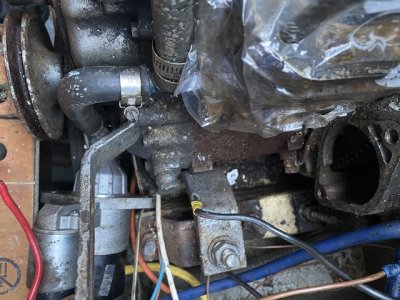
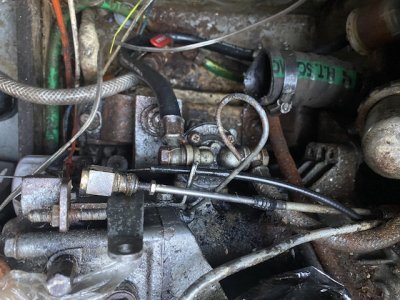
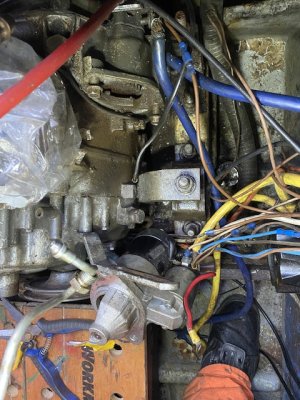
Head, alternator and starter motor removed, giving reasonable access to the engine mounts

(I was removing the head anyway to do the valves, which seem to be in quite good condition.)

4B81DC1C-CC53-4533-8FF9-123437C7E4DC.jpegF5E1A35D-E18F-433D-BFA2-CA2A2D8A6975.jpeg
Given the rust under the starter motor, though, its likely to be worse under the engine, and Im tempted to lift it. at least enough to give access to the underside of the engine.

Does one necessarily have to detach the prop shaft?
 
Yes, and as soon as you touch the bolts on the mounts, you are committed to a realignment process.
Thats what I feared.Maybe defer that to next winter then, and try and spray/flood down/long brush to the underside meantime.

There is a possibility that some vegetable oils are less aggressive to rubber. Ive seen s U S Army tech bulletin on using castor oil as a dressing on protective NBC gear, and an article suggesting its use on tyres. However, uncontrolled testing of the sunflower oil I actually use for rust treatment convinced me that, while it softens old hard radiator hoses and may soften old hard tyres, this softening was likely to be followed by failure. More saturated oils like castor or perhaps canola might be different, but I wouldnt bet on it. This implies many/most rust treatments should be kept off the rubber mounting blocks.
 
845A98BE-92D2-4AE1-880A-2A3565E10355.jpeg
I used a bit of aluminium tubing packed with rolled beercan, in a drill chuck, with sunflower oil as a binder applied by toothbrush, which puts a bit too much on.

I actually BOUGHT the aluminium tubing for the first time (which hurt). Previously used scrap (old TV aerials, arrowshafts, etc) but couldnt find anything this time.
 
Last edited:
Not wishing to 'dump' on your progress, but I'm compelled to point out that some of that wiring may need some attention.
It may be fine, but have a good look to ensure the connections are secure and the cables are secure in the lugs.
That heavier blue cable looks a little strained at the top of the image....again it may be fine, and where it's oily may be a good connection rather than if it was going green.
It's a trade off.....I keep my engine bay dry and Oil free, so I sometimes suffer from corrosion on terminals, despite making lots of effort.
Sometimes an oily engine bay is helpfull...ish. hmmm
 
Not wishing to 'dump' on your progress, but I'm compelled to point out that some of that wiring may need some attention.
It may be fine, but have a good look to ensure the connections are secure and the cables are secure in the lugs.
That heavier blue cable looks a little strained at the top of the image....again it may be fine, and where it's oily may be a good connection rather than if it was going green.
It's a trade off.....I keep my engine bay dry and Oil free, so I sometimes suffer from corrosion on terminals, despite making lots of effort.
Sometimes an oily engine bay is helpfull...ish. hmmm
Thats a later can of worms. Electrical system is a complete unknown, since the battery was absent when I got the boat, but the battery leads were lying in bilgewater, which is probably a bad thing.
 
Top