Engine inlet anti syphon.

Joined
13 Oct 2017
Messages
1,953
Location
solent
Visit site
I have an anti syphon with a piss the bed tube, and have connected it thus. Please ignore the rough elbows, they are for illustration purposes, you are looking at the two tubes with the blue elbows. It looks right to me.
I have sunk before. It was not a thrilling experience. It felt manly and good to have recovered the vessel myself, but I am emasculated on a near daily basis when Karen reminds me that had I not sunk it in the first place then things would have been better all round. So PLEASE do not let me get this wrong. If ever we start sinking again I am going straight for the chain locker to make myself a bowline noose.
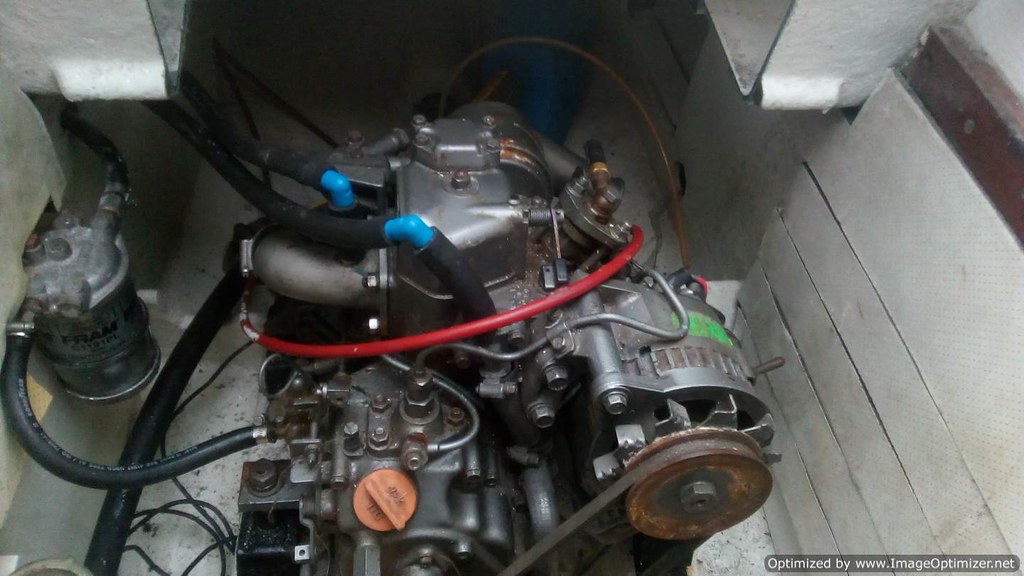
IMG_20171230_144257 by mark punksteel, on Flickr
 
I have an anti syphon with a piss the bed tube, and have connected it thus. Please ignore the rough elbows, they are for illustration purposes, you are looking at the two tubes with the blue elbows. It looks right to me.
I have sunk before. It was not a thrilling experience. It felt manly and good to have recovered the vessel myself, but I am emasculated on a near daily basis when Karen reminds me that had I not sunk it in the first place then things would have been better all round. So PLEASE do not let me get this wrong. If ever we start sinking again I am going straight for the chain locker to make myself a bowline noose.

IMG_20171230_144257 by mark punksteel, on Flickr

This is similar to how I did mine with the anti syphon between the raw water outlet of the exhaust manifolds and the exhaust injection point.

Exhaust-System-2.jpg


This is another way with the siphon break between the seacock and raw water pump

Waterlock-480x298.jpg


This is also similar to mine.

I cannot see where the 2 pipes cone from in the raw water line or where the siphon break is or what type it is


35953336851_d56cd0520a_b.jpg


This is on my engine. The plastic pipe goes to a pee outlet on the side of my boat but some position it over a cockpit drain.
 
Last edited by a moderator:
To be clear and concise, I have added the anti syphon between the outlet from the water pump to the injection point in the exhaust. Sypon break is in a cockpit locker, tell tale bleed type
 
Last edited:
To be clear and concise, I have added the anti syphon between the outlet from the water pump to the injection point in the exhaust. Sypon break is in a cockpit locker, tell tale bleed type

The injection point is that the inlet to the water cooled manifold or the water injection point into the exhaust mixer to mix with exhaust gasses
 
The major advantage of locating the pee tube above a cockpit drain is that you can see it without leaning over the transom, specially at night.
Another bonus is that, if you ever catch a fish while trolling, you can rinse your hands after handling your catch.
 
This is similar to how I did mine with the anti syphon between the raw water outlet of the exhaust manifolds and the exhaust injection point.

This is another way with the siphon break between the seacock and raw water pump

This is also similar to mine.

I cannot see where the 2 pipes cone from in the raw water line or where the siphon break is or what type it is

This is on my engine. The plastic pipe goes to a pee outlet on the side of my boat but some position it over a cockpit drain.

If the syphon break is on the suction side of the pump surely air will be sucked in while the engine is running and compromise the water flow ??

To be clear and concise, I have added the anti syphon between the outlet from the water pump to the injection point in the exhaust. Sypon break is in a cockpit locker, tell tale bleed type

If you mean what you say then surely the anti siphon loop will be bypassing the engine and you will get very little effective cooling !


The lop must either be between the pump and the inlet to the engine- or more usually and as illustrated in the link to the Vetus system,between the engine and the exhaust injection point
 
Last edited:
To be clear and concise, I have added the anti syphon between the outlet from the water pump to the injection point in the exhaust. Sypon break is in a cockpit locker, tell tale bleed type

You fit it between the thermostat housing and the exhaust elbow. All you need to do is fit an unequal tee 300-450mm above the waterline (as close to the engine as you can), connect a hose from the thermostat to one end and from the other end a hose to the mixing elbow. The 3rd connection only needs to be for a small bore hose for the pee pipe.
 
The loop must either be between the pump and the inlet to the engine- or more usually and as illustrated in the link to the Vetus system,between the engine and the exhaust injection point

IMO, only immediately after the pump if it's freshwater cooled.
 
You fit it between the thermostat housing and the exhaust elbow. All you need to do is fit an unequal tee 300-450mm above the waterline (as close to the engine as you can), connect a hose from the thermostat to one end and from the other end a hose to the mixing elbow. The 3rd connection only needs to be for a small bore hose for the pee pipe.

sounds about what I have done.
 
sounds about what I have done.

Yes, you have it in the right place, although not sure why you need the elbows. Just a pipe from the outlet on the thermostat housing up to your valve or T with your small diameter pee tube and then another pipe from the T to the injection point.
 
Yes, you have it in the right place, although not sure why you need the elbows. Just a pipe from the outlet on the thermostat housing up to your valve or T with your small diameter pee tube and then another pipe from the T to the injection point.


Like i said in post #9 ?
 
Yes, you have it in the right place, although not sure why you need the elbows. Just a pipe from the outlet on the thermostat housing up to your valve or T with your small diameter pee tube and then another pipe from the T to the injection point.

I know chaps, I did say in the OP that they were there for illustration purposes only. The pipes to the syphon are in poor condition if you look closely and will be replaced. I just wanted to be sure it was correct before I did so.
 
I know chaps, I did say in the OP that they were there for illustration purposes only. The pipes to the syphon are in poor condition if you look closely and will be replaced. I just wanted to be sure it was correct before I did so.

In the OP you were worried about sinking.

I designed the anti siphon on my single cylinder diesel generator but the guy who fitted it put too much sealent on the pee hole skin fitting and blocked the fitting. The result was water siphoning back into the cylinder through the exhaust valve. It took some time to find the fault as it was behind the insulation. At no time did any water get into my boat even through the generator is fitted below the water line.

Now it that had happened to the anti siphon on the head it would have sunk my boat,
 
In the OP you were worried about sinking.

I designed the anti siphon on my single cylinder diesel generator but the guy who fitted it put too much sealent on the pee hole skin fitting and blocked the fitting. The result was water siphoning back into the cylinder through the exhaust valve. It took some time to find the fault as it was behind the insulation. At no time did any water get into my boat even through the generator is fitted below the water line.

Now it that had happened to the anti siphon on the head it would have sunk my boat,

yes, head first, tee hee hee
 
As I understand it, the anti syphon is to stop raw water being drawn into the exhaust system and possibly past an open exhaust valve depending on where the engine stopped on the cam.
So fitting it where I have will achieve that result, and with engine running I should get a positive flow from the tell tale.
We have fitted a very much more basic emergency bolt in some of our vehicles exhausts. If you stall or break down with the exhaust under water you can have the same problem as the engine cools, so undoing the bolt vents the manifold
 
As I understand it, the anti syphon is to stop raw water being drawn into the exhaust system and possibly past an open exhaust valve depending on where the engine stopped on the cam.
So fitting it where I have will achieve that result, and with engine running I should get a positive flow from the tell tale.
We have fitted a very much more basic emergency bolt in some of our vehicles exhausts. If you stall or break down with the exhaust under water you can have the same problem as the engine cools, so undoing the bolt vents the manifold

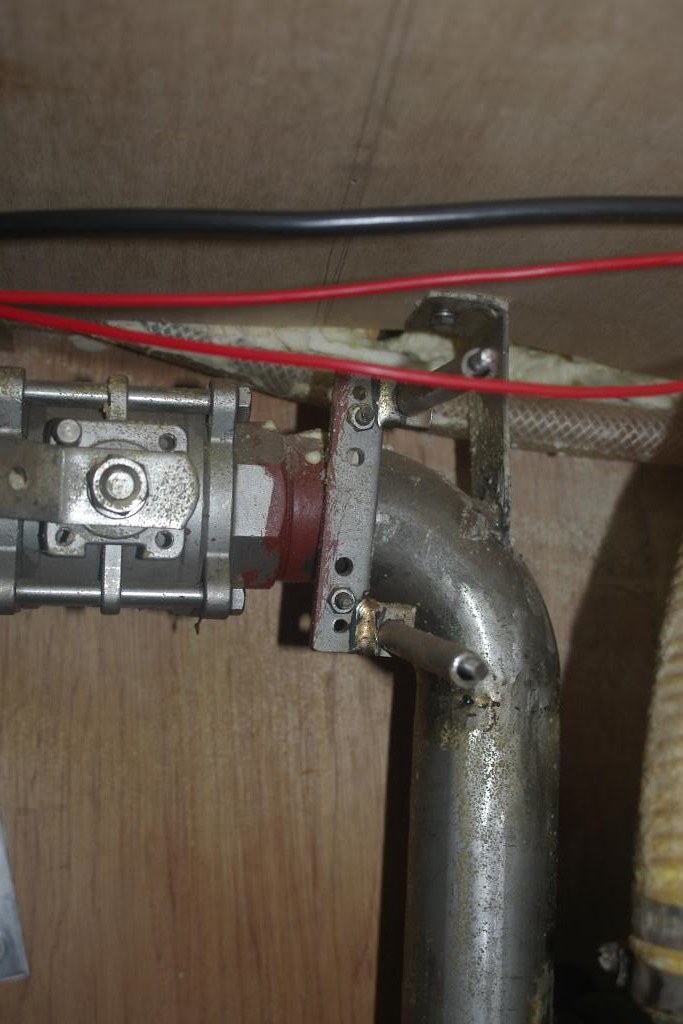
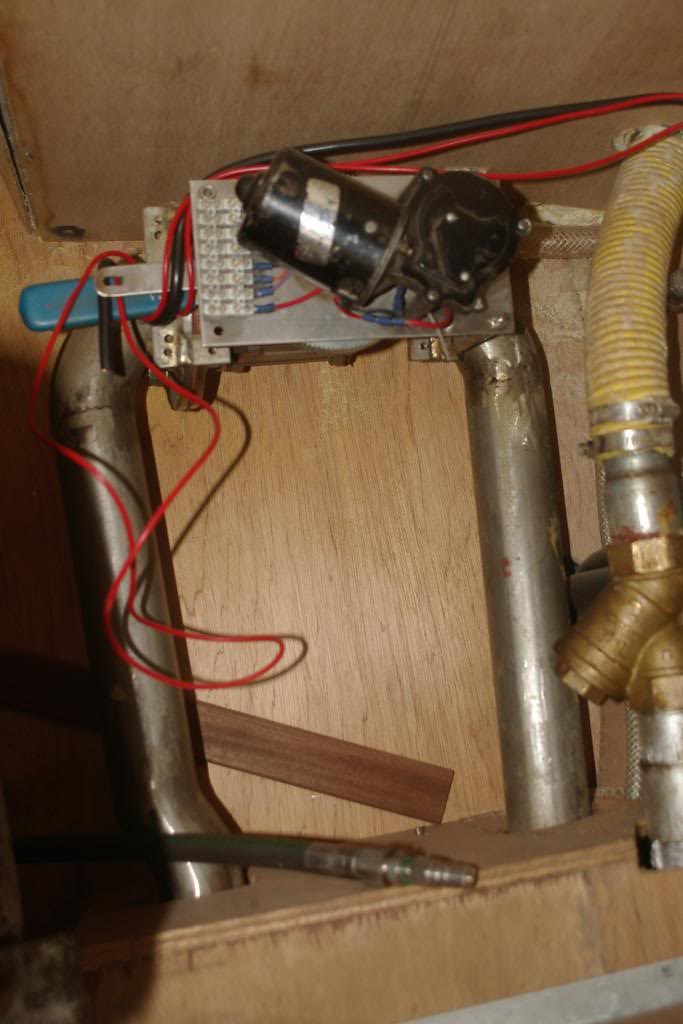
In a similar vain I fitted a 2 " stainless ball valve in the goose neck just before my exhaust out. This is because my exhaust out is in the side and the stern of my boat and it allows me to careen my boat or to close the exhaust to prevent the engine starting when I am away in a remote anchorage.

Valve in exhaust

35696738790_cfaa7d7f0b_b.jpg


Electric actuator on exhaust valve

35246623164_f3e57900d7_b.jpg
 
Last edited by a moderator:
In a similar vain I fitted a 2 " stainless ball valve in the goose neck just before my exhaust out. This is because my exhaust out is in the side and the stern of my boat and it allows me to careen my boat or to close the exhaust to prevent the engine starting when I am away in a remote anchorage.

Neat idea
 
As I understand it, the anti syphon is to stop raw water being drawn into the exhaust system and possibly past an open exhaust valve depending on where the engine stopped on the cam.
So fitting it where I have will achieve that result, and with engine running I should get a positive flow from the tell tale.
We have fitted a very much more basic emergency bolt in some of our vehicles exhausts. If you stall or break down with the exhaust under water you can have the same problem as the engine cools, so undoing the bolt vents the manifold

It is to prevent water continuing to flow in via the inlet, through the pump and engine cooling system into the exhaust when the engine is not running if the injection point is close to or below the waterline level and the inlet valve is not shut properly.

The raised loop creates a syphon which is broken by the anti siphon device, be it the valved type or the "peeing" type when the engine stops.

Without such a device the exhaust system can, over time, fill and eventually flood into the engine via an exhaust valve giving you a cylinder full of sea water, a mixture of oil and sea water in the sump and possibly a rusted up set of piston rings.

Adding a valve to the last part of the exhaust system guards against water flooding the system via the exhaust outlet but a swan neck in the last section will usually prevent this.

Its all explained in the Vetus on line catalogue!
 
Top