Emulsified oil dripping out of a seagull's leg

The oil you want in EP 240. Go to an tractor dealer with an empty milk bottle and get a couple of litres. From the picture the gear box may have been overfilled and then topped up in the normal Seagull manner by water getting in passed the seals. If you let the engine stand for a few days you can then undo the nylon drain bung and drain out the water, although I would be tempted to drain the lot and then, with the engine in an upright position, ie as though you were going to start it refill the box until it reaches the drain bung level. Give it time to level out, it’s thick oil, even in the summer, and top it up again.

From memory i think we changed the oil to EP 190 because of the difficulty of getting 240 in a retail setting.

The gearbox does not have seals, only bronze bearings. That is why they leak - and are supposed to in order to lubricate the bearing. The leakage is very slow, but obviously as the bearing wears it increases so does the amount of water getting back in.

Seals came in after 1979 with the new clutch gearboxes for the 40+ upwards and a new 2:1 box with no clutch for the featherweight. These of course did not need the heavy oil.
 
The oil you want in EP 240. Go to an tractor dealer with an empty milk bottle and get a couple of litres. From the picture the gear box may have been overfilled and then topped up in the normal Seagull manner by water getting in passed the seals. If you let the engine stand for a few days you can then undo the nylon drain bung and drain out the water, although I would be tempted to drain the lot and then, with the engine in an upright position, ie as though you were going to start it refill the box until it reaches the drain bung level. Give it time to level out, it’s thick oil, even in the summer, and top it up again.

From memory i think we changed the oil to EP 190 because of the difficulty of getting 240 in a retail setting.

The gearbox does not have seals, only bronze bearings. That is why they leak - and are supposed to in order to lubricate the bearing. The leakage is very slow, but obviously as the bearing wears it increases so does the amount of water getting back in.

Seals came in after 1979 with the new clutch gearboxes for the 40+ upwards and a new 2:1 box with no clutch for the featherweight. These of course did not need the heavy oil.

Are you adding 100 to the figures? My Seagull memories are of EP90 &140. Back-axle oil. 240 would be in grease territory!

Just looked at an old bottle of Seagull gearbox oil lurking in the back of my garage and it is definitely 140 SAE.

SAE 140 is the correct oil for the old unsealed Seagull gear boxes

Very late models (post 1978) had gear boxes with oil seals These use an EP 90 similar to most other outboard gear boxes but if the seals fail you can use SAE 140 pending seal replacement

http://www.saving-old-seagulls.co.uk/faq2.html#gearoil
 
Are you adding 100 to the figures? My Seagull memories are of EP90 &140. Back-axle oil. 240 would be in grease territory!

The 240 from memory was the recommendation for the tropics and 190 elsewhere.

The current recommendation that Vic refers to is probably more recent than my recollections, again because of the difficulty of getting heavier grades. In terms of lubrication it would not make any difference as the gears are the same spec and the later sealed boxes which use EP 90. The requirement for heavy oil is to minimise weeping through the plain bronze bearings.

We sold a lot of engines in Asia for fishermen. The gearboxes always leaked far more than in colder waters. However they rejected the sealed gearboxes when I offered them and bought a large number of the now obsolete older engines which pleased me as we had a large stock of gear sets that were otherwise redundant. Their preference for the older box was because of a different ratio but mainly they were suspicious of gearboxes that did not leak oil!

Customer is always right.
 
Oops! Sorry, I meant EP 140 and stupidly didn’t pick up that I had written 240.

Think your slip may have triggered false memory syndrome in me!

So, the 190 I referred to was the original recommendation and then revised to 140 because of availability issues but the heavier grade remained the recommendation for tropical waters such as Malaysia which is where we sold large numbers of engines for the fishing fleets.
 
Agreed, Seagulls are a bit sensitive to backpressure, but another possibility is that this engine has one of those dreadful suppressors in the HT cable and it could be breaking down. Someone gave me an almost unused Seagull which they gave up on because they could never start it. I got rid of the suppressor fitted an unsuppressed HT lead and it has never failed since. Checked the suppressor and it was virtually open circuit.

I know nothing about Seagulls ..... but the usual reason for fitting suppressed HT components is to stop RF interference with the car radio.

Were Seagull powered boats usually fitted with radios? :confused:

Richard
 
Were Seagull powered boats usually fitted with radios?
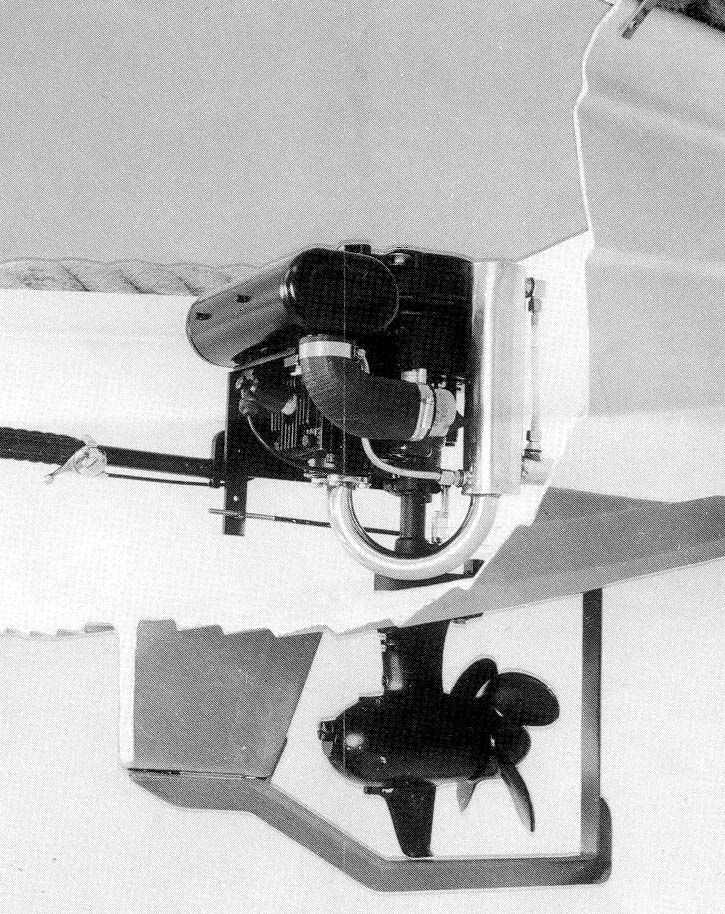
The inboard powered versions could have been! :D
inboard1.jpg
 
Last edited:
I know nothing about Seagulls ..... but the usual reason for fitting suppressed HT components is to stop RF interference with the car radio.

Were Seagull powered boats usually fitted with radios? :confused:

Richard

You wouldn't have been able to hear them anyway.
 
I know nothing about Seagulls ..... but the usual reason for fitting suppressed HT components is to stop RF interference with the car radio.

Were Seagull powered boats usually fitted with radios? :confused:

Richard

maybe not but the suppressor stops the interference on other peoples radios nearby.
 
Richard! No-one will be able to hear their radio for 500m in any direction... suppressor or no suppressor!

Seagulls aren’t that bad, the worst noise I ever heard from an outboard was years ago sitting on the harbour wall At Lyme on a windless sunny morning when we heard a really noisy outboard, visibility was superb but we couldn’t see anything, after about 5 minutes we finally saw a small dinghy about a mile out coming towards the shore, the engine got louder, finally it was close enough to see that it was an old British Anzani on the back of it. Wow was that noisy.
 
Top