Electrics question - 24v windlass on a 12v Battery system??

mikeakc

Active Member
Joined
9 Mar 2021
Messages
65
Visit site
Dear all,
I wonder if some more experienced forum members could offer some advice here.

I have a 26ft Colvic northerner and this winter I intend to fit an anchor windlass, powered using the existing 12v system on board. My father-in-law very generously gave me a 12v motor and a Simpson Lawrence Sprint 1000 windlass, both of these are used units off other boats. We put them together on a bench and rigged them up to a 12v battery and it ran without any problems.

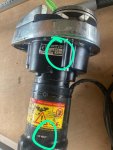
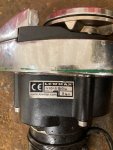
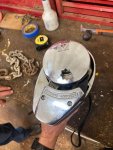
However, when I got home, I noticed that the windlass had a Lewmar sticker on it saying 24v. See the images here. The motor it is attached to is a 12v motor. Can anyone explain why it might be labelled 24v please? Is it different to a 12v unit in any way? Could this just be a safety sticker saying it can run at a higher voltage safely? I have little to no experience in this area, so if you could bear that in mind when giving any technical answers I'd be most grateful.

Much appreciated,
Mike
 

Attachments

  • Windlass3.jpeg
    Windlass3.jpeg
    124 KB · Views: 34
  • Windlass2.jpeg
    Windlass2.jpeg
    114.2 KB · Views: 36
  • Windlass1.jpeg
    Windlass1.jpeg
    108.5 KB · Views: 36
Presumably, the windlass would originally have had a 24v motor. Yours now seems to have a 12v motor, so it should work fine on 12v.
 
Dear all,
I wonder if some more experienced forum members could offer some advice here.

I have a 26ft Colvic northerner and this winter I intend to fit an anchor windlass, powered using the existing 12v system on board. My father-in-law very generously gave me a 12v motor and a Simpson Lawrence Sprint 1000 windlass, both of these are used units off other boats. We put them together on a bench and rigged them up to a 12v battery and it ran without any problems.

However, when I got home, I noticed that the windlass had a Lewmar sticker on it saying 24v. See the images here. The motor it is attached to is a 12v motor. Can anyone explain why it might be labelled 24v please? Is it different to a 12v unit in any way? Could this just be a safety sticker saying it can run at a higher voltage safely? I have little to no experience in this area, so if you could bear that in mind when giving any technical answers I'd be most grateful.

Much appreciated,
Mike
If it's a 12V motor, it's a 12V windlass, just make sure you use a 12V contactor (solenoid pack).
 
If it's a 12V motor, it's a 12V windlass, just make sure you use a 12V contactor (solenoid pack).
It's only a 12v motor because that's what I attached to it to test it. The boat it came off was running the same windlass on a 24v motor with a 24v power supply. Sorry I didn't make that clear in the original post! the sticker that says 24v is attached to the black underbody of the windlass, not the motor (which is just the black cylinder at the bottom). Could you explain the differences between a 12v and a 24v windlass (apart from the motor of course!) If there is no difference then I'm confused as to why it would be labelled as a 24v windlass.
Many thanks
 
It's only a 12v motor because that's what I attached to it to test it. The boat it came off was running the same windlass on a 24v motor with a 24v power supply. Sorry I didn't make that clear in the original post! the sticker that says 24v is attached to the black underbody of the windlass, not the motor (which is just the black cylinder at the bottom). Could you explain the differences between a 12v and a 24v windlass (apart from the motor of course!) If there is no difference then I'm confused as to why it would be labelled as a 24v windlass.
Many thanks
The motor is the difference.

It's not a windlass I know but manufacturers can make identical windlasses and then put different motors in for different purposes / markets. No reason it couldn't have a 240v or 110 v motor ( safety aside)

If you think back to Ohms Law - W = VxA so that 24 v motor will need to only draw half the amps of the same 12v motor to give the same power into the windlass. That makes life easier as higher amps requires thicker / heavier, more expensive cables to the windlass to avoid excessive voltage drop over a long cable run so some boats run 24v systems to make the cables more workable.

If you have a working 12v Motor and your boat is 12v then i'd strongly consider that as your starting point, do the calculations for cable sizing and see if it is doable for your boat - For a 26 footer it should be fine unless you have the worlds most indirect cable routing planned
 
It's only a 12v motor because that's what I attached to it to test it. The boat it came off was running the same windlass on a 24v motor with a 24v power supply. Sorry I didn't make that clear in the original post! the sticker that says 24v is attached to the black underbody of the windlass, not the motor (which is just the black cylinder at the bottom). Could you explain the differences between a 12v and a 24v windlass (apart from the motor of course!) If there is no difference then I'm confused as to why it would be labelled as a 24v windlass.
Many thanks

There is no difference, the windlass will be labelled according to the motor that was fitted to it when it was assembled from new. As you have now fitted a 12V motor and there are no other electrical components in the windlass itself it's now a 12V windlass.
 
The motor is the difference.

It's not a windlass I know but manufacturers can make identical windlasses and then put different motors in for different purposes / markets. No reason it couldn't have a 240v or 110 v motor ( safety aside)

If you think back to Ohms Law - W = VxA so that 24 v motor will need to only draw half the amps of the same 12v motor to give the same power into the windlass. That makes life easier as higher amps requires thicker / heavier, more expensive cables to the windlass to avoid excessive voltage drop over a long cable run so some boats run 24v systems to make the cables more workable.

If you have a working 12v Motor and your boat is 12v then i'd strongly consider that as your starting point, do the calculations for cable sizing and see if it is doable for your boat - For a 26 footer it should be fine unless you have the worlds most indirect cable routing planned

I agree 100% with what you say.

My understanding is that the 24V motor would have half the size wiring as a 12V motor. Therefore you should never attempt to run a 24V motor off 12V as it will damage/ overheat the motor.

However my Adler Barbour Cold machine fridge/freezer motor can run on 12V or 24V and the makers say it will perform better on 24V (Presumably the motor has heavy enough windings to handle 12V)
 
Last edited:
Top