Eber Exhaust Corrosion

smithy

Well-Known Member
Joined
17 Apr 2011
Messages
367
Location
Glasgow
Visit site
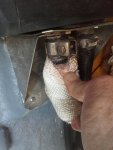
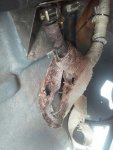
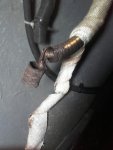
I could smell exhaust fumes on heater start up, on inspection I found a split in the pipe. The pipe is rotten for the first few inches. Luckily the intake is from the cabin so the fumes were restricted to the locker. Judging by the state of the lagging it's been like this for quite some time. I have a carbon monoxide alarm but it wasn't activated.
Anyone else had corrosion like this?
 

Attachments

  • ex1.jpg
    ex1.jpg
    339.1 KB · Views: 39
  • ex2.jpg
    ex2.jpg
    442.7 KB · Views: 38
  • ex3.jpg
    ex3.jpg
    311.7 KB · Views: 36
This does highlight the fact that checks of systems on a regular basis are required. It also serves as a good warning that CO alarms only alarm at a very high level of CO. On long exposure times at just below the alarm point you can still have symptoms of CO poisoning. Also for anyone with the cheap Chinese clone heaters make sure yoy do not use the exhaust pipe provided in the kits because these have been seen to fall apart very quickly on road vehicles. They would definitely not last long in a marine environment. Marine heaters should only be installed with double wall marine exhaust pipe.
 
My friend has just removed his very rusty Eber and the aluminium exhaust outlet had completely corroded away. Held up to the sun the stainless exhaust looked more like a tea strainer with rot along the length of the pipe.
He has a new £85 chinese 5kw and bought 2m of quality exhaust.
 
I check mine every year since I spent a chilly night at anchor, felt ill so turned up the heater, then was sick with a splitting headache. Luckily, I opened the hatch at that point and recovery took a couple of hours. And, yes, I now have a CO alarm which doesn't like the grill.
 
This does highlight the fact that checks of systems on a regular basis are required. It also serves as a good warning that CO alarms only alarm at a very high level of CO. On long exposure times at just below the alarm point you can still have symptoms of CO poisoning. Also for anyone with the cheap Chinese clone heaters make sure yoy do not use the exhaust pipe provided in the kits because these have been seen to fall apart very quickly on road vehicles. They would definitely not last long in a marine environment. Marine heaters should only be installed with double wall marine exhaust pipe.
I can see the marine exhaust advertised at over £300, where do I get the double walled stuff you are talking about? Will this last longer? Is this a common problem? In reality I can't see people removing all the lagging every year to check for porosity. I'm surprised there isn't a recommendation to keep the top few inches clear to make checking easier. Could it be I've over insulated it at the top causing it to overheat the pipe?
 
Last edited:
I can see the marine exhaust advertised at over £300, where do I get the double walled stuff you are talking about? Will this last longer? Is this a common problem? In reality I can't see people removing all the lagging every year to check for porosity. I'm surprised there isn't a recommendation to keep the top few inches clear to make checking easier. Could it be I've over insulated it at the top causing it to overheat the pipe?
Its possible the pipe got bent a bit too tightly at the bend to the heater or knocked with something in the locker. That can split the crimp of the exhaust system.
 
In reality I can't see people removing all the lagging every year to check for porosity.
Undoing one clip is not terribly arduous and it means it will probably undo next year. My problem is the stupid Dunoon ferries and their wash - on calm days if the boat lies stern to the wash, the period is such that the 2nd wave washes right over the transom and if, as I have too often done, forget to put in a cork, salt water gets into the pipe to the extent that I sometimes had to syphon the stuff out before it would run. And, yes, I have the biggest swan neck the space allows.
 
Any flexible exhaust has a shorter life expectancy than a solid equivalent. Friends of mine used to fit the "wrong" exhaust on their cars by fitting a length of flexible pipe to align them. I suspect that most of the problem is that the first few inches can expect to see flames and very hot gases, so the crimped edges burn through. That probably explains why I've seen quite a few installations using solid pipe from the unit with flexible clamped to them. This avoids the flexible hose being exposed to the most aggressive effects. That aggressive environment can also be expected to promote interaction between dissimilar metals, so the use of an exhaust paste between the alloy stub and the steel hose is important.

Rob.
 
I've decided to renew the pipe this time using a solid section for the first 150mm hopefully preventing the problem recurring. Thanks for all input.
 
Top