Drying out rafted problem

NickNap

Well-Known Member
Joined
3 Apr 2005
Messages
140
Visit site
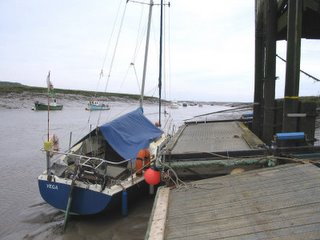
I recently spent the night alongside the wall at Tuckenhay on the Dart. I’m 23’ bilge keel. A 29’ bilge keel came alongside later. During the night, as we both dried out, I tipped to one side (away from the wall) and my neighbour also dried but stayed level. Although we had fenders out, the difference in height meant that my rubbing strake was now about 10” below the other boat and my centre stanchion took all the pressure as I tipped outwards – the base ripped out taking a section of deck with it.

I’d thought that we would settle naturally, but my inner keel must have grounded about the same time as my neighbour did, leaving me resting on one keel.

Looking back – should I have moved to the outside when the other boat arrived, or carry some extra large fenders for this situation?

Any suggestions welcome to avoid a repeat in the future
 
drying out as the much smaller vessel, I would definitely have wanted to be the outer vessel even if I was not drying out I would have moved - the difference in weight is too much.
 
I think I might have mentioned the fact that he was bigger than you and tell him to go elsewhere or at least have a chat about your repective drafts and get him to consider the damage your stanchion tops might do to his gelcoat/rubbing strake.
Also - if he is rafting up on you it would have been good mannered to make sure that he fendered up properly and watched as you dried out.
Personally, I think he has been a pillock.
 
Always aim to have the inner boat dried first. If you are on a guaranteed flat pad, deeper boat inside. If it is likely to slope, it is most likely to slope down away from the wall or piles, so still the deeper draught on the inside, just in case.

The theory is that the inner boat finds it's position and stablises whilst the outer is still afloat, and can therefore take to the ground naturally and find it's own position.

Worst case scenario, the outer boat grounds first and rides over the rubbing strip of the inner, with great pressure at the point of contact.

If ever there was a case for inspecting the bottom for obstructions or 'holes' on the previous LW, then rafting proves the reason.

If I can figure out how to do it, see my Where am I ? posting, coming soon.
 
Actually Nick I never like drying out against a wall with a bilge keeler anyway. If you KNOW that the bottom is OK, like hard sand its not a risk and most times the ground slopes away from the wall. But what if it doesn't? you could end up with a soft spot under the keel nearest the wall and end up going the other way with the same result..... Better to stand well off the wall and use a plank to get ashore. And rafting is always a bad idea regardless of how big the boats are....
I dried out in the Looe river with a cat once near a wall. Nice hard sandy bottom.
No problem I thought until the outside keel grounded on a big waterlogged log that had conveniently rolled in with the tide and it was only my big ball fenders that saved me from a similar fate.
I am certainly not too nice to suggest to another boat that he should....er....go elsewhere either!
 
Not a situation that I would want to be in .... Yes ok - Newport etc. I dry out with others alongside - BUT only if they are similar in freeboard / size of boat ... If different significant - then Oi Chum - park up somewhere else please !

Only way you could avoid what happened to you is BIG - I mean BIG balloon ball fenders to force the boats a good distance apart .... but he had no right to keep you as smaller boat in inside ...
 
It used to be common practice around here to fasten the stanchion bases on the inside edge with bolts but on the outside edge with screws.

If anyone falls against the guardwires the bolts take the strain but if you lean heavilly on something the screws would pull out limiting the damage.

Personally i allways use large round fenders when drying out against something .The problem is not exclusive to bilge keelers.A single keel yacht can slide away from the wall/boat next door in soft mud with the same result.
Axe.jpg
 
I dried out at Wooten Creek IOW earlier in the year. Luckily I was on my own on the jetty as we ended up with one keel in a gully leaning at an angle of about 45 degrees. Even on my own I didn't like this. Once I'd surveyed the bottom moving up the jetty 10 m solved the problem on the next tide. God knows what would have happened if I'd had someone outside me.
 
Thanks for your comments guys. I'll try to avoid drying out against a wall in future unless absolutely necessary
 
Don't not do it do it with caution. Another thing that can happen is that the boat leans so far way from the wall that when you come out of the bar later in the evening you can't get aboard!

I believe it or not someone has asked the exact same question on the Westerly Owners Association web forum. /forums/images/graemlins/grin.gif
 
Top