Does my morse control have a warm up position?

Rammers

New Member
Joined
17 Nov 2019
Messages
7
Visit site
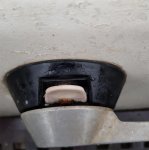
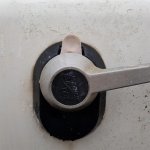
I cannot for the life of me fathom if my morse control has a warm up position? Has anyone seen one like this before?
I have pulled pushed and tweaked all ways to no avail. It looks like the pinky tab should move however it has a screw through it so I cannot see how it can. Any thoughts would be appreciated. It may just not have that facility.
Hopefully the pictures will appear....
20191124_104606.jpg

20191124_104612.jpg

20191124_104612.jpg

20191124_104621.jpg
 
I cannot for the life of me fathom if my morse control has a warm up position? Has anyone seen one like this before?
I have pulled pushed and tweaked all ways to no avail. It looks like the pinky tab should move however it has a screw through it so I cannot see how it can. Any thoughts would be appreciated. It may just not have that facility.
Hopefully the pictures will appear....
20191124_104606.jpg

20191124_104612.jpg

20191124_104612.jpg

20191124_104621.jpg

Your picture links have appeared in the "reply" box but will not respond to clicking, I will try again after I Save.
On any Morse controls that I have used, pressing in the red button in the middle will allow you to advance the throttle without engaging gear. However, for warming up, why not just run your engine in gear, either in forward or reverse on a pontoon or in reverse on a mooring, it being recommended that running a diesel engine at low revs, under no load, is a recipe for glazing the bores. My preference is to run in gear at 1800-200 revs.
 
Last edited:
I cannot for the life of me fathom if my morse control has a warm up position? Has anyone seen one like this before?
I have pulled pushed and tweaked all ways to no avail. It looks like the pinky tab should move however it has a screw through it so I cannot see how it can. Any thoughts would be appreciated. It may just not have that facility.
Hopefully the pictures will appear....
20191124_104606.jpg

20191124_104612.jpg

20191124_104612.jpg

20191124_104621.jpg

I believe that the Marine Master single-lever control works by moving the red tab out towards the lever to engage gear, or moving it back away from the lever to disengage gear. From the photos, it looks badly corroded; you may be able to dismantle it and free it up, but a replacement might be a better idea.

mm1.jpgmm2.jpg
 
Last edited:
I haven’t been able to open your pictures, with my single level control the control lever is pulled forward/out from its drive position to disengage the gearbox, the control can then be used to increase the revs of the engine without prop drive.
 
I haven’t been able to open your pictures, with my single level control the control lever is pulled forward/out from its drive position to disengage the gearbox, the control can then be used to increase the revs of the engine without prop drive.

Click the links to see the pics

https://www.dropbox.com/s/2zshpkibhlrq56f/20191124_104606.jpg?dl=0
https://www.dropbox.com/s/pg07n7fpbmst3l2/20191124_104612.jpg?dl=0
https://www.dropbox.com/s/mvn9a7a8yl7a049/20191124_104621.jpg?dl=0
 
Last edited:
To warm up my engine. I start the engine, check water is coming out with the exaust then move the lever, in gear, into tickover then put the kettle on for a cup of tea.
Once tea drunk it is OK to use the engine.
 
To warm up my engine. I start the engine, check water is coming out with the exaust then move the lever, in gear, into tickover then put the kettle on for a cup of tea.
Once tea drunk it is OK to use the engine.
Do you do the same with your car ( apart from in gear )
 
Do you do the same with your car ( apart from in gear )
My car has an engine that was designed 10 to 15 years ago. The boat has an engine that was designed 50 to 60 years ago.

I've worked in the aviation industry for a few years, have you ever seen an aircraft (fixed or rotary) turn the key and trundle down the runway. Its all about getting things up to working tempratures and pressures.

SeaStart, the aquatic AA/RAC. don't work in the seas I sail.
 
I start engine - cast off - n go

+1

If it’s breezy I may select reverse and then forward briefly before casting off, just to double-check I’m going to have drive when I need it. But the engine itself isn’t going to get any more reliable from an extra ten minutes’ coking up its exhaust elbow and disturbing the neighbours.

Pete
 
Remember the reason for warming up aviation engines is so that the carburettor heating is working, thus helping to prevent engine stalls when making sudden throttle changes. That’s not applicable to marine diesels: if they work, they work, warming them up won’t help their reliability. Indeed, it may cause harm in the long term.
 
My car has an engine that was designed 10 to 15 years ago. The boat has an engine that was designed 50 to 60 years ago.

I've worked in the aviation industry for a few years, have you ever seen an aircraft (fixed or rotary) turn the key and trundle down the runway. Its all about getting things up to working tempratures and pressures.

SeaStart, the aquatic AA/RAC. don't work in the seas I sail.

This is all a big wind-up, right? :o

Richard
 
There are twp good reasons to warm up an engine in the slip. Perhaps these apply slightly more to gasoline, but perhaps not.

1. The engine has been prone to stumbling cold. You really don't want it stalling the first time you switch gears, right in the fairway. One to two minutes should be enough, but it depends on long you have been away from the boat.
2. You just changed a filter or something similar. Best to make sure the fuel is all the way through. How long depends on the extent of the work. That said, I'll probably be running it in gear to get some load if this is for more than a few minutes.

The airplane example is valid. Nearly every engine problem I have had has revealed itself within a few minutes. But really, does anyone believe diesels are so fragile that a few minutes at idle will matter? That's just OCD. Every HD truck is idled for about 10 minutes during the pre-trip inspection, so that the air pressure comes up. No problem. Many see a lot of idle time during the day, running pumps and hydraulics.
 
Top