Do you run the fridge after sunset?

Akestor

Well-Known Member
Joined
12 May 2018
Messages
428
Location
Athens, Greece
www.youtube.com
As said in a Danfoss PDF, the compressor will consume around 40Ah/24 hours with a 100-liter cooling box installation. That is around 1, 6Ah per hour. Assuming that when it is working it consumes 5Amps, it works around 20 minutes scattered every hour on and off by the thermostat.
If we have a 100w solar panel, it can produce 100w/18v= 5amps lets say for 6 hours every day that will be 30Ah. So running only the fridge the battery will lose 10ah every 24 hours. That simple conclusion makes me think that I will have to shut off the fridge at night, but I will be glad to hear your installations.
 
Ours stays on continuously as well. We don’t have wind or solar, but as weekend and holiday sailors we don’t stay in one place for long periods which means we generally use the engine enough to keep the battery topped up. A decent sized battery bank and a high-output alternator help in this.

Also very helpful is the eutectic plate which means the fridge can “store cold” while there is electricity to spare, and then not need to run the compressor for some time afterwards.

Pete
 
Ours is on 24/7 the whole time we are in Greece, up to 6 months. Our Danfoss BD35F compressor draws about 4A at the start of the cooling cycle, nearer 3A at the end. Usually runs for 1/3 of the time. Our 125 W solar panel runs it May- August, after that we need to run engine occasionally. Having a 3 battery bank gave a huge improvement over the previous 2 battery.
 
Ours is also on all the time we are onboard.

Consumption will vary according to how much insulation you have, how often you open the door/lid, and what the ambient temperature is around the condenser and compressor. When I rebuilt our fridge with a huge amount of insulation and a water cooled condenser, the efficiency of the fridge improved dramatically (as one would expect). It stays cooler, uses much less power and is in danger of becoming a freezer if you knock the thermostat accidentally.

The OP needs to look at the whole demand/use/capacity/recharge cycle of his batteries IMHO. A decent battery charge/discharge state of charge monitor helps.
 
Yes. But often turn the setting down at night. But it depends on whats in the fridge, and how long until batteries will be on engine or shorepower. I monitor battery levels and have 60w of solar 240Ah batteries and probably draw more via fridge than your estimate.
 
We leave ours on 24/7 - shutting off at night didn't save much as the fridge just worked twice as hard the following morning - ambient temp in the med in summer is quite high.

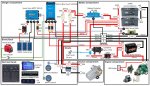
We have 300W solar panels on the bimini and sail in northern Croatia, that feeds 370Ah of sealed lead acid batteries.

Setup looks like this ....

Leccy.JPG

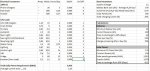
Calculations on consumption are as follows .... turned out to be reasonably accurate.

Leccy2.JPG

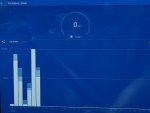
Max we can reasonably generate per day is 1,5 kWh ....

Leccy3.jpg

Sitting at anchor with no engine use and everything is usually fully charged by mid-day on a typical sunny day. We can sit almost indefinitely at anchor with nothing other than solar.
 
We turn ours up in the day and down at night. Theoretically, we have 240Ah battery with 150 W panels (plus a windgen but not much from that).

The fridge is home made with lots of insulation but how good I don't know! We put three 500ml water bottles in the element which freeze during the day and then keep the temp down for over half the night. By the time the fridge needs a good workout the sun is up and taking over the power needs (unless of course it's hiding). We've cruised N Spain, Scotland and Bristol Channel with this setup.
 
Another vote for leave on 24/7 - Do you really want your food starting to grow bacteria as it got warm?

As others have said the fridge will just need to work harder in the morning , but also the ambient temperature is lower at night, so your fridge will probably be working less hard than it is during the day when it has to cope with being opened and a higher ambient temperature so your calculations for night time use should reflect that

if your batteries are struggling - add another battery, maybe look at more insulation round the fridge, also consider the flow of cool air to the compressor - if it has dirty fins on the heat exchanger and sits in a pool of warm air it will struggle more than a clean one in cool air.
 
A good trick to reduce electricity consumption by a less than perfectly efficient fridge, or an ice-box with no refrigeration, while on passage, is to add a frozen chicken. In a well stocked fridge it will take at least 48 hours to defrost. At this stage, if you don't have an oven to roast it in, you can joint it before cooking on the hob.
 
considering battery capacity ( as reffered to by other responders) is a bit pointless provided you have enough for overnight running safely.
As stated switching off really just means more power needed next morning. Your solar output and estimate of usage may not be accurate but it would seem that you could use a few more AH from
somewhere. Try and see what happens in practice while monitoring your batteries and add a bit more solar if the balance is a bit wrong!
 
considering battery capacity ( as reffered to by other responders) is a bit pointless provided you have enough for overnight running safely.
As stated switching off really just means more power needed next morning. Your solar output and estimate of usage may not be accurate but it would seem that you could use a few more AH from
somewhere. Try and see what happens in practice while monitoring your batteries and add a bit more solar if the balance is a bit wrong!
Battery capacity is only relevant inasmuch that it is prudent to try not to discharge your batteries more than 50% of their Ah capacity. It's therefore part of the equation...
 
Yes that was what I meant by 'enough for overnight running safely'.

Depends on your pattern of activity. If you only have enough battery to run overnight before needing significant recharging, then you need either enough solar to make it all back, or to run the engine every day even if you otherwise wouldn't need to. Whereas the longer you can last on one discharge cycle, the greater the odds that a natural recharge opportunity like motoring up a river, or in a calm, or a night in town at a marina, will come along during that cycle without you having to change your plans to get it.

Obviously (semi-)liveaboards who spend long periods anchored in one place need a steady-state regime where each day's usage can be made back in one day without doing anything, so lots of solar or a generator. But for those of us who move around and get most of our charging from the engine, battery capacity does make a big difference to whether you end up power-constrained or not.

Pete
 
A good trick to reduce electricity consumption by a less than perfectly efficient fridge, or an ice-box with no refrigeration, while on passage, is to add a frozen chicken. In a well stocked fridge it will take at least 48 hours to defrost. At this stage, if you don't have an oven to roast it in, you can joint it before cooking on the hob.
We take this a few steps further, at the start of a passage everything is frozen. Things can be defrosted quickly in a bucket of water as long as it is well sealed.
 
I switch it off at night and even with not much in it, I barely notice the difference in temperature in the morning, even in summer.

Off course you can just try it out one night to check the difference.
 
I have an A++ rated fridge. It draws around 4a when the compressor is running. If I turn it off over night (nights are long here), the next morning it will be at least 15c or higher. Ambient air temp is around 26c at it's coldest and 30c during the daytime.
 
Top