Do you know how to tie a cleat hitch?

Pick your choice

  • Picture 1

    Votes: 9 13.8%
  • Picture 2

    Votes: 50 76.9%
  • Picture 3

    Votes: 6 9.2%

  • Total voters
    65

MapisM

Well-Known Member
Joined
11 Mar 2002
Messages
20,658
Visit site
Ok, I'm aware you all know.
But based on talks with some other fellow boaters, I realised that there are different views on how to start it on mushroom cleats, hence the poll.
With normal cleats, there's also a choice, restricted to options 2 and 3, but let's assume to have mushroom cleats, so that also 1 is feasible. In each case, the standing end of the line comes from the upper left corner of course.
Oh, and aside from voting, comments on the reason of your choice are obviously welcome!
MushCleat.jpg
 
Number one is the way I was told was the 'right' way, but that does not mean I am right, does it? But to my way of thinking you are taking a turn around the cleat and the sooner you get some weight in your favour the better, and number one does get something acting on your side immediately, doesn't it?

Mal
 
Depending on the situation, i could use any of those, But if i was 'doing a good job of it', i would choose No. 3, Because
)Load along line of cleat
)Easier to loosen under load (in a controlled way)
)Possibly more room left when finished for another line

I wish my cleats were that shiny!
Matt
 
It is number 2. At least that is what I was taught in the RN and I think they have a rough idea what they are doing........
Not sure it really matters that much in reality though.
 
Ok, I'm aware you all know.
But based on talks with some other fellow boaters, I realised that there are different views on how to start it on mushroom cleats, hence the poll.
With normal cleats, there's also a choice, restricted to options 2 and 3, but let's assume to have mushroom cleats, so that also 1 is feasible. In each case, the standing end of the line comes from the upper left corner of course.
Oh, and aside from voting, comments on the reason of your choice are obviously welcome!
MushCleat.jpg

O-X-O

is the correct way ;)
 
Frankly, my dear, I don't give a damn!

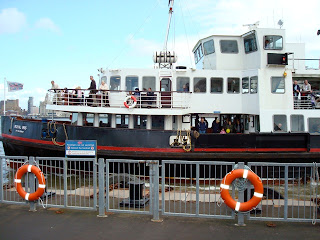
But the Mersey Ferries always passed the warp thro the middle & then figure 8'd about 4 times with no half hitch. it was enough to hold a few thousand tons of ferry in up to 5kts of tide & occasionally some seriously steep seas.

You don't have an option for my choice do you?
 
Last edited:
Frankly, my dear, I don't give a damn!
ROTFL, Yeah, I saw that coming.
And mind, I agree to some extent, but I deliberately didn't include the option.
Afetr all, we're just at the beginning of a long winter, and I didn't find so many more interesting threads around, so.... ;)

PS: even if I never saw a boat having troubles with any of the three alternatives above, I must say that 4 times figure 8 with no half hitch is indeed weird... How tall were those cleats?! :eek:
 
Frankly, my dear, I don't give a damn!

But the Mersey Ferries always passed the warp thro the middle & then figure 8'd about 4 times with no half hitch. it was enough to hold a few thousand tons of ferry in up to 5kts of tide & occasionally some seriously steep seas.

You don't have an option for my choice do you?
Would seem to be pretty standard - seem the same on IW and Gosport Ferries.
 
I think royal navy teach 2 or 3, and I cant remeber which. A RN commander taught me that 25 yrs ago, and it was something to do with "less chance of rope jamming". I didn't believe him then and don't now!

#1 is definitely not RN, but it's the one I choose. As a matter of physics it spreads the line's tension more evenly across the bolts that hold the cleat to the deck, whereas 2 and 3 put relatively more load on the bolts at one end of the cleat and correspondingly less on the bolts at the other end.

I dont agree windermere colvic's analysis that #3 puts the load along the line of the cleat. It doesn't, at least not any more than #2. #3's load pattern is the same (except mirror image) as #2. Load patternwise, #1 is the best from an engineering point of view
 
I use No. 2. The first turn has more friction and gives more resistance to slippage.

No. 1 is rarely an option, but I've also seen ferry crews wrapping multiple figure of eights onto such cleats.

I try to discourage crew from using No.3. There's a greater chance of the line slipping off the cleat, especially if being eased under load.
 
(snip)
PS: even if I never saw a boat having troubles with any of the three alternatives above, I must say that 4 times figure 8 with no half hitch is indeed weird... How tall were those cleats?! :eek:

The warps were about 4" diam, the bollards are about 18" high, 8" diam with a big flat plate on top and about 18" - 2' apart. There were two handlines thrown as the ship came in, the first had a warp with a soft eye eyesplice in the end this was dropped over one bollard & the engines used to hold the ferry against the jetty while the second line was wrapped around the bollard pair. On leaving, the second line was unwrapped & hauled ashore while the ferry was sprung off the jetty on the eye spliced warp. Very efficient, simple & effective. They probably still do the same today, but I haven't been on one for 20 years.
 
I think royal navy teach 2 or 3, and I cant remeber which. A RN commander taught me that 25 yrs ago, and it was something to do with "less chance of rope jamming". I didn't believe him then and don't now!

#1 is definitely not RN, but it's the one I choose. As a matter of physics it spreads the line's tension more evenly across the bolts that hold the cleat to the deck, whereas 2 and 3 put relatively more load on the bolts at one end of the cleat and correspondingly less on the bolts at the other end.

I dont agree windermere colvic's analysis that #3 puts the load along the line of the cleat. It doesn't, at least not any more than #2. #3's load pattern is the same (except mirror image) as #2. Load patternwise, #1 is the best from an engineering point of view

I think the RN work on the basis that the cleat is properly secured to the deck and the primary issue is ensuring the best method of securing the line to ensure it doesn't slip
 
As a matter of physics it spreads the line's tension more evenly across the bolts that hold the cleat to the deck
Xellent point J, I agree 100%. And that was actually the key of the debate with those friends of mine which said otherwise.
That said, unless I'm aware of potentially critical load conditions, 3 is my standard choice, but just for practical rather than physical reasons.
Firstly, to me 3 is the most convenient/easier if there's the need to pull the line before turning it around the cleat.
Secondly, compared to 1 (but in this respect 3 is as good as 2), the bitter end of the line remains inside the boat instead of pointing outside, when you're done with the knot.
 
Mersey+Ferry.jpg


You can just see the relevant bollards on the boat & its mate on the jetty. Seeing the picture reminds me that the warps were actually passed ashore for the eye to go over a bollard, the onboard end was then wrapped around the twin bollards to get the required length. When the strain went on them they creaked & groaned like mad, but only the first few loops ever moved at all.
 
The warps were about 4" diam, the bollards are about 18" high, 8" diam with a big flat plate on top and about 18" - 2' apart...
Well, that's indeed a different league... Probably the warps weight alone is enough to hold the knot tight! :D
 
IMO figure 1, but instead of going the top side of the left-hand mushroom, go under-neath, to complete a figure 8 first. Less prone to jamming, and more control if you need to feed out the line slowly with high pressure on it.
 
Top