Do we need another anchor design?

Thank you gentlemen for your insight. I find a good anchor thread fascinating :encouragement:

 
It's a while now since I last did some scrutineering - one of my students is now doing that at RORC Med events - and the process has become much more complex. Nevertheless, I'm aware that those worthies ( or 'jobsworths' as I've heard them called, twice ) who determine the Offshore Special Regs have given the question of 'Which Anchor' quite some thought....


I have carried and used both of these......

29798323188_5701ab9e16_z.jpg


but find this one seems to have rather better 'holding power'.....


48060694792_ed486b7084_z.jpg

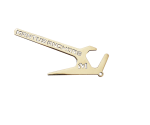
The Mantus geometry seems to result in lower holding power....
bottle-opener-cut-out-shiny.png
 
It's a while now since I last did some scrutineering - one of my students is now doing that at RORC Med events - and the process has become much more complex. Nevertheless, I'm aware that those worthies ( or 'jobsworths' as I've heard them called, twice ) who determine the Offshore Special Regs have given the question of 'Which Anchor' quite some thought....


I have carried and used both of these......

29798323188_5701ab9e16_z.jpg


but find this one seems to have rather better 'holding power'.....

48060694792_ed486b7084_z.jpg
Someone will be along soon to claim these anchors have the same holding power as their larger brothers :).

The fact that they also open beer is just a bonus :)
 
Noelex - for someone who claims to study anchors and made a long term detailed study of his own anchor but was unable to identify that his anchor, uniquely, has a fluke seabed angle of 16 degrees vs the almost universal angle of 30 degrees - your comments on anchors lack much, or any, credibility.

You were more than happy to be critical of other anchors, or anchor techniques - many of which you have never used - but totally ignored or missed this critical characteristic.

The 16 degree fluke/seabed angle of a set Mantus is obvious from virtually every underwater you, or anyone else, posted - its not very difficult to make the analysis.

Either most of your comments and conclusions are, very, questionable (and wrong), either because your powers of observation are lacking or because you had some ulterior motive for hiding this critical piece of information.

One is ignorance the other at best a shill or spruiking.

A 16 degree fluke angle will roughly halve the hold of an anchor compared to a 'similar' on of the same weight - its not rocket science - yet you missed it completely.

You continue to make claims you simply cannot substantiate, like a big anchor can be set safely at short scope, or your Mantus is as good as s similarly weighted Rocna - yet you cannot provide any holding capacity data to substantiate your rash statements.

You have a responsibility - even if you hide under anonymity - people foolishly buy anchors based on your incorrect comments - evidenced in your thread.

Jonathan

Edit

I was wondering - will Noelex have the courage and integrity to resurrect his thread on CF and issue a simple note of caution. He can add the caveats he does not believe the suggestions made - and provide information supporting his view - or it can all be simply swept under the carpet (in typical marine industry fashion - thinks anchors, think tether hooks, think chain hooks, shackles etc etc.
 
Last edited:
Someone will be along soon to claim these anchors have the same holding power as their larger brothers :).

The fact that they also open beer is just a bonus :)


There speaks someone with cruising experience worth listening to..... ;)


Oh, and couldn't they be 'sisters'...? They are, in France.
 
When I am critical I do so for sound technical reasons. I test exhaustively and I have a few successes.

Here are a few of the successes.

I tested some shackles over a period of time and found they did not meet the manufacturer's own specification. The manufacturer of the shackles complained about my testing protocol, the same used in Australia to test shackles. They quietly changed the specification, though you need to read the website carefully (as one should anyway) to realise the adjustment they made.

I found that an anchor makers fluke was found to have inadequate strength. They immediately, no discussion, re-engineered the fluke.

Under tests 2 anchor makers were found to have shanks of inadequate strength - the shanks were upgraded, immediately for one manufacturer only after failure for the other, using a high tensile steel. This does not include the investigation of the 'bendy shanks'.

Testing of a chain hook demonstrated that the WLL and Min Break Strength of a chain hook was grossly overstated, because the test protocol used by the manufacturer was totally wrong. The manufacturer blamed those who had conducted the test, SGS (a pretty weak defense in my view) and changed the MBS and WLL to reflect the results I had produced.

I have a few failures as well - where manufacturers have ignored the results of my tests.

In general manufacturers do take notice - but they seldom acknowledge they were at fault and certainly never acknowledge, me, for pointing out the error of their ways. I also try not to rub salt in a wound if the manufacturer has 'fessed up' and made the change - its history. If they don't change and cannot prove me wrong - I am like a terrier. Many manufacturers (and others :)) do not like me, what a surprise, and are very hesitant to provide me with samples (I cannot afford to buy big anchors and destroy them!).

Interestingly those who I have found to be at fault - sadly tend to have a whole series of faults. They are amateurs pretending to be professionals - and don't learn. They then complain that I am picking on them. Odd sort of world in the marine 'industry'.

When I test I do not expect to find faults - and many products are excellent. Chain for example is consistently over strength. Many shackles are more than adequate. These results are published but merit little mention - until such times they join a list of best buys. But when something is found consistently to be out of specification or a glaring failure - I do focus - as it does imply poor testing, inadequate testing. inapplicable (though this can be subjective) testing and in some cases poor or no quality control - and they wonder why I seem to pick on them. Some result are massaged to allow publication without a manufacturer being allowed the facility to sue - the results stand but legal proceedings - even when you win - can be expensive - articles sometimes need to be read with this in mind.

And I do stand by my tests - my name, location, email etc are easily found - I do take responsibility. Every test is documented, photographed, samples stored. All break testing is conducted at as NATA approve facility. If requested I make repeat tests. I am happy if manufacturer want to sit in on tests.

Sorry - self promotion and justification over.

Jonathan
 
Last edited:
Just as you tend to be a terrier on product testing, I tend to be that way on word usage. Of course, being and American on a UK forum, I have to flex at times, but not when OED is definitive. In fact, US sailing publications use OED for nautical terms.

From the OED:

kedge (also kedge anchor)
verb

(with reference to a boat) move or be moved by hauling in a hawser attached at a distance to a small anchor.
with object ‘I kedged the dinghy to the port’
no object ‘most of the smaller boats had to kedge for a while’

noun

A small anchor used for kedging.


There is no secondary definition that says "second anchor." If it is to be a back-up, spare, or secondary, then that is what it is called.

I got this habit from being on several technical standards committees. ASTM and API. A person developing a new standard occasionally wanted to define a word to mean something specific in a standard. The firm policy was always that if Websters and Oxford agreed, and the definition was technically correct (which it always was), the word would not be further defined as that would only cause confusion and clutter within the English language. A word, therefore, means what it means. Let's not clutter it up with "push pit" as an alternate for stern rail and the like. In fact, this thread is an example of why that should not be done.

Say what you mean.

(On another thread we quibbled over what you call a kellet (chum, angel, sentinel). In that case, no major dictionary defined the word, so call it what you will. At least in that case the meaning among sailors was clear if the context was anchoring (assuming none of the chaps were actually attaching their chum to the chain and lowering away--seems cold hearted, even among forumites).
 
Last edited:
Thinwater

I wholeheartedly agree with your post and though you and the OED might and are correct - we must accept that people may use the terms incorrectly (and I for one am not going to go around trying to correct them)

I had perceived, possibly erroneously, that members used the word 'kedge' for any anchor that was not the primary (even though that second anchor was never actually used for or even intended for 'kedging') - it was simply the other anchor they carried.

I'd rather correct, what I see as, more glaring errors - that potentially may lead to 'failure'.

We can but lead by example.

Jonathan
 
Again, Thinwater

We don't have a kedge anchor, by anyone's definition. We carry 3 or 4 anchors (3 daily and another for long cruises). All our anchors are good a primaries (or as some say 'bower' anchor). Being aluminium they are not heavy. We similarly do not have a 'kedge' rode. We have a spare primary rode (and enough cordage to cobble together a third. We have also have enough cordage for decent shore lines. we also carry spare snubbers to use singly or as a bridle. Everything is sized to be a primary, should the existing primary not be available.

I dislike single use items and if we were to kedge - any of our aluminium anchors would be easy to deploy. Having a dedicated kedge and kedge rode - implies generous use of cash and lots of extra weight.

Jonathan
 
Again, Thinwater

We don't have a kedge anchor, by anyone's definition. We carry 3 or 4 anchors (3 daily and another for long cruises). All our anchors are good a primaries (or as some say 'bower' anchor). Being aluminium they are not heavy. We similarly do not have a 'kedge' rode. We have a spare primary rode (and enough cordage to cobble together a third. We have also have enough cordage for decent shore lines. we also carry spare snubbers to use singly or as a bridle. Everything is sized to be a primary, should the existing primary not be available.

I dislike single use items and if we were to kedge - any of our aluminium anchors would be easy to deploy. Having a dedicated kedge and kedge rode - implies generous use of cash and lots of extra weight.

Jonathan

Agreed. My kedge has always been my Fortress secondary. Even a good sized aluminum anchor is light., something that did not exist, back in the day.

Another common distinction is that a kedge does not have chain, for ease of handling. But a secondary doesn't need much either, as a rule.
 
"How many angels dance......"

We small boat sailors have inherited the remnants of a centuries-old world-wide technology, and with it all the ambiguities of its terminology and its multisource language.

When I peer into the books from a recent but now past age of shipping under sail - and how it was done - I find many terms that have had their meanings changed, and lost, over time. How many of us today would readily understand that 'bower anchor' or 'best bower' reflected the practice of a ship's master ensuring he/they carried several principal anchors, for losing one was commonplace? How many of us understand the term 'sheet anchor' and what the object was used for?

Is a kedge anchor essentially intertwined with the practice of 'kedging off'?

Are we in danger of missing the point, should we become too focused on 'definitions' and not the comprehension within our community?
 
...Is a kedge anchor essentially intertwined with the practice of 'kedging off'?

Are we in danger of missing the point, should we become too focused on 'definitions' and not the comprehension within our community?


Can you think of a good reason NOT to assign a specific meaning to a piece of equipment? Sheets and guys are different things, though by simply jibing the chute they are reversed. Would it be better to say "the red rope" on a forum? No, we wouldn't know what you meant. To use the word kedge in place of anchor just because it sounds salty (is there another reason?) results in foggy rather than clear writing. Clarity should always come before style.
 
Whereas I agree that we should use the correct terminology I feel we must accept that many do not differentiate and use terms loosely. A reason for not using specific terms is very simple - many have entered the pastime and are not imbued with the lore - they are/were accountants, or marketing gurus - they have no need to worry about ambiguity - this is meant to be a pleasure for them - not another university challenge.

I would rather they were more specific with their posts with much more clarity of the conditions they describe than get all the terminology correct. Tell us the vessel size, weight, depth, size of chain, windlass (or not) - we cannot guess and the the difference in vessel size is more critical than getting the terminology correct.

On kedging - I wonder how many have kedged? We have never done it.

Jonathan
 
Because in my opinion, a second primary is not a good secondary or a good kedge. The rode is wrong (a second primary might be all-chain?) and the anchor type is probably different.

Or I may misunderstand.

Define the difference between a primary and secondary and their characteristics and what makes a good kedge - accepting that the majority of people on this forum will be carrying steel anchors weighing from 10kg to 25kg. Walk round any marina and quantify how many have dual bow rollers with 2 all chain rodes - dual bow rollers are becoming like dragons teeth and the few that exist often house only one anchor.

Personally any large yacht, 40'/45', with only one bow roller is missing a great opportunity and a double bow roller with no second anchor and rode is - odd.

Jonathan
 
Language lives, evolves, 'morphs' continuously. Any attempt to 'define with precision', after the fashion of an SI Unit or Standard, is to seek to take a single snapshot of a moving, changing scene. That's perhaps why physicists and engineers prefer numbers ( maths ) to words ( prose ).

Nevertheless, we need to seek comprehension.

I turned to my copy of 'The Young Sea Officer's Sheet Anchor', by Darcy Lever, 1808 version 'including changes and additions in Blunt's 1858 American edition'......

'The Sheet Anchor is of the same Size and Weight as the two Bower Anchors and the Spare Anchor; It is a resource and dependence, should either of the Bowers part, for which purpose the Cable
is always kept ready bent with along Range, that it may be let go in an Emergency.

The Kedge Anchor. The smallest of the Anchors, to which a Hawser or Cablet is generally bent

It might be thought that using publications such as 'Seamanship In The Age Of Sail' and that above is pointless in this digital age, but not so - for we are challenged by the exact same winds and seas, tides and human failings as those hardy types of the 18th and 19th centuries. We certainly have much-improved materials, but we need just as much understanding of the sea's problems as before, and every bit as much judgement in addressing them.

It seems that certain of our correspondents do have that understanding, evidenced by their practices detailed in these posts and pages above.
 
Noelex,

I draw your attention to this, much referenced, PhD thesis

https://core.ac.uk/download/pdf/4271814.pdf

B M Kim 2005 'Upper Bound Analysis for drag anchors in soft clay'

I particularly draw attention, I make it easy for you, to page 169 and the next few pages (as this specifically addresses the impact of varying the location of the crown). The rest of the dissertation merits study as Kim investigates many aspects of anchor design - though his focus is on unweighted fluke anchors.

Interestingly your anchor designers, the ones for whom you spruik, are based in Houston, guess where Kim did his work?

The conclusion Kim comes to is that the crown location, crown = fluke/shank location, is best at the rear of the fluke. The US Navy has conducted similar work (there are references at the the end of the dissertation) and of course Danforth, Fortress, Bugel, Knox, SARCA, Bruce who all predate Kim's work also attached the shank at the rear of the fluke.

Again - in the face of increasingly overwhelming evidence I have to ask why you never identified this critical difference - given that crown location is critical to performance.

As a self proclaimed anchor expert I am surprised this is all new to you - and wonder why you do not have the courage nor integrity to warn those who have bought based on your recommendations. I also wonder how much of your other pontifications are based on nothing more than gut feel or the need to criticise the opposition.

I have modified my Mantus and can confirm that a simple alteration improves hold but that hold of the 'standard' Mantus is only marginally better than a similarly weighted Delta.

Now -

Show us the numbers

Or will you continue to be in denial as I roll out more, and more, evidence (much of which is in Kim's reference list).

Jonathan
 
Top