Do I need to do anything special when fitting a new diesel lift pump?

Please look at video clips on how to bleed the fuel system on a diesel motor. They are very unforgiving because if there is any air in the fuel system the motor won't run. Start at the fuel tank and work thru to the injectors



Make certain that the feed pipe going into the injection pump has absolutely no air at the injection pump end.
Slackening the banjo bolt or bleed screw if fitted with the engine turning over on the starter motor.

Older pumps do not seem to be able to get the air out of there.
 
Neal
Here's some more links that you might find useful


Idiots guide to bleeding BMC engine
https://www.canalworld.net › forums › 15357-idiots-gu...


9 June 2008 — The first can be bled by the same method above, then open the one on the body and crank the engine until fuel flows freely, repeat with the one ...
Another bleeding BMC thread - Boat Building & Maintenance
3 Feb 2013
bmc 1.8 bleeding diesel - Boat Building & Maintenance
6 Apr 2009
BMC 2.2 lift pump to fuel filter pipe - BMC - Canal World
6 Feb 2013
BMC 2.2 Bleeding, Idle Stumble & White Smoke...
4 Oct 2020
 
Last edited:
Please look at video clips on how to bleed the fuel system on a diesel motor. They are very unforgiving because if there is any air in the fuel system the motor won't run. Start at the fuel tank and work thru to the injectors


I have, over the years, read many books about bleeding diesel engines. I have also watched many videos, including the ones in your links.

I've owned quite a few boats, with various diesel engines, since 1984.

This is the first one that has failed to start (and it was running perfectly just over a week ago).
 
I have, over the years, read many books about bleeding diesel engines. I have also watched many videos, including the ones in your links.

I've owned quite a few boats, with various diesel engines, since 1984.

This is the first one that has failed to start (and it was running perfectly just over a week ago).

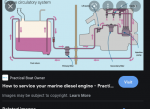
It's getting late but I thought you said you have done significant work on the lift pump(?) If you have done work on the fuel system then the fact that it was running just over a week ago is irrelevant.

Anyhow my experience is that they are temperamental sods.:rolleyes:

1. Have you got fuel at the primary filter?
2. Have you got fuel at the lift pump?
3. Have you got fuel at the secondary filter?
4. Then "crack the injectors" that's turning the motor over until you get fuel (no air) coming out of the injector

Cracking the injectors Loosen the nut at the injector (1/4 turn). Turn the motor over with the starter motor until there is a stream of fuel coming out (no air) and then tighten the nut up. Go on to the next injector and do the same thing.


Screenshot 2021-09-03 at 21-04-01 schematic diesel fuel system - Google Search.png
 
Last edited:
It's getting late but I thought you said you have done significant work on the lift pump(?) If you have done work on the fuel system then the fact that it was running just over a week ago is irrelevant.

Anyhow my experience is that they are temperamental sods.:rolleyes:

1. Have you got fuel at the primary filter?
2. Have you got fuel at the lift pump?
3. Have you got fuel at the secondary filter?
4. Then "crack the injectors" that's turning the motor over until you get fuel (no air) coming out of the injector .
Maybe have a look at this clip?


View attachment 121831

Thanks (again!), coopec.

Both engines started easily, and ran perfectly, on Tuesday and Wednesday last week.

After switching them off on the Wednesday, and returning the stop levers to 'run', neither engine was touched at all, in any way, until Friday last week, when the port engine burst into its usual joyful life, but the starboard engine wouldn't even try to fire.

After a few basic checks, I removed, and opened up the lift-pump. The 'arm' that runs vertically through the pump wasn't engaged at the bottom with the actuating levers. The lower end of the arm, which should have a sort of 'T'-shaped locating bit, looked worn (it's possibly been doing a good job since 1966). If located by hand, the pump would work for a few pumps, but would then dislocate. So I diagnosed a worn-out lift pump.

The service kit doesn't include a replacement 'arm', so I thought, "sod the expense", and bought a whole new lift pump (about £30).

I fitted that this Wednesday (ie one week after that engine had last been run), full of confidence that, after routine bleeding, the engine would then start easily.

I've now tried bleeding so many times, that I've lost count. That's: the 'out' line from the new lift pump, then the secondary filter, then the bleed points on the injection pump, then the injectors (I've never had to bleed the last two items before, on either of these engines).

I even asked one of the marina's resident engine people to have a go. After just over an hour, with two of us working together, it still wasn't even trying to fire.

I might need Bru's bleeding hammer after all!

PS I spoke to a renowned local road vehicle mechanic this morning, who's worked with BMC diesels for several decades. After asking a few pertinent questions, his definite advice was to use "just a few squirts of easystart". I'm still not brave enough to do so!
 
Last edited:
It's getting late but I thought you said you have done significant work on the lift pump(?) If you have done work on the fuel system then the fact that it was running just over a week ago is irrelevant.

Anyhow my experience is that they are temperamental sods.:rolleyes:

1. Have you got fuel at the primary filter?


View attachment 121831

On this boat, the tanks are in the bilges, with the primary filter on a bulkhead a good metre above the fuel tank tops.

So the lift pump is sucking fuel up that height, to the primary filter, before pushing the fuel onto the secondary filter.

If I open the bleed screw on the primary filter, and operate the lift pump lever........ no fuel comes out (I assume the pump just pulls in air).

That's why I started a thread, last week, about by-passing the mechanical lift pump, and installing an electric pump between the tank and the primary filter.

I might go back to that idea: though it's never been a problem before.
 
Is it turning over fast enough? I have experience with an engine start battery that was not sufficiently charged (Perkins 4236) and it took an age to start, despite being a very good starter. A full charge later and it started great, within a couple of seconds of the starter engaging. The turn over noise change / speed drop was not that noticeable on the low charge battery, until compared with the fully charged battery, when it was noticeable that the extra oomph had been missing.
 
Is it turning over fast enough? I have experience with an engine start battery that was not sufficiently charged (Perkins 4236) and it took an age to start, despite being a very good starter. A full charge later and it started great, within a couple of seconds of the starter engaging. The turn over noise change / speed drop was not that noticeable on the low charge battery, until compared with the fully charged battery, when it was noticeable that the extra oomph had been missing.

At the moment, the boat is alongside a marina pontoon, with a Sterling charger permanently plugged into to the mains.

The starter battery was new in June 2020, and, until a few weeks ago, was stored at home, with regular charges from a Ctek charger.

Both engines sound, to me, to be turning over at a fair lick.
 
On this boat, the tanks are in the bilges, with the primary filter on a bulkhead a good metre above the fuel tank tops.

So the lift pump is sucking fuel up that height, to the primary filter, before pushing the fuel onto the secondary filter.

If I open the bleed screw on the primary filter, and operate the lift pump lever........ no fuel comes out (I assume the pump just pulls in air).

That's why I started a thread, last week, about by-passing the mechanical lift pump, and installing an electric pump between the tank and the primary filter.

I might go back to that idea: though it's never been a problem before.

You obviously know what you are doing.

Yes the pump is obviously pulling in air but why? Is the suction hose/tube 100% sound (no air leaks)?
Hard to make recommendations from here but surely the problem is with the hose between the fuel and the lift pump? Have you checked for blockages? I can't think what else it could be........
If you install an electric pump you will have the same problem won't you?
 
Last edited:
Thanks (again!), coopec.

Both engines started easily, and ran perfectly, on Tuesday and Wednesday last week.

After switching them off on the Wednesday, and returning the stop levers to 'run', neither engine was touched at all, in any way, until Friday last week, when the port engine burst into its usual joyful life, but the starboard engine wouldn't even try to fire.
I even asked one of the marina's resident engine people to have a go. After just over an hour, with two of us working together, it still wasn't even trying to fire.
I might need Bru's bleeding hammer after all!

PS I spoke to a renowned local road vehicle mechanic this morning, who's worked with BMC diesels for several decades. After asking a few pertinent questions, his definite advice was to use "just a few squirts of easystart". I'm still not brave enough to do so!

I'd put the "renowned local road vehicle mechanic who's worked with BMC diesels for several decades" advice way ahead of a couple of the self styled "experts" on this forum..

But I don't think I'd use starting fluid in this instance as the problem appears to prior to the lift pump. Surely there has to be an air leak or blockage?
 
Last edited:
I'd put the "renowned local road vehicle mechanic who's worked with BMC diesels for several decades" advice way ahead of a couple of the self styled "experts" on this forum..

But I don't think I'd use starting fluid in this instance as the problem appears to prior to the lift pump. Surely there has to be an air leak or blockage?

There are some very knowledgeable, helpful, people on these forums.

As a definite non-engineer, I have learnt a huge amount over the years.
.
I'm very happy to listen to possibly conflicting points of view.
 
There are some very knowledgeable, helpful, people on these forums.

As a definite non-engineer, I have learnt a huge amount over the years.
.
I'm very happy to listen to possibly conflicting points of view.

Yes I've had a lot of good advice from knowledgeable people on the YBW and Cruiser forums in the past (particularly on the electrical side)
Sadly a lot of the knowledgeable people have moved on over the last 12 months:cry:
 
You obviously know what you are doing.

Yes the pump is obviously pulling in air but why? Is the suction hose/tube 100% sound (no air leaks)?
Hard to make recommendations from here but surely the problem is with the hose between the fuel and the lift pump? Have you checked for blockages? I can't think what else it could be........
If you install an electric pump you will have the same problem won't you?

It's blindingly obvious why air is sucked in when the primary fuel filter bleed screw is opened, the primary filter is positioned between the tank and the lift pump. When bleeding a diesel engine with a pump you can only open bleed screw that are after the pump.
 
There are some very knowledgeable, helpful, people on these forums.

As a definite non-engineer, I have learnt a huge amount over the years.
.
I'm very happy to listen to possibly conflicting points of view.

Neil, nip to your local Halfords and get one of these: DIESEL FUEL PUMP PRIMING TOOL | Halfords UK

It's been mentioned a time or two before in your threads, but seems to have gone unnoticed. Fit it in the fuel line before the primary filter, if possible. You can then use it to pump fuel through the whole system. Open all of the bleed screws, including the one on the primary filter, pump until the fuel exiting the bleed screw is free of air and close the bleed screw. Keep pumping until fuel is air free at the next bleed screw, close the bleed screw, etc. Finally, bleed at the injectors by cranking the engine.

Edit: If it still doesn't start, remove a fuel line after the secondary filter and crank the engine, to ensure the lift pump is actually working. Just because it's new doesn't mean it's good.
 
Last edited:
Neil, nip to your local Halfords and get one of these: DIESEL FUEL PUMP PRIMING TOOL | Halfords UK

It's been mentioned a time or two before in your threads, but seems to have gone unnoticed. Fit it in the fuel line before the primary filter, if possible. You can then use it to pump fuel through the whole system. Open all of the bleed screws, including the one on the primary filter, pump until the fuel exiting the bleed screw is free of air and close the bleed screw. Keep pumping until fuel is air free at the next bleed screw, close the bleed screw, etc. Finally, bleed at the injectors by cranking the engine.

Thanks Paul.

It's silly, I know, but I'm nervous of cutting out a section of copper fuel line, to be replaced with two short sections of rubber hose.

But if it gets it going, it'll feel like I've won euromillions.

Anyway, I'm just off to seek out the nearest Halfords.
 
Thanks Paul.

It's silly, I know, but I'm nervous of cutting out a section of copper fuel line, to be replaced with two short sections of rubber hose.

But if it gets it going, it'll feel like I've won euromillions.

Anyway, I'm just off to seek out the nearest Halfords.

Just be super careful not to get copper filings in the fuel Neil. Before fitting the copper pipe back to the primary filter, pump a little fuel through, using the primer, to flush the pipe.
 
To finish bleeding mine the final step is to crack each injector pipe one at a time whilst cranking the engine. This is after ensuring the final fuel filter after the lift pump is bled, usually a screw at top of filter. Open it and manually pump lift pump.
It takes mine 5-10 secs on each injector with quite a bit of throttle to get it bled and running. Ensure the engine stop in correct position. Of course I really don’t know much tbh.
Seems like it would be worth making sure inlet filter isn’t blocked for the 2 mins that would take.
 
Or try the dreaded easy start in inlet filter to see if that ignites it. Do it with an injector pipe cracked to let air out but be ready to close it within a few secs. I have a feeling there's probably lots wrong with that idea.....
 
Top