Do I need anodes?

Ship'sCat

Active Member
Joined
20 Sep 2019
Messages
67
Visit site
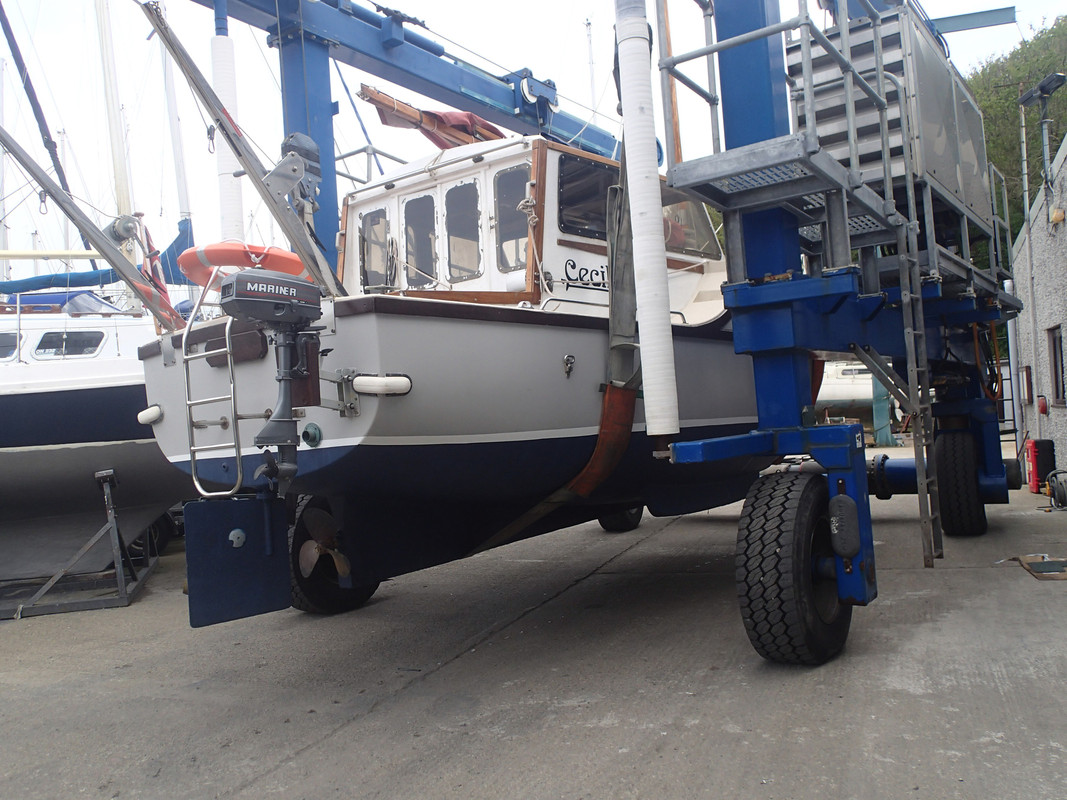
Last year I bought a 23 foot bilge keel fibreglass yacht with steel fins port and starboard and a central cast iron keel. With the boat ashore I have noticed that there seems to have been more corrosion on the starboard steel fin, which I am about to have repaired. The previous owner had taken the inboard engine out - so the boat nowadays is powered by an outboard. There are no anodes on the boat and it seems that there never have been. I am wondering about fitting an anode to the starboard fin to protect my investment re the repairs. But I am wondering whether the absence of an inboard engine & prop means that it is not worth bothering with anodes. Does anyone have any advice please?
 
I suppose that it depends on how long the inboard spends in the water as there will then presumably be different metals in close proximity to each other when it is immersed.

I assume that the fins and keel are all the same metal?

Richard
 
Last year I bought a 23 foot bilge keel fibreglass yacht with steel fins port and starboard and a central cast iron keel. With the boat ashore I have noticed that there seems to have been more corrosion on the starboard steel fin, which I am about to have repaired. The previous owner had taken the inboard engine out - so the boat nowadays is powered by an outboard. There are no anodes on the boat and it seems that there never have been. I am wondering about fitting an anode to the starboard fin to protect my investment re the repairs. But I am wondering whether the absence of an inboard engine & prop means that it is not worth bothering with anodes. Does anyone have any advice please?
Presence or absence of Inboard and prop have not a lot to do with it but f you see corrosion of the steel fins as a problem fit anodes to them but to fully protect them they each need an anode on each side
Small dome shaped anodes would be suitable . Zinc or aluminium in salt water. Remember they have to make good electrical contact with the steel

Personally I'd probably thoroughly clean , de-rust, prime and paint (
See International Yacht Paint's website for full details of prep, priming and painting
 
My mirage 28 bilge Keeler had two teardrop shaped zinc anodes when I bought it. After a couple of years they showed no attrition so I removed them as I banged my head on them when anti fouling.
I was on a swinging mooring in a tidal lagoon. I didn't notice any more corrosion without them.
 
I suppose that it depends on how long the inboard spends in the water as there will then presumably be different metals in close proximity to each other when it is immersed.

I assume that the fins and keel are all the same metal?

Richard
The port and starboard fins are steel, but the central keel is cast iron, about 400mm away at closest. The rudder is timber and the hulls grp.
 
The port and starboard fins are steel, but the central keel is cast iron, about 400mm away at closest. The rudder is timber and the hulls grp.
Cast iron and steel do have a slightly different potential and the steel will be slightly sacrificial, even without the presence of the outboard propeller. If there is any corrosion on the steel and attachment is not too difficult, then I guess that you might as well use an anode to be on the safe side.

Richard
 
Cast iron and steel do have a slightly different potential and the steel will be slightly sacrificial, even without the presence of the outboard propeller. If there is any corrosion on the steel and attachment is not too difficult, then I guess that you might as well use an anode to be on the safe side.

Richard
The cast iron keel will only have any effect on the steel bilge plates it it is electrically connected to it. Id suggest that they should not be connected but I don't think there is a sufficient potential difference between them for there to be any significant effect anyway.

Similarly there will only be any interaction between the outboard engine and the bilge plates ( or the keel for that matter) if it is electrically connected to them. In the unlikely event of any electrical connection between the bilge plates and the outboard it would be the aluminum alloy outboard leg that might suffer, not the steel bilge plates.
Small outboard props are usually aluminium, or plastics. Its only the props on high performance powerboat outboards that are likely to be stainless steel.
Modern outboards are usually, if not always, fitted with anodes to protect them . If the outboard cannot be lifted when not in use regular inspection and replacement of the anode is important


001-Galvanic_Series_of_Common_Metals_Scale_of_Nobility_Cathodic_Anodic_Reactance_of_Metals_Corrosion_of_Metals.png
 
Last edited:
The cast iron keel will only have any effect on the steel bilge plates it it is electrically connected to it. Id suggest that they should not be connected but I don't think there is a sufficient potential difference between them for there to be any significant effect anyway.

Similarly there will only be any interaction between the outboard engine and the bilge plates ( or the keel for that matter) if it is electrically connected to them. In the unlikely event of any electrical connection between the bilge plates and the outboard it would be the aluminum alloy outboard leg that might suffer, not the steel bilge plates.
Small outboard props are usually aluminium, or plastics. Its only the props on high performance powerboat outboards that are likely to be stainless steel.
Modern outboards are usually, if not always, fitted with anodes to protect them . If the outboard cannot be lifted when not in use regular inspection and replacement of the anode is important


001-Galvanic_Series_of_Common_Metals_Scale_of_Nobility_Cathodic_Anodic_Reactance_of_Metals_Corrosion_of_Metals.png
Edit : Lost the will to live. :)

Richard
 
Last edited:
Top