Diy spray foam

you still need enough room for the inverted can. Also, the gun is a pain to clean if used for short periods. Usually found at the bottom of the toolbox jammed solid.
 
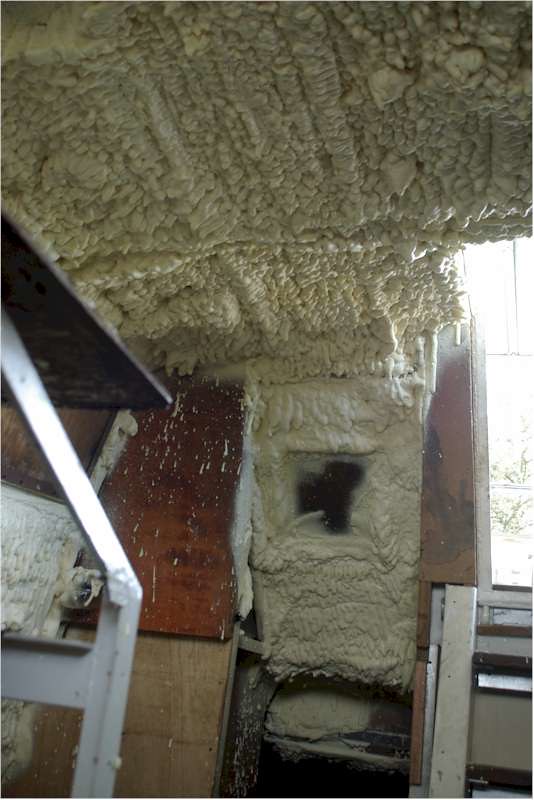
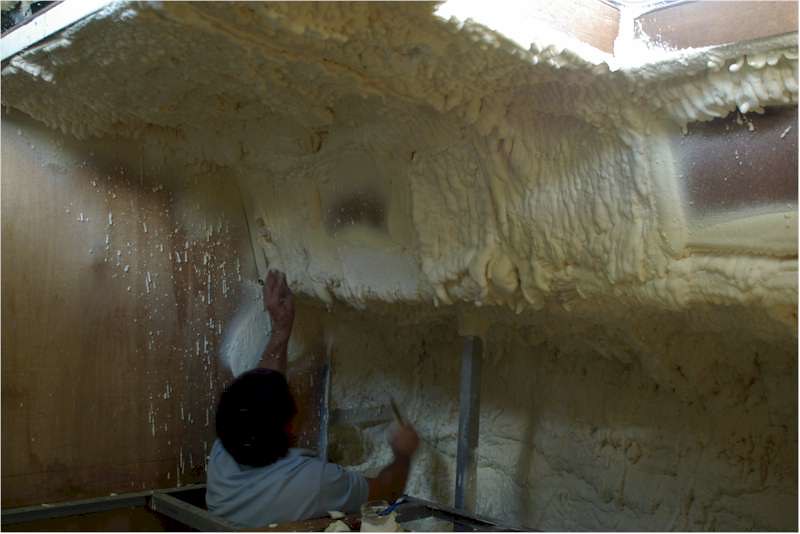
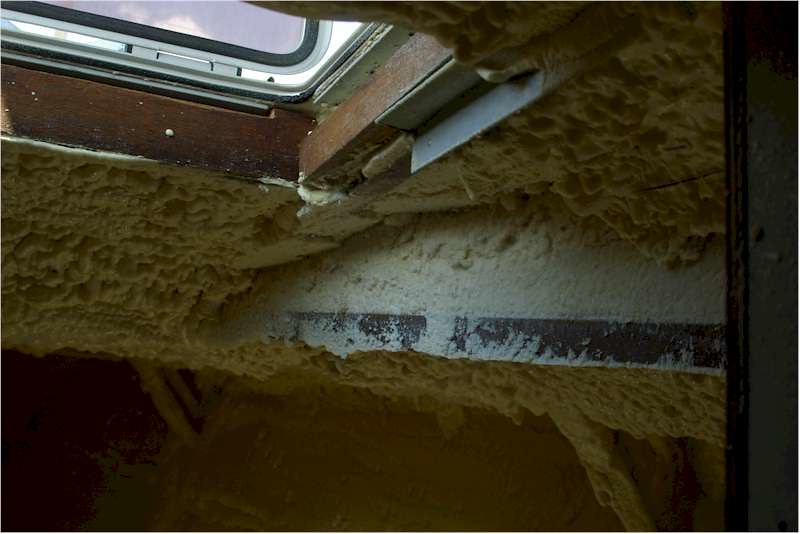
I has the whole of my boat PU foam sprayed inside by some professionals.

Glad I did not attempt it myself.

35696429470_0e0fc467d5_c.jpg


35277398223_eeccb63b35_c.jpg


35277398813_1cd431b24d_c.jpg


It all has to be trimmed level after spraying. We itched for days after.

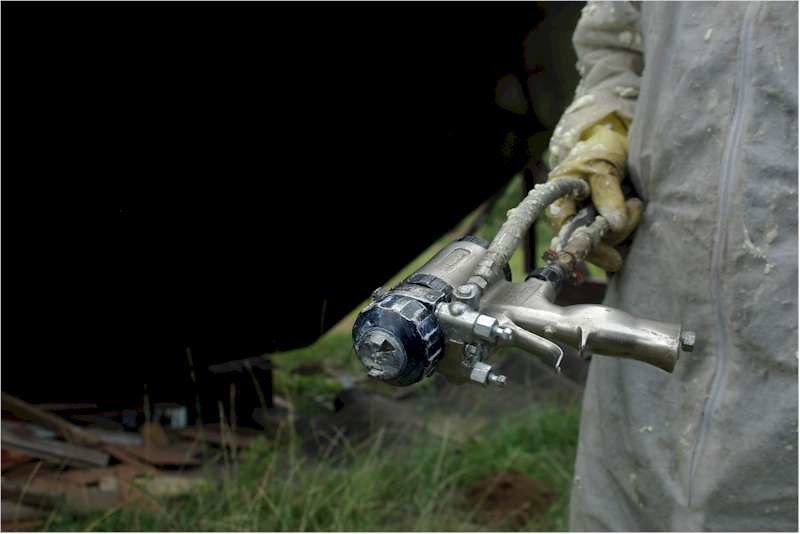
35696432830_f4e1503a1d_c.jpg


this was the spray gun used.

36086051325_be7c485bc3_c.jpg


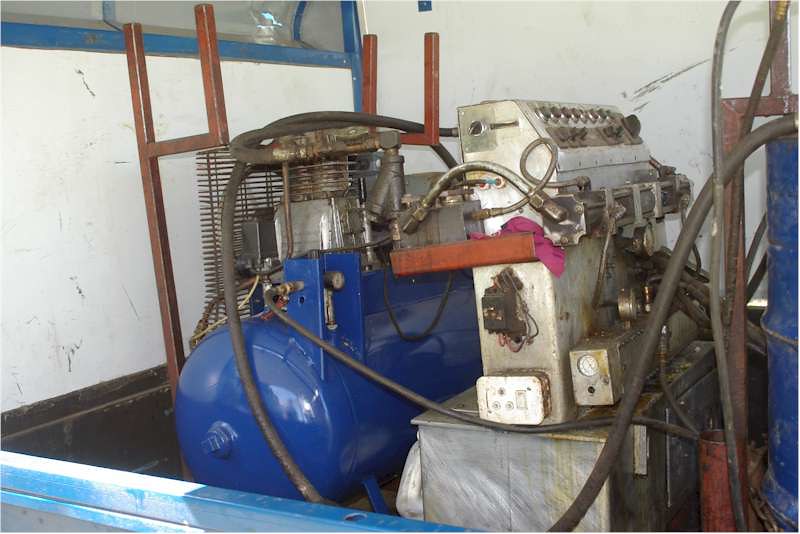
This was the compressor and mixing kit use.
 
The ebay applicator has a long nozzle. How about if I bend it upwards or add to it a bent extender?

Just add a flexible pipe, you can chuck it when it jams.
I'm not sure about this stuff. If you create a blob it has a skin which is waterproof, but as soon as you crush or otherwise interfere with it, it will soak up water, and the interface where it sticks is not skinned over. Also, what about the urea formaldehyde fumes, do they persist, not nice stuff.
When daughter insulated her van she used cork because it's eco friendly, and stuck it to the skin because any gap allows condensation. Still has the smell of the contact adhesive though. There are other products like the foil faced blanket type, lightweight and a bit less chemical.
https://www.toolstation.com/ybs-gen...JAvkxhFYxEbVf5vD95AglH8rcJ2rKFRsaAtZlEALw_wcB
 
Another thing: if the foam is the same as furniture foam (it is the same stuff, just rigid) and not fire resistant, then, according to the firefighting course instructor, one inhalation if it burns is enough. In houses it's usually behind a firestop, ie, plasterboard.
 
Is the cured foam closed cell? If not I really wouldn't consider it, as that's a prerequisite on board a boat in my book.

I've found expanded polythene works extremely well as lining insulation.
It's normally used for packaging applications and I managed to get quite a lot from work, it was going to be thrown out if I hadn't rescued it from the skip.
About 10mm thickness is perfect for lining applications, but even as thin as 3mm is effective, I've used it as inserts for the windows in winter as it tucks nicely into the all round internal channel.
It's easy to fit being flexible but rigid enough to stay put.
Doesn't rot and can be glued in place with silicone or spray adhesive, whatever you like.
Really easy to work with, light weight and can be cut with scissors, no mess or crumbling.
Its flexibility is really helpful because it makes it tolerant of being oversize; it'll squeeze in and self support, either permanently or until the adhesive cures.


I've used it for insulating above the head lining throughout, and also for wrapping around the heater ducts.

I'm about to use it to line inside one of the side cupboards, the top of which is the underside of the gunwhales / exterior walkways.
Not fire retardant but my electrics are all in good order and we don't allow candles on board
 
Last edited:
If your headlining is attached to panels, why not just put a self-adhesive strip around their upper edges to effect something of a seal against the deckhead, and rely on the air gap between panel and deckhead for insulation? Or is foam demonstrably that much better (for the extra effort) than a layer of reasonably static air?
 
If there is an air gap against the outer skin condensation will occur there, and stay there, wetting the back of the panels. As I understand, cured foam is closed only until you crush it or pierce the 'crust', which forms on the surface in curing. Make a piece and try it before committing.
 
If your headlining is attached to panels, why not just put a self-adhesive strip around their upper edges to effect something of a seal against the deckhead, and rely on the air gap between panel and deckhead for insulation? Or is foam demonstrably that much better (for the extra effort) than a layer of reasonably static air?

If that were true people wouldn't bother installing cavity wall insulation...
 
Top