Dinghy tenders

When I google Tabernac I automatically get tabernacle. You don't mean Tabur Yak by any chance do you? If so I used to have one with sailing conversion many years ago. Great little boat but too big for a tender.

 
Hung on davits behind a 35 foot yacht?

I'd suggest that will limit you to perhaps less than 8 foot length or she'd hang right out either side.............meaning you can forget the 12' Mirror or others of similar size.

I just started this week building a 8' Barrow Boat from a kit to serve the same purpose - except I do not plan to try and carry 4 adults. It fits your spec excepting it has a conventional drop-down dagger board.

http://www.barrowboat.com.

Cheers
JOHN
 
Many thanks for this list; I like the 9' Nestaway but from memory these are quite expensive. In general I prefer the stem dinghies and this one seems to provide width and stability.
 
Nestaway Sectional Dinghies range

In fairness I should point out I am a director of Nestaway Boats, hope this does not contravene forum rules.

Nestaway offers a number of sectional nesting dinghy designs aimed at the yacht tender market:

(1) Our two-piece nesting 8ft Pram Dinghy was developed specifically as a yacht tender. The bow stores in the stern, flat, ideal for storing upside down on deck; and the Pram shape has most volume for a given length. Sailing Today - if I am allowed to mention that here - did a comprehensive review in their September 2010 issue (link to pdf on our site). She has a lot of rocker and flair in the bow, so is much drier in a chop than any inflatable, rows and sails well and will go all day on a litre or two of fuel (she needs about one horsepower, ie half throttle on the smallest petrol outboard, to drive her at 4 knots or so). Weight 46kg in glassfibre or 32kg in carbon/Kevlar/foam.

(2) We will have a Danny Greene "Chameleon" 10ft nesting Pram at London, built (by us) in plywood/epoxy/teak as a one-off for a customer, but no reason we couldn't build another... plans available direct from Danny if you want to build one yourself, well-established in the liveaboard dinghy market, but not what we would call an easy DIY build.

(3) Our 7ft 10" two-piece clinker Stem Dinghy has always generated lots of interest but is really only suitable for 1-2 adults. We've sold a few as second tenders to larger yachts, and to singlehanded yachtsmen who appreciate its light weight and the fact it stores in a 4ft square.

(4) The new 9ft sectional Stem Dinghy, which (besides being longer than the 7ft 10") is much chubbier and deeper in hull form, was launched at this year's Southampton show. This is a lovely boat, capable of taking at least three adults, rows/sails well and is very stable for a 9ft hard dinghy.

(5) We are now working on a scaled-down (8ft) version of the chunkier 9ft hull type, of which we will probably offer a lower freeboard (topsides reduced by one "plank") version as a replacement for the current 7ft 10".

(6) The Canadian-built NN10 (10ft nesting stem dinghy), which has a finer waterline than our own 9ft and is biased more towards sailing performance than everyday tender use (but less stable).

Then there is the 14ft Trio. It was not really our intention but a couple of these have gone as slightly off-the-wall yacht tenders: being relatively long and thin the hull is exceptionally easily-driven (3.5hp for 11-12knots) and with the optional outriggers quite fast to row. If you leave off the stern section and bolt on a plank you get a useful 9ft one-person tender. It's more seaworthy/stable than you'd think, too, as the bottom sections aft are almost flat. If you had a larger yacht the forthcoming 16ft Trio (4ft 6" beam) might also be of interest - stows in a 6ft length and we estimate 15knots with a 6hp.

We know we are not cheap: we build the boats with top quality materials, to a high standard, in the UK. However that means they should last a long time, and if you do damage them glassfibre is a much easier DIY repair than plastic (eg Walker Bay). You also won't have to buy a big, heavy, expensive (and attractive to thieves) engine, because all our hulls are easily-driven compared to inflatables.

We attend most of the major UK boat shows and/or would be pleased to give you a demonstration by appointment in the Christchurch/Poole area.

Ian Thomson
Director, Nestaway Boats
 
Thanks for the info.

When the time comes - I have to change my boat first - I will bear this in mind.
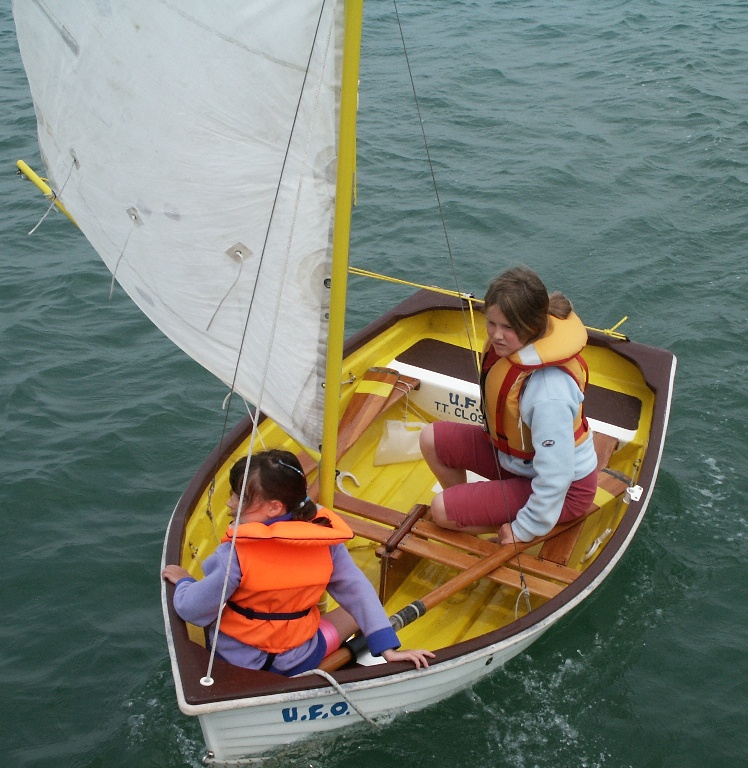
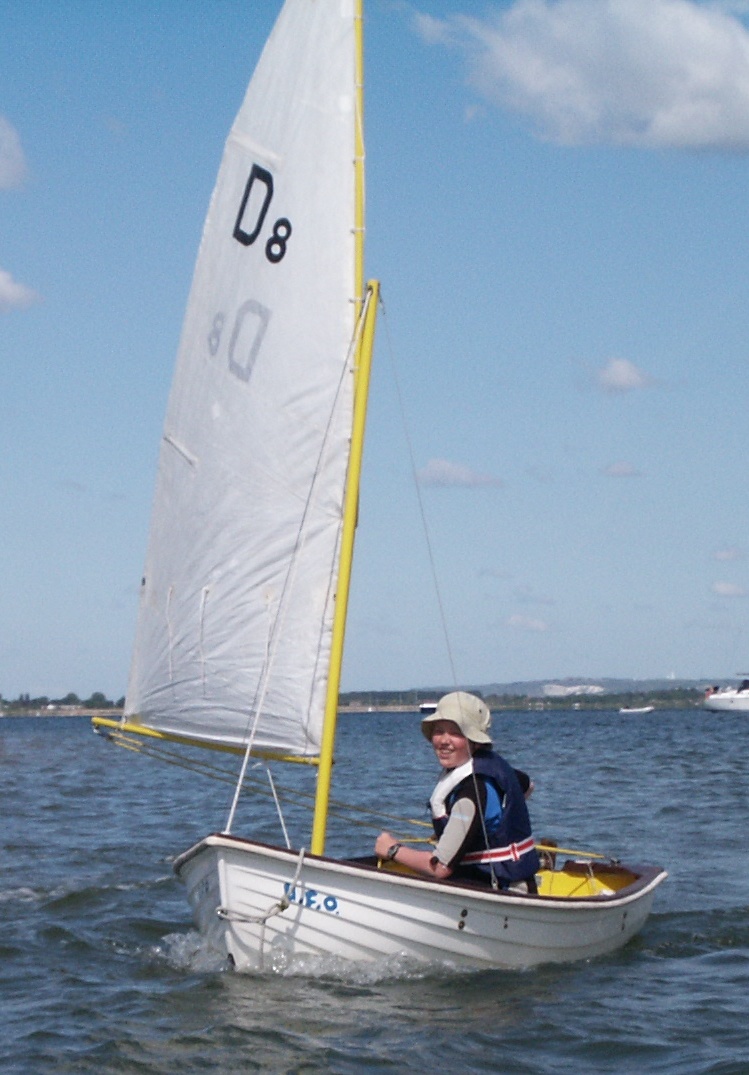
What you want is one of these:-

UFO2.JPG


UFO1.JPG


I've been thinking about taking a mould off it for ages.
 
Walker bay 10

I bought one of these second hand off e-bay with the tube and road trailer for 500 quid.

Very light and almost indestructible moulded polyurethane construction.

Sails surprisingly well, with unstayed mast (similar to a laser) is 2 part and can be stored within the length of the dinghy.

Clever self bailer in keel.

easy to row with captive rowlocks

Almost impossible to capsize with tube.

Can't think of a thing to say against it other than it is expensive if bought new.

Well designed and built.

It is incredibly stable and a very good load carried with the tube.

One useful side effect of the tube is that the dinghy is dry when motoring into a short choppy sea.
 
I have just bought a Walker bay 8
Removeable inflatable tubes (although load and power limits much lower without)
Performance Sail Kit (main only), not really for upwind though
Rudder/Tiller for sailing
Decent Oars and Rowlocks
Injection moulded plastic with good seating
Comes with fitted buoyancy bags
Jockey wheel in rear of hull
Davit ring kit available (fitted to mine)
Solid transom for up to 4hp
Decent size towing eye
70lbs.
Sadly, not pivoting centreboard. (Dont hit stuff!!)

£500 off ebay in good nick (without the inflatable tubes).

They are expensive, but I like the quality.

You forgot the cup holder!
 
Mirror dinghy, except for daggerboard.

My criteria are much the same and a Mirror fills most of the requirements but not quite. That's why I am building a 'special' at the moment. I took a wrecked Mirror, stripped it into its component panels and modified them to provide a flatter run aft for better buoyancy and possible planing. I am now part way through making a panel kit out of glass/kevlar sandwich which should make for a much tougher structure than 6mm ply and be lighter - around 20kg.

I am fitting a wheelbarrow wheel into a recess in front of the transom so I can wheel it about like a barrow and will be fitting it with a standing lug rig at the normal forward mast step. I have also removed some of the internal tanks to give more stowage space - the skin will have over 100kg of buoyancy.

I prefer a centreboard but as I will only sail occasionally I'm sticking to a dagger board.
 
Top