Diesel bug biocides

Jamie Dundee

Well-Known Member
Joined
24 Jul 2019
Messages
1,544
Visit site
Recently discovered I had a dose of the bug despite using Marine 16 each fill up, prefilter bowl full of crap. I’m guessing this is a historical problem as this is my first year with the boat.
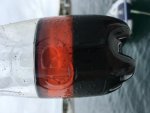
0459C958-ECB6-4F32-85EA-39DF9002166B.jpeg

Gave the tank a double shock dose of M16 and changed prefilter and engine filter which seems to be doing the trick as far as the bug is concerned. What I’m now finding in the prefilter sight glass is a clear liquid, diesel in appearance but viscous, a bit like thin engine oil. I’ve never seen any evidence of water in the prefilter or when I pumped the bottom of the tank and wondered if the water could be emulsifying with the diesel. I know M16 is a biocide but found the following in the PBO group test of bug treatments.

69566688-0F04-4F1F-BF28-5BD8F4DBBC7F.png

This clearly mentions water being ‘dispersed’. Could the substance in the prefilter be a diesel/water emulsion. I’m draining it regularly, the engine is running well, although prior to redraining the prefilter does seem to lose a bit of power, burning a diesel water emulsion is known to produce less power than pure diesel. Generally puzzled :unsure:

 
Your picture seems to show a red diesel layer sitting on top of contaminated crap. I suggest that since you have been dosing with biocide it has killed any bugs in the tank. The dead diesel bug is now being sucked through the filters. Ideally the tank should be cleaned. Is there an inspection panel on the tank? If you don't clean the tank you will have to drain and replace the pre filter regularly, for how long depends on the degree of contamination while continually dosing the diesel. You could remove the diesel and filter it, but the tank sides will still be contaminated with dead bug. Is tank easy to remove?
Marship have a good site on diesel.
 
I don't think a few drops of additive are going to do any good.
You need to physically clean the tank and system.
 
Your picture seems to show a red diesel layer sitting on top of contaminated crap. I suggest that since you have been dosing with biocide it has killed any bugs in the tank. The dead diesel bug is now being sucked through the filters. Ideally the tank should be cleaned. Is there an inspection panel on the tank? If you don't clean the tank you will have to drain and replace the pre filter regularly, for how long depends on the degree of contamination while continually dosing the diesel. You could remove the diesel and filter it, but the tank sides will still be contaminated with dead bug. Is tank easy to remove?
Marship have a good site on diesel.
I don't think a few drops of additive are going to do any good.
You need to physically clean the tank and system.
The only access to the tank is through the fuel gauge sender fitting. I’ve had a hand pump in there but didn’t get anything out. I’ve now got a powered pump which will be better. Very little particulate now coming through but I am puzzled by the slightly viscous clear liquid I’m draining from the prefilter. Both filters are new and clear. I plan to cut a decent access hole in the tank during the winter and fit a drain to the bottom of the tank.
 
Whatever the clear viscous fluid is, it's not wanted in the tank.
'Diesel Bug' is a whole zoo's worth of different oragnisms, then there are breakdown products from diesel reacting with or catalysed by metals like copper. Then there's the possibility that someone has added something other than diesel to the tank, like veg oil as fuel.
Your tank sounds fairly severe.

Personally I would put a suction pipe to the bottom and see what comes out.
Remove any water that way.
Then agitate it to get as much crud as possible into suspension, then suck it all out into drums and see what you have.
It might be worth getting and endoscope or some small camera to see inside the tank?
 
Whatever the clear viscous fluid is, it's not wanted in the tank.
'Diesel Bug' is a whole zoo's worth of different oragnisms, then there are breakdown products from diesel reacting with or catalysed by metals like copper. Then there's the possibility that someone has added something other than diesel to the tank, like veg oil as fuel.
Your tank sounds fairly severe.

Personally I would put a suction pipe to the bottom and see what comes out.
Remove any water that way.
Then agitate it to get as much crud as possible into suspension, then suck it all out into drums and see what you have.
It might be worth getting and endoscope or some small camera to see inside the tank?
I don’t think the tank’s in a bad way, just a past episode which has come to light through running it a bit low in a bumpy sea. It’ll be sorted this winter, boat’s due to come out in 6-7 weeks by which time I’ll have put 60-70 hours on the engine this year.
Then agitate it to get as much crud as possible into suspension,
Will be well agitated out on the swinging mooring over the next couple of days....

0BF956FD-DD41-4E5B-A1D4-9ECD2B7C27B1.jpeg
 
I don’t think the tank’s in a bad way, just a past episode which has come to light through running it a bit low in a bumpy sea. It’ll be sorted this winter, boat’s due to come out in 6-7 weeks by which time I’ll have put 60-70 hours on the engine this year.

Diesel bug problems often occur with a newly-acquired boat, usually because the previous owner didn't use it much in the time before selling. It happened to me with my last boat, same circumstances, bumpy sea stirring up the crud.

My last boat had a keel tank with very restricted access. I rigged up a DIY fuel polishing system, pumping the fuel out of the tank and back in. Because of baffles in the keel tank, it wasn't easy to clean it comprehensively, but by targeting the return flow into inaccessible bits it helped to move the crud.

Hope you manage to clean it up.
 
Diesel bug problems often occur with a newly-acquired boat, usually because the previous owner didn't use it much in the time before selling. It happened to me with my last boat, same circumstances, bumpy sea stirring up the crud.

My last boat had a keel tank with very restricted access. I rigged up a DIY fuel polishing system, pumping the fuel out of the tank and back in. Because of baffles in the keel tank, it wasn't easy to clean it comprehensively, but by targeting the return flow into inaccessible bits it helped to move the crud.

Hope you manage to clean it up.
To a certain extent the fuel is constantly being polished by running through the filters and back to the tank through the fuel return. Just still puzzled by the water being dispersed by a biocidal additive.
 
To a certain extent the fuel is constantly being polished by running through the filters and back to the tank through the fuel return. Just still puzzled by the water being dispersed by a biocidal additive.

True, the return line helps polish the fuel. Some engines return more fuel than others though. But it's the lumpy seas which stir up the crud off the bottom of the tank.

I'm not sure that you know exactly what the stuff in your filter is, but I'm sure you'll eventually get rid of it.

You originally said you use Marine 16. There are 2 versions, have you been using the Diesel Bug Treatment?
 
I don’t think the tank’s in a bad way, just a past episode which has come to light through running it a bit low in a bumpy sea. It’ll be sorted this winter, boat’s due to come out in 6-7 weeks by which time I’ll have put 60-70 hours on the engine this year.

Will be well agitated out on the swinging mooring over the next couple of days....

/QUOTE]
If you try putting more hours on the engine while the filter is coming up with unknown liquids, in significant quantities, I think you are seriously taking risks.
Both of boat damage due to sudden stop of engine, and engine damage.
It needs sorting ASAP, not waiting for winter.

Trouble after a bit of rough water generally relates to a tank with the pick-up raised off the tank floor significantly. My mate's tank had over 4 litres of water and pondlife below the diesel. Enough to block the filters many times over.
No little bottle of additive stands a chance of coping with such quantities.

Have you considered running from e.g. a plastic outboard tank and jerry cans for the rest of the season?
What engine is it? Some return negligible amounts via the return pipe.
 
Yet to have a blocked filter, I found the gunge in the prefilter as a result of losing a couple of hundred rpm off wot. I still haven’t found any evidence of water in the tank although if there is bug there must be water. Which brings me back to my OP.

Don’t think a jerry can will get me far.... :oops:

E3FE8D3D-88F6-4D60-A72F-231BF09C168D.jpeg
 
  • Haha
Reactions: pvb
True, the return line helps polish the fuel. Some engines return more fuel than others though. But it's the lumpy seas which stir up the crud off the bottom of the tank.

I'm not sure that you know exactly what the stuff in your filter is, but I'm sure you'll eventually get rid of it.

You originally said you use Marine 16. There are 2 versions, have you been using the Diesel Bug Treatment?
The clear bug treatment/preventative and also a couple of tanks of injector/system cleaner.
 
I've been lucky in not having diesel bug so far but as a result of posts on here I bought a small bottle of Marine 16 (100 mil) the other day, not yet used. Advice needed please. The blurb on the Marine Superstores website says:

"Marine 16 diesel bug fuel treatment is a biocide blend formulated especially for preventing or eradicating the fuel spoilage organisms known collectively as diesel bug. A 100ml bottle is sufficient to prevent diesel bug growth in 2000 litres of fuel. For serious contamination addition rates of 100ml to 100 litres may be required. "

Can that be right? I've got an approx 60 litres fuel tank so 2000 litres is 32 fill ups. That says 3 mil, half a teaspoonful per tankful. Surely not?

There are no instructions on the bottle, which incidentally I've just noticed is 50 mil not 100 as advertised... Consumer battle looming.
 
I've been lucky in not having diesel bug so far but as a result of posts on here I bought a small bottle of Marine 16 (100 mil) the other day, not yet used. Advice needed please. The blurb on the Marine Superstores website says:

"Marine 16 diesel bug fuel treatment is a biocide blend formulated especially for preventing or eradicating the fuel spoilage organisms known collectively as diesel bug. A 100ml bottle is sufficient to prevent diesel bug growth in 2000 litres of fuel. For serious contamination addition rates of 100ml to 100 litres may be required. "

Can that be right? I've got an approx 60 litres fuel tank so 2000 litres is 32 fill ups. That says 3 mil, half a teaspoonful per tankful. Surely not?

There are no instructions on the bottle, which incidentally I've just noticed is 50 mil not 100 as advertised... Consumer battle looming.

I use Marine 16 Diesel Bug Treatment, but I happily overdose - adding maybe 50ml to 100 litres of fuel. For me, the cost and inconvenience of suffering diesel bug outweighs the marginal cost of overdosing.

According to the Marine 16 website, they don't produce 50ml bottles...
 
I use Marine 16 Diesel Bug Treatment, but I happily overdose - adding maybe 50ml to 100 litres of fuel. For me, the cost and inconvenience of suffering diesel bug outweighs the marginal cost of overdosing.

According to the Marine 16 website, they don't produce 50ml bottles...
Thanks for that pvb. I shall be visiting MS tomorrow...
 
The only access to the tank is through the fuel gauge sender fitting. I’ve had a hand pump in there but didn’t get anything out. I’ve now got a powered pump which will be better. Very little particulate now coming through but I am puzzled by the slightly viscous clear liquid I’m draining from the prefilter. Both filters are new and clear. I plan to cut a decent access hole in the tank during the winter and fit a drain to the bottom of the tank.
Its important that you suck from the bottom of the tank with a powerful pump. I used a drill pump running at high speed (a battery drill is not fast enough). This is connected by flexible clear braided pipe to a 15mm copper pipe with which I could move around the bottom,,,,, I wasn't having any of your crud problems, but the amount of semi solidified crud that came out was unbelievable - I did this every year for 3 years - then the tank started leaking (water in a mild steel tank will rot it through,) so I had a new one made - with a proper sump and tap at the bottom. Even now when I run off a 500cc of road diesel after every fill up to check - in the Med you have Bio Diesel, I get a black waxy liquid which over 3 years has accumulated to at least 500cc of this muck. I ran some through a filter, and the wax instantaneously blocks the filter.... Not good if this accumulated in tanks for many years....
 
Its important that you suck from the bottom of the tank with a powerful pump. I used a drill pump running at high speed (a battery drill is not fast enough). This is connected by flexible clear braided pipe to a 15mm copper pipe with which I could move around the bottom,,,,, I wasn't having any of your crud problems, but the amount of semi solidified crud that came out was unbelievable - I did this every year for 3 years - then the tank started leaking (water in a mild steel tank will rot it through,) so I had a new one made - with a proper sump and tap at the bottom. Even now when I run off a 500cc of road diesel after every fill up to check - in the Med you have Bio Diesel, I get a black waxy liquid which over 3 years has accumulated to at least 500cc of this muck. I ran some through a filter, and the wax instantaneously blocks the filter.... Not good if this accumulated in tanks for many years....
I’ll give the powered pump a go when the gales subside. Cable tie the pickup tube to a bamboo rod or similar and have a poke around, so to speak :rolleyes:
edited; luckily the tank is V shaped towards the centre so hopefully most of the crud will be at the bottom of the V.
 
I’ll give the powered pump a go when the gales subside. Cable tie the pickup tube to a bamboo rod or similar and have a poke around, so to speak :rolleyes:
edited; luckily the tank is V shaped towards the centre so hopefully most of the crud will be at the bottom of the V.
Shame the stupid designer/builder did not put a sump tap in !
 
Top