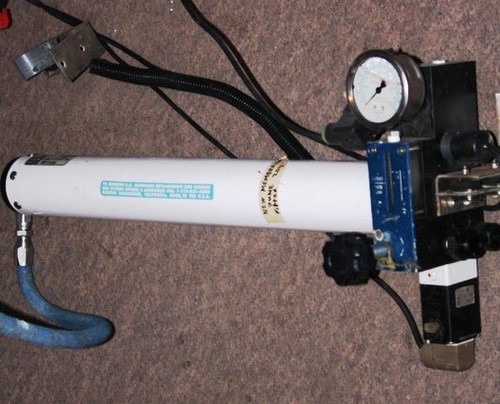
Desalination RO Membrane performance figures variations for 21 and 40inch???

  • Thread starter Thread starter vas
  • Start date Start date

vas

Well-Known Member
Joined
21 Jun 2011
Messages
8,200
Location
Volos-Athens
Visit site
hello all,

currently own an HRO System9/200 (200 means 200usg/day (gpd) = 31.5lph) bought s/h a few years ago.

Checking Dow Chemicals series of 2.5inch dia membranes, I see that the length of the pressure vessel (haven't taken mine apart to measure the membrane itself) matches the SW30-2521 length of 21inches or 533mm.
Fair enough, except for the fact that output of this membrane on their site is 300gpd or 47lph. and not 200gpd.
Tests this year (first year I used it) showed that at 800psi and with 27-28C water temp in salty med I was getting just over 30-32lph, which is not enough for my needs but matches the HRO system specs and is 50% less than the Dow 2521 ones.

Now, whats the point of posting and asking? Well, simple:

can I safely assume that the 21inch long 2.5inch dia RO membranes of yesterday (1995-2000) had almost 50% lower output compared to those available today? My system was built in 1998 and touch wood still works :D
Or is there a catch I'm missing and everyone gets 30lt from the 21inch long 2.5dia membranes and only 60lt from the 40inch long 2.5in dia ones like SW30-2540???
Finally, are the advertised values in Dow's PDFs reliable or wishful thinking?

I am planning to upgrade my 30lph HRO System9/200 system to a longer pressure vessel (to be confirmed that my machinist can built one!) and a SW30-2540 membrane which means I should go up to 700gpd or 108lph which is much closer to my needs, but if that turns out at 60lph I may not bother upgrading....

any one?

cheers

V.
 
hello all,

currently own an HRO System9/200 (200 means 200usg/day (gpd) = 31.5lph) bought s/h a few years ago.

Checking Dow Chemicals series of 2.5inch dia membranes, I see that the length of the pressure vessel (haven't taken mine apart to measure the membrane itself) matches the SW30-2521 length of 21inches or 533mm.
Fair enough, except for the fact that output of this membrane on their site is 300gpd or 47lph. and not 200gpd.
Tests this year (first year I used it) showed that at 800psi and with 27-28C water temp in salty med I was getting just over 30-32lph, which is not enough for my needs but matches the HRO system specs and is 50% less than the Dow 2521 ones.

Now, whats the point of posting and asking? Well, simple:

can I safely assume that the 21inch long 2.5inch dia RO membranes of yesterday (1995-2000) had almost 50% lower output compared to those available today? My system was built in 1998 and touch wood still works :D
Or is there a catch I'm missing and everyone gets 30lt from the 21inch long 2.5dia membranes and only 60lt from the 40inch long 2.5in dia ones like SW30-2540???
Finally, are the advertised values in Dow's PDFs reliable or wishful thinking?

I am planning to upgrade my 30lph HRO System9/200 system to a longer pressure vessel (to be confirmed that my machinist can built one!) and a SW30-2540 membrane which means I should go up to 700gpd or 108lph which is much closer to my needs, but if that turns out at 60lph I may not bother upgrading....

any one?

cheers

V.

We use a Cat pump and a 40" and 21" membrane. With seawater at 28/30 degC we typically produce 130 litres per hour. The Cat pump can easily take another 40" membrane which should increase our output to circa 200 litres/hour
 
hello all,

currently own an HRO System9/200 (200 means 200usg/day (gpd) = 31.5lph) bought s/h a few years ago.

Checking Dow Chemicals series of 2.5inch dia membranes, I see that the length of the pressure vessel (haven't taken mine apart to measure the membrane itself) matches the SW30-2521 length of 21inches or 533mm.
Fair enough, except for the fact that output of this membrane on their site is 300gpd or 47lph. and not 200gpd.
Tests this year (first year I used it) showed that at 800psi and with 27-28C water temp in salty med I was getting just over 30-32lph, which is not enough for my needs but matches the HRO system specs and is 50% less than the Dow 2521 ones.

Now, whats the point of posting and asking? Well, simple:

can I safely assume that the 21inch long 2.5inch dia RO membranes of yesterday (1995-2000) had almost 50% lower output compared to those available today? My system was built in 1998 and touch wood still works :D
Or is there a catch I'm missing and everyone gets 30lt from the 21inch long 2.5dia membranes and only 60lt from the 40inch long 2.5in dia ones like SW30-2540???
Finally, are the advertised values in Dow's PDFs reliable or wishful thinking?

I am planning to upgrade my 30lph HRO System9/200 system to a longer pressure vessel (to be confirmed that my machinist can built one!) and a SW30-2540 membrane which means I should go up to 700gpd or 108lph which is much closer to my needs, but if that turns out at 60lph I may not bother upgrading....

any one?

cheers

V.

The outputs quoted by Dow are the maximum values based on standard test conditions, you will almost never get those outputs in a real life system although you should get close if everything is set up properly.

The higher salinity of the Med will certainly reduce the output below the quoted figures. However the biggest factor is the size of the high pressure pump - the figures quoted by Dow will be based on a certain flow rate of seawater at 800psi, if your high pressure pump is only capable of delivering 75% of that flow rate then your output will only be about 75% of the Dow figures.

In simple terms the membranes will produce about 10% fresh water for any given input up to the max figure quoted by Dow. So if your high pressure pump delivers 300 lph to the membrane then you will get around 30 lph fresh water, if the pump delivers 400 lph then expect to get 40 lph fresh water. (these are very rough ballpark figures)
The bottom line is that just adding a larger membrane will not automatically increase the output unless the pump is capable of delivering the flow rate to take advantage of the larger membrane. In a system like the HRO 9/200 the pump will have been specified to produce the flow rate necessary to give the 200 usgpd output, there will be little spare capacity so adding a bigger membrane will not produce noticeably more output especially if your current membrane is producing well under it's maximum.
 
thanks for the comments.

my GP pump is 3gpm or 800lph, so in theory I should be able to use a 40inch membrane and get at least 80lph.
Hence my question on output of various membranes since the 21inch one I have should be able to produce more.

So to ask in a slightly different way, can different (brand, technology, era) 21inch long 2.5inch dia membranes have 20% variation in output?

IBTW, is there an easy way to measure pump performance? 13.6lpm is not something I can measure easily...

cheers

V.
 
thanks for the comments.

my GP pump is 3gpm or 800lph, so in theory I should be able to use a 40inch membrane and get at least 80lph.
Hence my question on output of various membranes since the 21inch one I have should be able to produce more.

So to ask in a slightly different way, can different (brand, technology, era) 21inch long 2.5inch dia membranes have 20% variation in output?

IBTW, is there an easy way to measure pump performance? 13.6lpm is not something I can measure easily...

cheers

V.

I have checked the Dow Tech Info and my figures above were a bit optimistic!!. The info is here http://www.dow.com/en-us/markets-an...everseosmosisless4elements/dowfilmtecsw302540 and click on the Product Data Sheet link.

Basically the 21" membranes have a 5% recovery rate so actually only 40lph from your 800lph pump. The 40" membranes have an 8% recovery rate so you could get 74lph with a bigger membrane.
The other thing that may be affecting the performance is the actual rating of the pump - most manufacturers will quote the pump output when operated against zero pressure, at 800psi the output will probably be less than the quoted figure. How much less will depend on the design of the pump and any wear.

You can measure pump flow by putting the output pipe into a large container, run the pump for a set length of time (1min or 2 min) and then measure the output in the container. If you use a large bucket with measured marks on the side it will be good enough for this application, for more accuracy use a measuring jug to measure the quantity in the container.
 
thanks for the comments.

my GP pump is 3gpm or 800lph, so in theory I should be able to use a 40inch membrane and get at least 80lph.
Hence my question on output of various membranes since the 21inch one I have should be able to produce more.

So to ask in a slightly different way, can different (brand, technology, era) 21inch long 2.5inch dia membranes have 20% variation in output?

IBTW, is there an easy way to measure pump performance? 13.6lpm is not something I can measure easily...

cheers

V.
I am guessing you have a Cat 247? This would likely have a 1.5kw motor fitted to give you a flowrate of 13.6l/m. I understand that the ultimate set up for this pump is two 40" membranes and one 21" membrane. If you push it to three 40" membranes the third in the system gets salt clogged as by the time the seawater gets to this part of the membrane there is little pure water left.
 
thanks for the help, but I'm afraid I'm still not wiser...

Some facts:

pump is General Pump WM3015C, the label states 3.0gph @1750rpm and 1500psi max. Stainless steel with solid ceramic plungers.
From my understanding it's considered one of good/best pumps together with the CAT ss range for watermakers, right?
So unless it has a problem, I cannot accept that it runs out of steam on a 21inch membrane!

Tried it an hour ago at the marina, and saw a consumption of 8Amps @220V at 800psi and 6Amps at 0psi when preparing to power off. Cannot see the motor specs as I have to unbolt the v.heavy assembly from the lazarette and turn it around, but cannot again imagine that the motor is not man enough. From the above values it must be 2KW or so. [edit: manual states 2.1HP el.motor]
I also went through all the manuals and the pump/motor assembly is the same no matter which of the three setups you get: 200, 400 or 500gph.

So for sure it should be able to run one 40inch 2.5dia membrane.
Still puzzled on why HRO back in 1995-8 were advertising their systems as 200gph for the 21inch and not 300gph. And yes, it does produce 200, hence me asking if technology has changed enough in the last two decades that output has increased by 40-50%.
Next month I'll take the pressure vessel apart, remove the membrane, check condition and mainly check if someone can built a longer pressure vessel out of aluminium so that I can keep the cappings and just replace the tube part of the vessel together with a matching 40inch membrane.
At that time I'll try measuring pump output (with no pressure though...) and see.

Water consumption is typically 100-120lpd with 4-6 onboard and usually run the gen for an hour a day charging batteries in the morning in order to help the PV MPPT charger finish off and complete the charge during the day, so easy enough to run the watermaker at the same time. A 70-90lph system would be nice, 30lph as is now, doesn't really cut it.

cheers

V.
 
Last edited:
We running a Cat 247 pump with an 1.5 kw motor and 1bu 40Ins membrane at 800 psi and we getting 1.5 LP 1 min and 3 second , when Check to day by filling 5X1.5 litres water bottles . 5 mins 15 second . That's about 87 LPH .
 
thanks for the help, but I'm afraid I'm still not wiser...

Some facts:

pump is General Pump WM3015C, the label states 3.0gph @1750rpm and 1500psi max. Stainless steel with solid ceramic plungers.
From my understanding it's considered one of good/best pumps together with the CAT ss range for watermakers, right?
So unless it has a problem, I cannot accept that it runs out of steam on a 21inch membrane!

Tried it an hour ago at the marina, and saw a consumption of 8Amps @220V at 800psi and 6Amps at 0psi when preparing to power off. Cannot see the motor specs as I have to unbolt the v.heavy assembly from the lazarette and turn it around, but cannot again imagine that the motor is not man enough. From the above values it must be 2KW or so. [edit: manual states 2.1HP el.motor]
I also went through all the manuals and the pump/motor assembly is the same no matter which of the three setups you get: 200, 400 or 500gph.

So for sure it should be able to run one 40inch 2.5dia membrane.
Still puzzled on why HRO back in 1995-8 were advertising their systems as 200gph for the 21inch and not 300gph. And yes, it does produce 200, hence me asking if technology has changed enough in the last two decades that output has increased by 40-50%.
Next month I'll take the pressure vessel apart, remove the membrane, check condition and mainly check if someone can built a longer pressure vessel out of aluminium so that I can keep the cappings and just replace the tube part of the vessel together with a matching 40inch membrane.
At that time I'll try measuring pump output (with no pressure though...) and see.

Water consumption is typically 100-120lpd with 4-6 onboard and usually run the gen for an hour a day charging batteries in the morning in order to help the PV MPPT charger finish off and complete the charge during the day, so easy enough to run the watermaker at the same time. A 70-90lph system would be nice, 30lph as is now, doesn't really cut it.

cheers

V.

Your electric motor is very likely to run at 1500rpm so if the pump is driven direct from the motor then the pump is running at 1500rpm and not 1750rpm. If the pump is belt driven then the pump speed will depend on the pulley ratios between motor and pump. If both pulleys are the same size then the pump will still only be running at 1500rpm. To get 1750rpm you should have a smaller pulley on the pump compared to the one on the motor.
If your pump is running at 1500rpm then thepump output will be 685 lph not 800 lph. This then equates to around 34 lph fresh water produced from a 21" membrane at 5% recovery - this is pretty close to what you are actually getting so it is very likely your pump is running at 1500rpm.

Regardless of that you can still run a 40" membrane with your pump, this will give around 55 lph fresh water. You could fit 2 x 40" membranes if you wanted to up the output this would then give over 100 lph fresh water.

We have a CAT247 pump and 1.5kw motor, the same as sailaboutvic. We have 2 x 40" membranes and we get around 150 lph at 800 psi.

Membrane performance does degrade over time so if your membrane is a good few years old it will likely not be producing as much as it did when new. The link I gave above gives the current outputs for Dow membranes but I have no idea if that is 40% better than 2 decades ago, but I doubt there has been that much imrovement.
 
We running a Cat 247 pump with an 1.5 kw motor and 1bu 40Ins membrane at 800 psi and we getting 1.5 LP 1 min and 3 second , when Check to day by filling 5X1.5 litres water bottles . 5 mins 15 second . That's about 87 LPH .

thanks,

I liked your test, so I did it and came up with an appalling 2:25 per 1.5lt water bottle :( which is 37lph, more than what I thought I was getting so a bit more puzzling ...

Your electric motor is very likely to run at 1500rpm so if the pump is driven direct from the motor then the pump is running at 1500rpm and not 1750rpm. If the pump is belt driven then the pump speed will depend on the pulley ratios between motor and pump. If both pulleys are the same size then the pump will still only be running at 1500rpm. To get 1750rpm you should have a smaller pulley on the pump compared to the one on the motor.
If your pump is running at 1500rpm then thepump output will be 685 lph not 800 lph. This then equates to around 34 lph fresh water produced from a 21" membrane at 5% recovery - this is pretty close to what you are actually getting so it is very likely your pump is running at 1500rpm.

Regardless of that you can still run a 40" membrane with your pump, this will give around 55 lph fresh water. You could fit 2 x 40" membranes if you wanted to up the output this would then give over 100 lph fresh water.

We have a CAT247 pump and 1.5kw motor, the same as sailaboutvic. We have 2 x 40" membranes and we get around 150 lph at 800 psi.

Membrane performance does degrade over time so if your membrane is a good few years old it will likely not be producing as much as it did when new. The link I gave above gives the current outputs for Dow membranes but I have no idea if that is 40% better than 2 decades ago, but I doubt there has been that much improvement.

Thanks, your comment that my pump may be running on 1500rpm rather than 1750 does give another direction and also could explain the theoretical values advertised by HRO. Mind, unless it's amazingly difficult to source 1750rpm motors, it would be rather daft to setup a whole v.expensive system and advertise it with 20% or more output loss due to mounting it on the wrong motor. Yes, the pump is directly coupled to the motor.
So, today's task is to undo the mounts, turn it around and try to find any label on the motor stating rpm.
If that's the case, I'll have to devise a mount and two pulleys and get it up to the right speed as I doubt there will be another way to up rpm on a single phase 220V motor by 15% without replacing it... but let's go a step at a time for now.

Again many thanks!

V.
 
right,

some more info.
according to a friend el.engineer whom I sent the following pic of the label the motor is a synchronous AC motor with 4 poles.
Rotational frequency is n = f(2/p)
which apparently means that for:
50Hz current n= 25Hz = 25*60rpm= 1500rpm
60Hz current n= 30Hz = 30*60rpm= 1800rpm,

So effectively I'm at around 1450-1500rpm, so production is lower. This matches the info on the motor:


HRO_motor-BALDOR.jpg


According to him, I need a Variable Frequency Drive system to alter 50Hz to 60Hz which would probably set me back 150odd euro.
Out of curiosity I asked on one of the shops stocking motors for various industrial applications and for 150euro I can get a fix rpm motor (again 1400 or 2800 which is of no use) and he recons that for 300euro I can get a variable freq motor.

Now I'm thinking if I go to that trouble maybe I should get a VFD that would help me power up slowly the system so that I dont have to go down the three steps to up the pressure on the membrane slowly turning the knob on the assembly :rolleyes:

so, assuming the above are OK and I'm not missing something, anyone got experience with VFD devices, anything to choose, anything to avoid?


EDIT: would this work?
http://www.ebay.co.uk/itm/2-2KW-3HP...564524&hash=item4d515893aa:g:EQAAAOSw2yRZk7ur


cheers

V.
 
Last edited:
right,

some more info.
according to a friend el.engineer whom I sent the following pic of the label the motor is a synchronous AC motor with 4 poles.
Rotational frequency is n = f(2/p)
which apparently means that for:
50Hz current n= 25Hz = 25*60rpm= 1500rpm
60Hz current n= 30Hz = 30*60rpm= 1800rpm,

So effectively I'm at around 1450-1500rpm, so production is lower. This matches the info on the motor:


HRO_motor-BALDOR.jpg


According to him, I need a Variable Frequency Drive system to alter 50Hz to 60Hz which would probably set me back 150odd euro.
Out of curiosity I asked on one of the shops stocking motors for various industrial applications and for 150euro I can get a fix rpm motor (again 1400 or 2800 which is of no use) and he recons that for 300euro I can get a variable freq motor.

Now I'm thinking if I go to that trouble maybe I should get a VFD that would help me power up slowly the system so that I dont have to go down the three steps to up the pressure on the membrane slowly turning the knob on the assembly :rolleyes:

so, assuming the above are OK and I'm not missing something, anyone got experience with VFD devices, anything to choose, anything to avoid?


EDIT: would this work?
http://www.ebay.co.uk/itm/2-2KW-3HP...564524&hash=item4d515893aa:g:EQAAAOSw2yRZk7ur


cheers

V.
The motor data plate clearly shows that the speed is 1425rpm at 50Hz so it seems your watermaker is doing all that can be expected of it when operating in Europe.

However the pump is still producing more than enough flow to feed a 40" membrane - this is still the most cost effective way of increasing your output. You could retain your existing 21" membrane and add another 40" membrane to the system, this would get you up to around 85/90 lph production.

Using a VFD will add unnecessary complexity and all it will do is increase the pump speed and flow rate - it will not increase fresh water production. The only way to get more fresh water is to increase membrane area by changing to 40" or adding a 40" to the current system. Neither of these options need the VFD.
 
The motor data plate clearly shows that the speed is 1425rpm at 50Hz so it seems your watermaker is doing all that can be expected of it when operating in Europe.

However the pump is still producing more than enough flow to feed a 40" membrane - this is still the most cost effective way of increasing your output. You could retain your existing 21" membrane and add another 40" membrane to the system, this would get you up to around 85/90 lph production.

Using a VFD will add unnecessary complexity and all it will do is increase the pump speed and flow rate - it will not increase fresh water production. The only way to get more fresh water is to increase membrane area by changing to 40" or adding a 40" to the current system. Neither of these options need the VFD.

I suggested adding a 40" membrane/pressure vessel to the system in post two!! Far easier and utilising spare motor power for no extra input energy so no additional load on the motor or pump.
 
I suggested adding a 40" membrane/pressure vessel to the system in post two!! Far easier and utilising spare motor power for no extra input energy so no additional load on the motor or pump.

To be fair, Geem, you suggested adding an extra 40" membrane to your own system although it would infer that Vas could do the same thing to his own system.

I was simply trying to spell out the best options for Vas in simple terms since he seems to be struggling somewhat with the technicalities of pump speed, flow rates etc., and is now contemplating complicating things even further with a VFD for no apparent benefit whatsoever.
 
The motor data plate clearly shows that the speed is 1425rpm at 50Hz so it seems your watermaker is doing all that can be expected of it when operating in Europe.

However the pump is still producing more than enough flow to feed a 40" membrane - this is still the most cost effective way of increasing your output. You could retain your existing 21" membrane and add another 40" membrane to the system, this would get you up to around 85/90 lph production.

Using a VFD will add unnecessary complexity and all it will do is increase the pump speed and flow rate - it will not increase fresh water production. The only way to get more fresh water is to increase membrane area by changing to 40" or adding a 40" to the current system. Neither of these options need the VFD.

To be fair, Geem, you suggested adding an extra 40" membrane to your own system although it would infer that Vas could do the same thing to his own system.

I was simply trying to spell out the best options for Vas in simple terms since he seems to be struggling somewhat with the technicalities of pump speed, flow rates etc., and is now contemplating complicating things even further with a VFD for no apparent benefit whatsoever.

I very much appreciate your help, but coming from an engineering background I also try to comprehend the issues and evaluate possible actions.

Unfortunately my HRO system has the pressure vessel bolted on the control/sensor/needle valve assembly making adding an extra pressure vessel a bit complicated (but I'll come back to that later)

Let me first write down some facts and see if I got them right or not:

GP WM3015C pump produces:
3GPM or 11LPM @1750rpm == 660lph
Currently running at 1425rpm and according to the literature we have linear output so I expect 0.81 of the above so 535lph
I hope I'm right up to here, in stating that if motor was running at 1750rpm I'd get approx. 20% more water through the membrane. Please correct me if I'm wrong!

so chris, my starting point isn't 800lph but 660lph which are actually 535lph, hence me wanting to up that to the maximum the pump can produce.

I need some help in the following though:
On the SW30-2521 and at 1425rpm I get 37lph@800psi with water temp of around 26-27C. This is 80% of the DOW advertised production of 45.8lph.

However, if I try to use the same product information on permeate, pressure and recovery rates and do the calcs with 4% recovery I should be getting 21.4lph, with 5% 26.7lph and in order to reach the 37lph I'm getting I'd expect a 14.5% recovery rate which is silly. So, I'm missing something here, could someone help?

Now, back to the existing system which looks like this:
HRO_view1.jpg


How would I connect an extra pressure vessel with a SW30-2540 on top of my existing 2521?
The end cap of the existing vessel has one hole (offcentre) to feed the seawater from the GP pump. The other side is all done by the manifold/assembly there and I cannot interfere easily.
So two options are:
  • dismantle existing vessel, fabricate a longer alloy tube, remove the 21inch membrane and fit a 40inch using the same endcaps. Minus point the existing 21inch membrane goes to the skip...
  • drill a hole in the middle of the endcap of the existing pressure vessel and pump the product water of the standalone membrane there. Of course the GP pump output will go to the standalone vessel and the brine output of that will move on to the existing inlet of the builtin vessel. Makes sense? Series connection, am I right?

So summing up, if 120quid (VFD) buys me some more water production it's money reasonably spent. Boat is full of odd gadgets and lots of automation solutions, one more is not a problem, on the contrary, I could get my BMS system sent the right 0-10V signal and slowly up the revs to the motor making a soft start/stop and help protecting the membrane.

Of course the proper solution is an extra SW30-2540 membrane and vessel which I still have to estimate costs and source the bits. Btw, any pointers for pressure vessels that are cheap? ebay has a few 300psi ones, with some odd clamps at the caps which are not going to last..

cheers

V.
 
Vas,
Your figures seem pretty much correct and you have 535lph output from the pump, this should give around 27lph fresh water at 5% recovery rate from your 21" membrane. Not sure why you are getting 37lph from your system though??
One reason could be that the membrane is past it's useful life - what is the salinity level (ppm) of the product water?
You said in your first post that you bought the unit secondhand a few years ago so I am guessing that you don't really know how old the membrane is or how well it has been looked after. If so it may be a good time to bin the 21" anyway and start with new membranes that you can maintain as required and will always be a known quantity.
Your two options mentioned above are both viable means of increasing production, although some people say membranes should be plumbed together in parallel rather than series, but given the design of your endcap and manifold it looks like series is by far the easiest way to add another membrane. The downside of series connection is that the feed water to the second membrane will be a higher salinity so output may be less than optimal from the second membrane. The Dow Technical Manual does not really recommend one method over the other so it is probably not too important. Our two 40" membranes are in parallel and output is around 150lph as expected, never tried them in series so do not have a comparison.

From everything you have said I would suggest that the most cost effective means of getting the max fresh water from your system is to add a new 40" pressure vessel and membrane and to fit a new membrane into the existing 21" vessel. This setup should yield around 70lpm of fresh water. If you also add the VFD to increase the pump speed and flow then you could expect to get more fresh water.
 
I very much appreciate your help, but coming from an engineering background I also try to comprehend the issues and evaluate possible actions.

Unfortunately my HRO system has the pressure vessel bolted on the control/sensor/needle valve assembly making adding an extra pressure vessel a bit complicated (but I'll come back to that later)

Let me first write down some facts and see if I got them right or not:

GP WM3015C pump produces:
3GPM or 11LPM @1750rpm == 660lph
Currently running at 1425rpm and according to the literature we have linear output so I expect 0.81 of the above so 535lph
I hope I'm right up to here, in stating that if motor was running at 1750rpm I'd get approx. 20% more water through the membrane. Please correct me if I'm wrong!

so chris, my starting point isn't 800lph but 660lph which are actually 535lph, hence me wanting to up that to the maximum the pump can produce.

I need some help in the following though:
On the SW30-2521 and at 1425rpm I get 37lph@800psi with water temp of around 26-27C. This is 80% of the DOW advertised production of 45.8lph.

However, if I try to use the same product information on permeate, pressure and recovery rates and do the calcs with 4% recovery I should be getting 21.4lph, with 5% 26.7lph and in order to reach the 37lph I'm getting I'd expect a 14.5% recovery rate which is silly. So, I'm missing something here, could someone help?

Now, back to the existing system which looks like this:
HRO_view1.jpg


How would I connect an extra pressure vessel with a SW30-2540 on top of my existing 2521?
The end cap of the existing vessel has one hole (offcentre) to feed the seawater from the GP pump. The other side is all done by the manifold/assembly there and I cannot interfere easily.
So two options are:
  • dismantle existing vessel, fabricate a longer alloy tube, remove the 21inch membrane and fit a 40inch using the same endcaps. Minus point the existing 21inch membrane goes to the skip...
  • drill a hole in the middle of the endcap of the existing pressure vessel and pump the product water of the standalone membrane there. Of course the GP pump output will go to the standalone vessel and the brine output of that will move on to the existing inlet of the builtin vessel. Makes sense? Series connection, am I right?

So summing up, if 120quid (VFD) buys me some more water production it's money reasonably spent. Boat is full of odd gadgets and lots of automation solutions, one more is not a problem, on the contrary, I could get my BMS system sent the right 0-10V signal and slowly up the revs to the motor making a soft start/stop and help protecting the membrane.

Of course the proper solution is an extra SW30-2540 membrane and vessel which I still have to estimate costs and source the bits. Btw, any pointers for pressure vessels that are cheap? ebay has a few 300psi ones, with some odd clamps at the caps which are not going to last..

cheers

V.

It looks to me that you don't need more water flow. It's the pressure that forces the water through the membrane. You currently have plenty of flow to achieve 800psi even with an additional 40" membrane. Increasing the flow rate won't give you any more product water with your 21" membrane. Fitting another membrane is the only solution that will increase your output. If you can't achieve 800psi once you have added the second membrane then you could consider changing the motor for a 2hp version
 
right,

some more info.
according to a friend el.engineer whom I sent the following pic of the label the motor is a synchronous AC motor with 4 poles.
Rotational frequency is n = f(2/p)
which apparently means that for:
50Hz current n= 25Hz = 25*60rpm= 1500rpm
60Hz current n= 30Hz = 30*60rpm= 1800rpm,

So effectively I'm at around 1450-1500rpm, so production is lower. This matches the info on the motor:


HRO_motor-BALDOR.jpg


According to him, I need a Variable Frequency Drive system to alter 50Hz to 60Hz which would probably set me back 150odd euro.
Out of curiosity I asked on one of the shops stocking motors for various industrial applications and for 150euro I can get a fix rpm motor (again 1400 or 2800 which is of no use) and he recons that for 300euro I can get a variable freq motor.

Now I'm thinking if I go to that trouble maybe I should get a VFD that would help me power up slowly the system so that I dont have to go down the three steps to up the pressure on the membrane slowly turning the knob on the assembly :rolleyes:

so, assuming the above are OK and I'm not missing something, anyone got experience with VFD devices, anything to choose, anything to avoid?


EDIT: would this work?
http://www.ebay.co.uk/itm/2-2KW-3HP...564524&hash=item4d515893aa:g:EQAAAOSw2yRZk7ur


cheers

V.

These motors are usually capacitor start motors. I don't think you can simply fit a VSD to this type of motor. You would need to change the motor as well.
 
Top