
DC main switch - next noob question

SeaAndSea

Well-Known Member
Joined
29 Mar 2019
Messages
172
Location
Trader 47 Essex Marina
Visit site
IMG_20191125_160756.jpg

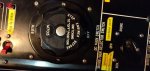
So DC main switch - why 1,2, Off and Both positions on the switch?

I'm assuming (after a bit of googling) this switch is only for the 12v Domestics with the implication that we have 2 banks of Domestic batteries?

If the above is true, when would you use 1 or 2 as opposed to both as per the current setting?

Should this ever be switched off in normal operation??

Thanks
Colin
 
I dont know the boat or the setup.

This ( in my view) was the " old" way of doing it.

It allowed you to have 2 sets of batteries on the same system, but you could isolate one which would ensure one had enough charge to start the boat as opposed to the fridge flattening them boat and calling the coastguard for a tow!

If the engines are running DO NOT turn it off. Your alternators wont survive.

When running you will have to have on both or they wont charge.

So I would start on both, run on both and when you anchor up for the day or stop, select only one battery.

You would usually turn off the 12v system when you leave the boat. It is worth checking that the bilge pumps still run. They should be on a separate line that cant be turned off.
 
This is the set-up on my Cranchi.

1 - 2 - Both - Off

No matter what setting (1 - 2 - Both), when engines running / battery charter on, both batteries charge.

As we don't have shore power, how we tend to do things...
When we moor for the night, we turn to 1. So, worst case and we some-how run down battery 1, we just flip over to battery 2 to start engines.
For good practice, we swap this over every other time.

When our neighbors are running their gennies, we hook into them (we're all friends) to keep the batteries topped up so thankfully never ran a battery dead.
 
Thanks guys for your replies. I think I need to follow some cables this weekend. I believe I have 24v batteries for the engines and 2 12v for domestics.
Ive found another smaller bank of batteries that seem to be connected to the solar panels...
 
I gave up 1-2-off-both switches a long time ago.

On our boat, both batteries have isolators. It's how we've had it for nearly twenty years.

The domestic batteries are a bank of semi-traction batteries with over 500 aH of capacity.
The engine start battery is a single battery that's been on the boat for years.

They're charged through diodes but the smart charger checks the actual voltage at the batteries so compensates for the diode losses. (Contrary to some people's comments that this is bad practice, our batteries do very well under this system. Other people swear by split charge relay systems.)

The advantage of our system is that it is fit and forget (almost). I was always forgetting to switch the 1-2-both switch round when turning the engine on and off when we had such a thing.

I will now stand by for incoming from people who say that they never forget and it's only dull people who get it wrong etc ...
 
In that case we’re into separate and independent engine start batteries for all three motors and some rather more involved wiring for charging the domestic battery bank.

Not necessarily John, my boat, a similar sized American trawler yacht, has a separate battery for the genset, and 2 battery banks of 2 x 225 amp hour batteries that are dual purpose, both engine starting and domestic. Unusual, but maybe not unique.
 
My 2000 Trader 445 has one 250 a/h battery for both engines and two 250 a/h batteries for the service bank and a 80 a/h genny start battery.
I then have a main switch for the engines and another for the service bank but no parallel switch, I guess the reason being that the genny can be used to charge the engine battery to get one of them started.
 
is it normal to have 12V system only on 44 and 47ft boats?
I always thought that north of 40ft boat electrics tend to be 24V (with further complications as gennies are 12V, so as VHFs, radios etc...)
 
Top