Cruise ship in trouble off Norway

Any news on the chaps from the cargo ship who took a dip? Did the anchor hold?
Marine traffic has it moved this morning and now docked so must have got it in somehow.

pTkmVO6.png


Wonder what hook they had - held well :)

TGl7cjJ.png
 
Last edited:
According to https://www.bbc.co.uk/news/world-europe-47727267 the problems were due to an officious Engine Management System.
A cruise ship caught in a storm off the Norwegian coast experienced engine problems due to low oil levels, according to Norwegian authorities.
Lars Alvestad, head of the country's maritime agency, said sensors had detected the shortage and shut off engines to prevent a breakdown. ... Mr Alvestad told reporters that the amount of lubricating oil was "within set limits, however relatively low" as it reached Hustadvika - a shallow stretch of coastline known for shipwrecks. "The heavy seas in Hustadvika probably caused movements in the tanks so large that the supply to the lubricating oil pumps stopped," said Mr Alvestad.
 
As an ex marine engineer I would love to hear the rational for running all the engines with such a low oil level.I cant think of any...especially as they obviously had enough oil on board
 
The above, plus setting off with only 3 out of the 4 engines working, into a well forecast storm in an area known to generate huge waves in such conditions.
 
There's something to be said for a bloody great prop shaft or two rather than the current vogue of electrical propulsion systems!
 
There's something to be said for a bloody great prop shaft or two rather than the current vogue of electrical propulsion systems!

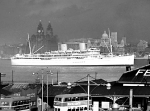
Turbo electric goes back a long way... ‘Canberra‘ in 1961, but looking further back the ‘Queen of Bermuda’ was 1932, both very successful ships. And of course the wartime T2 tankers - one of which is still running on the Lakes with a new bulletin fore body iirc.
 
Doesn't help if that shaft is attached to an engine with no oil. Granted, electrical systems add a layer of complexity, but it was the diesel bit that let them down. Actually, it was the human bit that let them down by not having enough oil, which is incomprehensible to me. The cost of a few tonnes of Castrol is nothing in the cashflow of running several cruise liners. If the company's that strapped for cash, I won't be going with them, because I'm worried about what other false economies they're making
 
Is it in any way possible that the oil levels were measured with the generator off ? I don't know about the oil coolant and lube pumping arrangements, but if the genny is not working, would the oil level in the tank go up to the recommended level.

Then when started, would it fall down to the danger/shutoff level ?

For multiple failures of the same systems, there is likely to be a common cause.
 
I know nothing much about large ships generators, but there does seem to be a tendency (including on yacht engines) for automatic systems to close down engines in the event of issues to protect the engine - even if this results in putting the entire vessel (and engine) at risk.
With manual over-ride, could one of the diesel generators have continued for 20 minutes or so with low lubrication - perhaps doing permanent damage to the generator but saving the ship and passengers?

The Volvo MDI’s are a bit like that. Preventing engine start if not happy, irrespective of the predicament of the vessel.

PS. Clearly in this case the lubricant day tanks should have been kept up to specified levels, but there will always be issues (technical or human failure) and it is always multiple factors which result in disaster
 
741D8877-7BEE-4EF4-A031-52DC4601F205.pngLike most modern passenger ships, this one has two separate engine rooms. But only one set of humans, who managed to make the same mistake in each one.

I agree that lubrication system alarms are very prone to shut down the engine affected but there is a good reason for this - a hot bearing or piston makes a crank case explosion only too likely.

A well known case of a crank case explosion occurred on the Reina del Pacifico (picture above) in 1947; the ship had been built at Harland and Wolff in 1931 and she had just been refitted there and was running trials before being handed back to her owners, PSNL. She had four Diesel engines which were trunk piston engines like a generator engine, not crosshead engines. The pistons had each been taken out during the refit but they were put back at random, not back in their original bores. The crank case breather system was common to all four engines. The ship was stopped because no.2 cylinder in the port outer engine was running hot. After five minutes the ship was put under way again and almost immediately all four engines exploded, killing 28 men.

The explosion flashed over from one crank case to the next through the common breather system. It’s assumed that putting the pistons back at random after 16 years of honing themselves in caused a hot spot above the flashpoint of the crankcase oil - which with a crosshead engine is also the cylinder oil.
 
Last edited:
Turbo electric goes back a long way... ‘Canberra‘ in 1961, but looking further back the ‘Queen of Bermuda’ was 1932, both very successful ships. And of course the wartime T2 tankers - one of which is still running on the Lakes with a new bulletin fore body iirc.

My father did a season (one of her very last) as purser on the DEPV Talisman, built in 1935:

wp54eb41f3_05_06.jpg
 
Top