
Crude shaped transom!

LUKE ROPER

New Member
Joined
4 Jan 2015
Messages
11
Visit site
Evening all

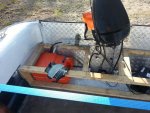
I'm stripping back and restoring a fibreglass boat as per the pictures attached (with no previous experience)
i've noticed a really crude cut out in the transom where the outboard is fitted (I'm replacing the outboard with a modern 30HP), it looks poor and has sharp pointed corners. I'll be re building the transom in wood & fibreglass (getting rid of the nasty checkerplate) and want to get a really smooth, professional look

2 questions please

1) Do I need to keep the same shape as existing, sharp and pointy or can it be level at the top without the cut out?

2) How do I get a professional finish on the new transom that looks flawless like a new boat

Any advice welcome

Thanks!

Luke

 

Attachments

  • 20150406_181804.jpg
    20150406_181804.jpg
    99.6 KB · Views: 0
  • 20150406_173336.jpg
    20150406_173336.jpg
    97.8 KB · Views: 0
I'm sure someone with a better idea of these things than me will be along soon but i would suggest that the cut out is there to ensure the prop is deep enough and that if you flattened the top of transom you'd either need a longer shafted engine or you level it all to the lower part risking swamping if you slow rapidly or reverse quickly. As for finish my only real experience with glassing is repairing surfboards. If the process is the same, once youve laminated you run a hot coat of resin over the top to smooth it out then lots of samding with progressively finer grits. The more work you put in the better the finish will be. Then i'd finish with a 2 pack paint job.
 
Expect that chequer plate was fitted as a budget to replace a rotten wood cored GRP transom. The outer skin of the transom is part of the hull moldings. Then plywood is glassed in to reinforce it before the inner moldings is attached. So the transom is double skinned and strong enough to take the thrust of the motor. The motor mounting needs to be at the correct height for the engine you are fitting, usually a long shaft on this kind of boat, and will require a cutout. Reproducing a transom that is strong enough and has a good finish is a major job and getting a good finish without making a moldings from a female mould very difficult.
 
Evening all

I'm stripping back and restoring a fibreglass boat as per the pictures attached (with no previous experience)
i've noticed a really crude cut out in the transom where the outboard is fitted (I'm replacing the outboard with a modern 30HP), it looks poor and has sharp pointed corners. I'll be re building the transom in wood & fibreglass (getting rid of the nasty checkerplate) and want to get a really smooth, professional look

2 questions please

1) Do I need to keep the same shape as existing, sharp and pointy or can it be level at the top without the cut out?

2) How do I get a professional finish on the new transom that looks flawless like a new boat

Any advice welcome

Thanks!

Luke
The cutout is as said to get the outboard at the right depth. 15", 20 " or 25" above the waterline according to whether its short, long or extra long shaft outboard.

Normally the anti ventilation plate should be about level with the bottom of the transom but the V shape of yours may mean a bit of a compromise.

outboard%20shaft%20length.gif


Do away with all the sharp corners.
 
Last edited:
Worried to take off the chequer plate now as it will probably open up a can of worms!! thanks for the reply, !'ll hope for the best!
 
Hi
Thank you for the reply, very informative. i plan to fish from the boat, will the v shape of the hull mean the boat will be stable and ok to stand up in or a bit rocky?
 
Two stories about transoms. One a guy bought a wooden mobo from South Africa of internet. On second voyage out the transom was so rotten it gave way and boat sank rapidly. They were in the water for about 14 hrs. Nearly perished.
The other story just a few weeks back. We have a popular swim to Rottnest about 10nm.(hundreds of swimmers) Power boats are used as tenders to the swimmers. Some swim in relays some non stop. Anyway this guy with a nice near new mobo with outboard rushed over to the swimmer at speed, cut the throttle and with a lot of passengers at the stern the stern wave came over the transom sinking the boat almost immediately. Plenty of rescuers as it happened. Message is keep that cut out at the transom for the motor as small as possible and beware the stern wave when slowing down.
As said smooth radiused corners are much better and in metal might stop fatigue cracks occuring. Not such a cocern with GRP. But do make that transom strong. Especially when towing on the road the cantilevered o/b can flex and stress the transom a lot. Many use a supporting rod bottom of transom to bottom of motor if you tow with motor tilted.
good luck olewill
 

Other threads that may be of interest

Top