
duncan99210
Well-Known Member
The “end caps” are, I think, part 2 and 3 on this diagram https://www.marinepartseurope.com/en/volvo-penta-explodedview-7744440-26-9867.aspx .


The D2-55s predecessor, the MD22, is notorious for spilling its coolant, mainly at switch off. That's why most people (including me) fit the expansion tank. The coolant expands into the tank when its running, then retreats back into the engine as it cools. If you don't have it, the coolant loss looks a lot, but doesn't make much difference when you look in the heat exchanger.
The D2-55 is a different engine, but maybe the symptoms are the same.
The “end caps” are, I think, part 2 and 3 on this diagram https://www.marinepartseurope.com/en/volvo-penta-explodedview-7744440-26-9867.aspx .

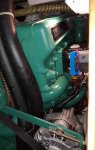
Interesting. Yes have calorifier, but had forgotten it’s role in things.OP, does the engine have a calorifier connected to it? Our calorifier coil got a small leak in it and produced the symptoms you’re describing: coolant loss in the bulge but no apparent lowering of the level in the engine. Took me a bit to figure it out but once I’d disconnected the pipes to the calorifier , that stopped the problem. Fitting a new calorifier was the end solution.
OP, does the engine have a calorifier connected to it? Our calorifier coil got a small leak in it and produced the symptoms you’re describing: coolant loss in the bulge but no apparent lowering of the level in the engine. Took me a bit to figure it out but once I’d disconnected the pipes to the calorifier , that stopped the problem. Fitting a new calorifier was the end solution.