Coastguard Helicopter Encounter

Jerbro

Well-Known Member
Joined
9 Jan 2003
Messages
387
Location
Wiltshire
Visit site
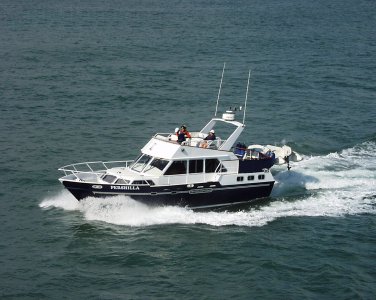
On our way back from Portsmouth to Weymouth last week doing just over 20 knots- just practising....

whiskeybravo1w.jpg


whiskeybravo3w.jpg


whiskeybravo4w.jpg


whiskeybravo5w.jpg


Sorry about the width, but these are screen grabs from the video I took.

Here is some video...scaled down from hi-def to fit on my website...

Video

10 out of 10 to the guys who managed to drop down in the smallest space on the bathing platform right by the transom door - amazing!
 
They come in low and close, and lean out the door with a board (in this case with 67 on). Tune in to channel 67 then they ask permission to come aboard - great fun.
 
Heard them try this last season with a Dutch boat - unfortunately there was nobody aboard who could speak Enogh english well enough to work out why they wanted to come aboard!

Mynheer presumably thought it was some sort of customs raid!
 
Amazing procedure.
I mean, these guys are highly trained pros for sure, but some degree of risk is obviously involved also is these trials, and that's the reason why (afaik) private boats should never be involved.
What if anything goes wrong? ...particularly if practicing that at 20+kts, which sounds like a military training, rather than a normal SAR operation!
All that said, I also would have been glad to offer my boat for such experience /forums/images/graemlins/grin.gif
 
At 20 knots it is fairly safe - at that speed if an engine fails the helicopter recovers the winchman and flies away on the remaining engine. The worse thing that can happen is if the boat skipper suddenly stops or turns or a crewmember attaches the hi-line or anything from the helicopter to the boat. It is great practise for the crews to use 'new' boats to winch to as every situation is different. Notice how little you can see of the pilot and therefore how little he can see of you! He/she relies mostly on the the winch operators directions whilst the winch-op is also watching the hand signals from the winchman on the wire - hence the need for all that practice!
 
I'd rather they practice on me when it wasn't needed so they are ready prepared for someone when it is needed. They're total professionals and I trust them completely.
 
[ QUOTE ]
IMHO most incidents would involve a boat dead in the water

[/ QUOTE ]
Extracting casulties/sick etc. Its easier to land on a moving boat.
 
Not sure that's completely true. The sort of incidents they are practicing for are recovering an injured crewmember/passenger. It is actually much easier for the pilot to control the helicopter with a degree of forward motion; hovering above a (relatively) stationary point is quite tricky as well as requiring a lot of energy, thus increasing the rotor downwash.
 
All I have ever read (not much), and whenever I have seen film of it, the Helo is moving, as it is easier for it to match the boat speed at a few knots. Apparently the pilot asks you to maintain a steady course at a steady speed.

Obviously there are SAR situations where the casualty is stationery too, though, but they can practice that at home on the airfield.
 
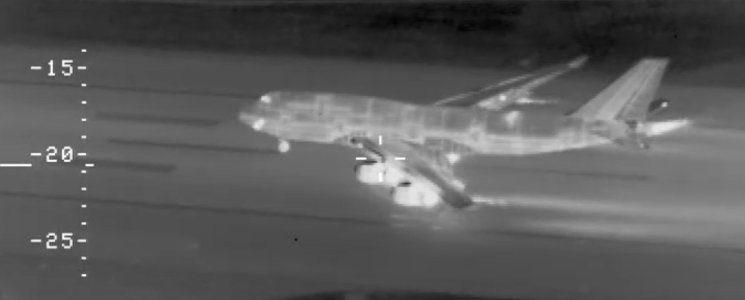
The police sent me a nice video from their IR camera after dumping 100 tonnes of fuel and returning to Heathrow in a 747 with stuck flaps. The bright cockpit windows are the heating elements.

ir_747.jpg
 
Top