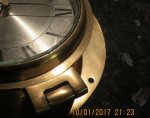
clear lacquering a brass clock - what did I do wrong?

scrambledegg

Well-Known Member
Joined
2 Nov 2015
Messages
264
Location
Portsmouth
Visit site
The brass clock that came with my boat had developed a nasty green pox. I nearly threw it away but instead spent countless hours polishing it up - and it was looking lovely.
Then I decided to use clear lacquer spray on it, 'cos I don't have the time to polish it every few days, but it went wrong . Hope you can see the problem from this picture:
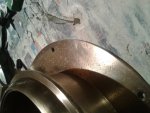
2017-01-04 22.08.46.jpg

Those specks you can see on it feel like coarse grains of sand, but the brass was clean.
Here's the whole process:
1. wet sanded the brass with grades 240, 400 and 600
2. polished with brasso
3. rubbed clean with dry kitchen paper
4. sprayed the lacquer: "pro-cote" clear acrylic lacquer.
It was quite cold when I sprayed it, between 5 and 10 centigrade.

Anybody got any clue what happened?
Also, best way to remove the lacquer to try again?
Thanks in advance, you kind souls.

Jeremy
 
I wouldnt trust kitchen paper to remove brasso for coating. brasso -> wipe off -> white spirit -> warm, soapy water -> rinse -> dry -> coat.

If you are lucky then the marks are just lumps that will vanish with a good rub down and buff.
 
You need to degrease the surface to remove all traces of polish before spraying. Acetone or a compatible lacquer thinners. Remove the varnish with paint stripper, then degrease again before spraying.
 
As PCUK says, but try to do it somewhere a bit warmer as most spray lacquers seem to work best if used in a warmer place and not sprayed onto a cold surface. 20 celcius is probably about right.
 
The most important thing about spraying brass is that it must be very dry and the only way of doing this is to dry it in an electric oven, not gas as that produces moisture.

Warm the brass gently and leave for an hour or so in the oven to dry properly. Spray when the brass is still slightly warm but not hot.
 
I brassoed a big brass door knocker, washed, left to dry then sprayed clear laquer can't remember how many coats but lots ... ten probably! Put it back on the front door and it was still just as shiny when we sold the house 13 years later!
 
Might just be dust, although the particles are a bit large (but that depends - if you had a pile of sawdust nearby, they would be). You have to have a really clean room for spraying anything, because unlike varnishing, the spray kicks up surrounding dust, which then promptly settles on the drying paint.
 
Well, I'm chuffed to report some success following the advice I've received on this thread. Here's the final result:
IMG_1363.jpg
Sorry I had to crop it so much to get the site to upload it.

For the record, this is what worked:
remove previous blemished lacquer with paint stripper
wet rub down the brass as before with final 600 grade wet 'n dry
polish with brasso
rub clean with kitchen paper towel
wipe down the brass with a cotton wool pad soaked with white spirit ( amazed at how much more black residue came off)
dunk and wipe in warm water with some detergent added, rinse
dab dry with kitchen paper towel
put into oven at about 70 celsius for 20 minutes
remove from oven, wait until warm to the touch and spray with clear lacquer.

No doubt acetone would have worked just as well as white spirit, but I didn't have any to hand.
Thanks again, posters
 
Last edited:
I think that's known in the paint trade as fish eye. This is caused by either silicon or oil contamination before painting.

"Fisheye in Paint
Fisheye is a small crater/hole in your paint finish that is surrounded by a ring of paint. It happens when something on the surface is pushing the paint away from that spot. It looks like an eye, of a fish. It appears within moments the paint lands on the surface. Thank goodness…it doesn’t sneak up on you like some other issues."

IMG_0463.jpg
 
Top