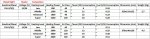
Chinese (5kw )air heater

We use the heater all the time in the winter and would no consider something that would be potentially dangerous. People are happy to spend a lot of money on something they never intend to use like a liferaft, plb,epirb but something you be using all the time and might kill you with exhaust gasses or fire you will cur corners on?
 
I've not felt the need to test the overheat cutout on my own Chinese heaters (nor on my Airtronic D4 for that matter) but on the oft-mentioned Facebook group there are frequent enough mentions of these heaters throwing overheat error 05 to judge that it does seem to function - usually down to poor installation with restricted airflow etc.
I've searched through the excellent documentation that a guy from Oz called Ray Jones has produced; he has examined these heaters in every detail, both software and hardware, and has found the following:
- the LCD controller displays 6 heat bars that start to show at a body temperature of 40C, so a full complement of bars (the normal running situation) represents >=140C.
- at a body temperature of 220C the controller ramps the heater down to its lowest settings.
- the overheat shutdown (a function of the main PCB not the controller) occurs at 230C which is also the value of a shorted body temperature sensor.

Using the configurable fuel (pump pulse frequency) and air (blower and combustion fan speed) mapping I've tuned mine to run just in the uppermost red band at all heat settings on kerosene. With very cold input air and on the lowest heat setting they run with 5 bars but light the 6th. bar once the air begins to get warmed. I feel confident that the overheat cutout would work but of course anything can fail and become 'potentially dangerous'.
 
Last edited:
I've not felt the need to test the overheat cutout on my own Chinese heaters (nor on my Airtronic D4 for that matter) but on the oft-mentioned Facebook group there are frequent enough mentions of these heaters throwing overheat error 05 to judge that it does seem to function - usually down to poor installation with restricted airflow etc.
I've searched through the excellent documentation that a guy from Oz called Ray Jones has produced; he has examined these heaters in every detail, both software and hardware, and has found the following:
- the LCD controller displays 6 heat bars that start to show at a body temperature of 40C, so a full complement of bars (the normal running situation) represents >=140C.
- at a body temperature of 220C the controller ramps the heater down to its lowest settings.
- the overheat shutdown (a function of the main PCB not the controller) occurs at 230C which is also the value of a shorted body temperature sensor.

Using the configurable fuel (pump pulse frequency) and air (blower and combustion fan speed) mapping I've tuned mine to run just in the uppermost red band at all heat settings on kerosene. With very cold input air and on the lowest heat setting they run with 5 bars but light the 6th. bar once the air begins to get warmed. I feel confident that the overheat cutout would work but of course anything can fail and become 'potentially dangerous'.
Yes, Ive read his many threads on the facebook page and he has done great work. The problem with not testing the overheat sensor is that quality control is present on branded heaters and so the parts are tested to be a certain quality before fitting. We know the chinese ones are not tested to any known standards and are not tested after assembly so they really should as an absolute minimum have the overheat sensor tested. There are I am sure at least a few out there that are faulty but have never been exposed to the conditions of overheat and so its never been spotted.
Why risk it when its such a simple test. Maybe not testing a branded heater is fine. I spot check a few Branded heaters when installing them for my own peace of mind and not found a faulty one yet. After all Matthew riches had a faulty one.
 
Last edited:
This thread is interesting. Unfortunately some posters have a vested interest

That doesn't automatically mean that what they say is not true, though.

I think the comments about the overheat sensor are worth discussing.

Would it be possible to fit a more reliable backup system of some kind- a heat sensor linked to a fuel shutoff valve. I know there are devices like this for central heating systems, but I don't know whether it would be practical to add one to a Chinaspacher.

For now I will continue using mine, but as before only when I am aboard and awake. I will pay extra attention to the air intake, though, to ensure that it does not become obstructed.

I presume overheating could also result from a faulty fan? Is there any sort of internal mechanism to sense that the fan has stopped, other than the inevitable overheating that would occur?
 
That doesn't automatically mean that what they say is not true, though.

I think the comments about the overheat sensor are worth discussing.

Would it be possible to fit a more reliable backup system of some kind- a heat sensor linked to a fuel shutoff valve. I know there are devices like this for central heating systems, but I don't know whether it would be practical to add one to a Chinaspacher.

For now I will continue using mine, but as before only when I am aboard and awake. I will pay extra attention to the air intake, though, to ensure that it does not become obstructed.

I presume overheating could also result from a faulty fan? Is there any sort of internal mechanism to sense that the fan has stopped, other than the inevitable overheating that would occur?

The fans do have a magnetic rotation sensor and should stop with a fault code if it doesnt rotate. I dont think there is an easy way to retrofit an extra heat protection system.
 
I've not felt the need to test the overheat cutout on my own Chinese heaters (nor on my Airtronic D4 for that matter) but on the oft-mentioned Facebook group there are frequent enough mentions of these heaters throwing overheat error 05 to judge that it does seem to function - usually down to poor installation with restricted airflow etc.
I've searched through the excellent documentation that a guy from Oz called Ray Jones has produced; he has examined these heaters in every detail, both software and hardware, and has found the following:
- the LCD controller displays 6 heat bars that start to show at a body temperature of 40C, so a full complement of bars (the normal running situation) represents >=140C.
- at a body temperature of 220C the controller ramps the heater down to its lowest settings.
- the overheat shutdown (a function of the main PCB not the controller) occurs at 230C which is also the value of a shorted body temperature sensor.

Using the configurable fuel (pump pulse frequency) and air (blower and combustion fan speed) mapping I've tuned mine to run just in the uppermost red band at all heat settings on kerosene. With very cold input air and on the lowest heat setting they run with 5 bars but light the 6th. bar once the air begins to get warmed. I feel confident that the overheat cutout would work but of course anything can fail and become 'potentially dangerous'.
Thanks for this information. Can you direct me to the documentation mentioned. The controller I have is somewhat different in function and layout of the buttons, but with identical screen logos to that just fitted to my friends camper.

For the external thermal cut out I was thinking of a hold on relay with one of the NO contacts of the relay in circuit with the supply to the tick tick fuel pump. This would cause a separate fault code for flame out, but would mean the fan would carry on thus providing the necessary purge as the heater cools down.

I will see if I can find a suitable klixon style device or possibly a thermistor plus a simple control circuit.
 
I have designed this safety circuit using a bimetallic klixon and a hold on relay. The necessary parts have cost less than £10. I expect to fit it next weekend.

Night%20heater%20external%20safety.pdf
 
aswell as ....might i suggest a lower temp perhaps 2 normally open klixon switch to a cabin warning lights for high temp no idea about case temp but perhaps 80 or 90 degrees and 120? degrees
 
aswell as ....might i suggest a lower temp perhaps 2 normally open klixon switch to a cabin warning lights for high temp no idea about case temp but perhaps 80 or 90 degrees and 120? degrees
I know the air outlet in normal full power gets to 95oC. The concern here is the airflow has reduced and the casing gets hot, which likely sits below 65 - 70oC. It won't melt below say 130 - 150oC, so a fixed sensor that clicks off at 100oC will cut the fuel supply, the heater will continue to run the main fan (if it stil works), but the heat source (fuel) is now gone, and all way before anything melts. And completely separate to the inbuilt controls and sensors. Ultimately the unit would show a flame out alarm (whatever fault code that is), but the most critical issue, i.e. the fuel supply, is the first thing to be cut out - and it is simple. It would be simple to fit a warning LED to the NC connection from the Hold on relay on the pump feed, which would flash at the frequency of the pump demand, in fact I think I will do this as a flashing LED will draw the eye.
 
i fitted mine into a stainless tool box but un fortunately left it on the boat. ive created a cradle and clamp to drop it into with easy to remove connection so i cannot playto look at case temp . the flashing led is also a good idea. I was looking to put an early warning light on if the casing sits at 65 then a led coming on at say 80 then pump off at 100degrees might give a chance to check and pull the squirrel out of the air intake before it became critical .
 
I know the air outlet in normal full power gets to 95oC. The concern here is the airflow has reduced and the casing gets hot, which likely sits below 65 - 70oC. It won't melt below say 130 - 150oC, so a fixed sensor that clicks off at 100oC will cut the fuel supply, the heater will continue to run the main fan (if it stil works), but the heat source (fuel) is now gone, and all way before anything melts. And completely separate to the inbuilt controls and sensors. Ultimately the unit would show a flame out alarm (whatever fault code that is), but the most critical issue, i.e. the fuel supply, is the first thing to be cut out - and it is simple. It would be simple to fit a warning LED to the NC connection from the Hold on relay on the pump feed, which would flash at the frequency of the pump demand, in fact I think I will do this as a flashing LED will draw the eye.
I installed the external safety circuit yesterday. Testing by disconnecting the klixon, the heater went into its normal off shutdown mode within a few seconds and showed error code 04. Today I will finalise the circuit and tidy the wiring as the araldite I used to affix the klixon to the top of the cowling with will have set hard.

The LED idea on the Relay NC connection to the pump would not work because both wires to the pump show a highish resistance to Negative 460 and 640 ohm's. So instead I have wired the LED to the klixon output to the relay hold on circuit, so if the klixon operates the LED will extinguish. The pump works just fine via the relay.
 
Well I’ve installed one today and it fired up 2nd attempt after the fuel got through and I’m err well

Cock a hoop!

It’s a 2kw/40w version and I’ve had the simpler controller that just reduces output which I like as my eber would sometimes shut down and restart which worried me on its leccy usage.

I can see that just the lowest setting will keep my 24’ Jaguar cosy and not use up too much fuel or leccy. (I hope)

As anyone established how many watts they use on the lower settings?

I’ve just lashed the electrics up today to get it working with my golf cart battery. It got me thinking about using that to save my meagre 100 ah house battery. Maybe a simple plug in and a good use of a 1 2 both switch?

£125 but I’ve used all eber bits off my previous two installations.

Pleased so far...


_____________________
 
Top