BabaYaga
Well-Known Member
I have a had a 25A mains charger for many years, with no problems. In the summer of 2013 I noticed a new, odd behavior. Despite the battery bank (3x80Ah) being well discharged, the charger never seemed to put out more than 12, max 15A. Apart from this, the charger worked as normal, current falling and voltage rising towards 14,4V and staying there until the bank was fully charged.
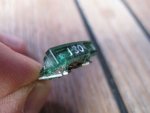
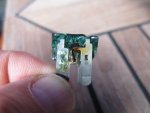
It was not until several weeks later that I discovered the likely explanation, which can be seen in the pictures.
The 30A blade fuse protecting the charging circuit had become hot, melting the plastic housing of the fuse but without actually blowing it. My guess is that it was a gradual process, where the heat probably restricted the current flow even more, producing more heat etc. But obviously not enough heat for the fuse to blow (I guess it would have, in the end).
Does this sound like a good explanation?
Can I avoid this happening again? Is a 30A fuse too close to the max output of the charger, 25A?
I'm not sure of the wire gauge, something like 6mm2 I think.
But I chose the fuse more based on the charger, thinking 5A was a safe margin. Maybe it is not?
Any views much appreciated!
http://www.ybw.com/forums/images/attach/jpg.gifhttp://www.ybw.com/forums/images/attach/jpg.gif
It was not until several weeks later that I discovered the likely explanation, which can be seen in the pictures.
The 30A blade fuse protecting the charging circuit had become hot, melting the plastic housing of the fuse but without actually blowing it. My guess is that it was a gradual process, where the heat probably restricted the current flow even more, producing more heat etc. But obviously not enough heat for the fuse to blow (I guess it would have, in the end).
Does this sound like a good explanation?
Can I avoid this happening again? Is a 30A fuse too close to the max output of the charger, 25A?
I'm not sure of the wire gauge, something like 6mm2 I think.
But I chose the fuse more based on the charger, thinking 5A was a safe margin. Maybe it is not?
Any views much appreciated!
http://www.ybw.com/forums/images/attach/jpg.gifhttp://www.ybw.com/forums/images/attach/jpg.gif