Cathead

Plomong

Well-Known Member
Joined
7 Feb 2006
Messages
1,977
Location
Bilbo, Spain (Basque Country, actually)
Visit site
I recently came across the term "clump cathead" while reading about casting and weighing anchor on old sailing vessels.

What is the difference between a "clump cathead" and a "normal" common or gardener "cathead" ??? Why is it necessary to distinguish between the two ??

Or are they the same ???

Puzzled Plomong
 
A cathead timber extends out, so that the anchor of an old man of war can hang vertically and be dropped without touching the hull.
The only "clump cathead" I've come across was a sheave mounted on the deck edge of a more modern warships, used when streaming a paravane.
I wonder if a small merchant sailing ship, having less tumblehome than a warship, would need less extension in the cathead, so may have only needed a sheave in the deck edge to perform the same function.
 
Last edited:
"On each bow is a"clump cathead" from which the anchor is hung when its hawsepipe is required for the bridles of cable for securing the ship to a buoy."
(Admiralty Manual of Seamanship vol. 1 1951 p.205)
 
Last edited:
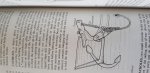
I had to look up what a cathead was! ;) This is the definition given in the Oxford Companion to Ships and the Sea. Hope the image works.
Cathead.jpg

Edit - sorry it comes out on its side! The original was in portrait view.
 
Last edited:
The only "clump cathead" I've come across was a sheave mounted on the deck edge of a more modern warships, used when streaming a paravane.

Was the sheave and/or its mounting referred to as a "clump cathead" in this case ????


The only "clump cathead" I've come across was a sheave mounted on the deck edge of a more modern warships, used when streaming a paravane.
I wonder if a small merchant sailing ship, having less tumblehome than a warship, would need less extension in the cathead, so may have only needed a sheave in the deck edge to perform the same function.

That sounds like a reasonable explanation, but some more compelling evidence would be useful.

I have a poorly-taken photo of an anchor on blocks on deck with the ring end of the shank just on or next to a sheaved block that is integral to the deck edge. That could be a "clump cathead", but I have no idea if that is correct. unfortunately the photo cannot be put up here for all to see.

Plomong
 
Last edited:
"On each bow is a"clump cathead" from which the anchor is hung when its hawsepipe is required for the bridles of cable for securing the ship to a buoy."
(Admiralty Manual of Seamanship vol. 1 1951 p.205)

I cannot relate that to any part of the 2011 edition to which I have access. Could you give the section and sub-section title so I can make another attempt ???

Plomong
 
I cannot relate that to any part of the 2011 edition to which I have access. Could you give the section and sub-section title so I can make another attempt ???

Plomong


OK here goes.

It is in the chapter entitled "Anchors and Cables", section entitled "Arrangement of Anchors and Cables", paragraph entitled "(i) In a Large Vessel" .

There is a drawing entitled " Fig.213 - Arrangement of anchors and cables in a cruiser.". This drawing clearly shows the two clump catheads, one on each bow, facing forward. Each consists of two plates welded or rivetted to the deck and overhanging the edge of the deck with a sheave or roller between them. (They look somewhat like the simple bow roller found on many yachts_.

On the following page are drawings showing the forecastles of a destroyer and what is described as "a small warship". These do not have clump catheads.

I hope this helps you but if not, I could perhaps post a copy of the drawing.
 
My 1972 edition doesn’t seem to have it. It has this picture of Arrangement of anchors and cables in a cruiser. This is Figure 11-8 at page 325.


Annoyingly it then goes on to speak of the hanging off of the anchor at the clump cathead as described in Volume II but my 1981 Volume II seems to have forgotten about clump cat heads.
 
My 1972 edition doesn’t seem to have it. It has this picture of Arrangement of anchors and cables in a cruiser. This is Figure 11-8 at page 325.

[...]

Annoyingly it then goes on to speak of the hanging off of the anchor at the clump cathead as described in Volume II but my 1981 Volume II seems to have forgotten about clump cat heads.

Perhaps clump catheads fell into desuetude and My Lords of the Admiralty, uncharacteristically, decided to do away with something that was not used.

I will post a picture.
 
OK here goes.

It is in the chapter entitled "Anchors and Cables", section entitled "Arrangement of Anchors and Cables", paragraph entitled "(i) In a Large Vessel" .

There is a drawing entitled " Fig.213 - Arrangement of anchors and cables in a cruiser.". This drawing clearly shows the two clump catheads, one on each bow, facing forward. Each consists of two plates welded or rivetted to the deck and overhanging the edge of the deck with a sheave or roller between them. (They look somewhat like the simple bow roller found on many yachts_.

On the following page are drawings showing the forecastles of a destroyer and what is described as "a small warship". These do not have clump catheads.

I hope this helps you but if not, I could perhaps post a copy of the drawing.

Thanks very much -- your description points to a clump cathead being almost a stump cathead !!! One which is much diminished in length, even to the point of being an integral part of the deck edge or just outboard of it.

Regards,

Plomong
 
My 1972 edition doesn’t seem to have it. It has this picture of Arrangement of anchors and cables in a cruiser. This is Figure 11-8 at page 325.

Annoyingly it then goes on to speak of the hanging off of the anchor at the clump cathead as described in Volume II but my 1981 Volume II seems to have forgotten about clump cat heads.

Seems from Poignards data, your comments and my more recent edition of the Manual that the earlier editioned contained material describing catheads as built on early 20-th century cruisers, and not the more modern designs used in WWII and later ???

Thanks for your help,

Plomong
 
My 1972 edition doesn’t seem to have it. It has this picture of Arrangement of anchors and cables in a cruiser. This is Figure 11-8 at page 325.


Annoyingly it then goes on to speak of the hanging off of the anchor at the clump cathead as described in Volume II but my 1981 Volume II seems to have forgotten about clump cat heads.
May I hijack this thread to ask 2 questions?

What is the Riding Slip and what does it do?
How does the Navy get its cable to coil so tidily in the locker?
Can I learn anything about handling the heap of cable that gets tangled in my chain locker?
Sorry, that's 3 questions.

Derek
 
The riding slip will ensure a failed capstan brake does not result in the anchor being deployed in error.
The cable in the cable lockers would not be that neat in use....it was for illustrative purposes only.
Yes, if you provide the details and photos of your specific ground tackle arrangement so helpful suggestions may be offered.
 
The riding slip will ensure a failed capstan brake does not result in the anchor being deployed in error.
The cable in the cable lockers would not be that neat in use....it was for illustrative purposes only.
Yes, if you provide the details and photos of your specific ground tackle arrangement so helpful suggestions may be offered.
Thanks for the clarification.

I don't have photos to hand. The locker is a convention irregular tetrahedron shape right forward. The windlass is a Quick mounted inside the locker, offset to the starboard side in line with the hawse pipe. The chain is 50m of 8mm.

Raising the anchor is troublefree. The drop into the locker is adequate.

Trouble arises after sailing; the heap of chain falls over and the chain gets tangled when laying anchor. I normally rely on gravity to get the chain out but I think the windlass would stall. It's necessary to push the heap around to untangle it - I don't want to do that with power on the windlass!

Any suggestions?

Derek
 
A bit of Merchant Navy folklore from forty years ago was that dumping a few quarts of fish oil into the chain locker helped. I heard this talked about but never saw it done!

More seriously it’s a very common problem and whilst the immediate ‘fix’ is to have someone kick the growing pile of chain flat as you bring it aboard (requires spare someone!) the only permanent fix that I know is to build a tall narrow chain locker all the way up to the deck head.
 
Could this be a modern 'take' on the requirement for a Clump Cathead ...?


48557056626_2806ba0132_b.jpg
 
Top