lw395
Well-Known Member
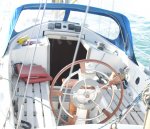
I think a big wheel that you can sit alongside, where you can see the jib is the only wheel I'd really want.
Small wheels that you have to sit or stand behind, I just don't like, except maybe indoors on a motorsailor.
On our boat, I can move across the cockpit, steer the wheel from the leeward side and trim the jib.
I can comfortably steer from either side seat in the cockpit for a long time. Or if it's lively with the kite up I can stand behind the wheel and drive the boat harder.
I don't like yachts with little wheels that look like they'd fit a mini cooper.
I'd rather have a tiller if you can't have a big wheel.
But each to his own.
As for cable size, the wheel has a certain mechanical advantage, there's a certain amount of force a helmsman can be expected to produce.
I think outsize wire will be an own goal, as it takes a lot of work to flex it and its initial stretch from zero to a reasonable preload will be high as the strands settle. I'm not convinced the fatigue life will be any better either as you're flexing the wire around a similar or worse cable dia/pulley dia ratio.
The big thing perhaps is to have a well designed rudder so the steering loads are reasonable in the first place.
Also, is galv steel cable still preferred over stainless for steering lines?
Small wheels that you have to sit or stand behind, I just don't like, except maybe indoors on a motorsailor.
On our boat, I can move across the cockpit, steer the wheel from the leeward side and trim the jib.
I can comfortably steer from either side seat in the cockpit for a long time. Or if it's lively with the kite up I can stand behind the wheel and drive the boat harder.
I don't like yachts with little wheels that look like they'd fit a mini cooper.
I'd rather have a tiller if you can't have a big wheel.
But each to his own.
As for cable size, the wheel has a certain mechanical advantage, there's a certain amount of force a helmsman can be expected to produce.
I think outsize wire will be an own goal, as it takes a lot of work to flex it and its initial stretch from zero to a reasonable preload will be high as the strands settle. I'm not convinced the fatigue life will be any better either as you're flexing the wire around a similar or worse cable dia/pulley dia ratio.
The big thing perhaps is to have a well designed rudder so the steering loads are reasonable in the first place.
Also, is galv steel cable still preferred over stainless for steering lines?


 ).
).