
Can anyone help with tuning a TecsunPL-880 to receive Navtex?

tudorsailor

Well-Known Member
Joined
12 Jun 2005
Messages
2,756
Location
London
zebahdy.blogspot.co.uk
I have a new Tecsun PL-880

FOr the life of me I cannot find how to tune to 516KHz. It keeps tuning to 5160KHz,

Can someone point me to how to select the frequency band that includes 516Hz

Thanks

TS
 
I have a new Tecsun PL-880

FOr the life of me I cannot find how to tune to 516KHz. It keeps tuning to 5160KHz,

Can someone point me to how to select the frequency band that includes 516Hz

Thanks

you need 516 KHz or 489 KHz you should be able to punch that in. However try putting in 1000 KHz and then using the rotary tuning knob see if it will wind down below 1000 into the hundreds. If it doesn't then the radio might need to be tweeked for receiving such low frequencies in USB as it might think they should be AM.

You will have to finetune these frequencies down a bit and the radio might not have sufficiently fine enough tuning for receiving the signal so that it is suitable for decoding.. Seatty is a good decoding program. I think you have to pay to get all functions however that payment is for life .

https://www.tecsunradios.com.au/store/wp-content/uploads/2015/12/PL880-MANUAL.pdf


SeaTTY
 
Last edited:
I think I have now tuned to 516 via long wave. I then pressed the USB button and USB was in the display. All I need now is to work out from where the Navtex will come to get the timings. Crete is probably nearest
I will try to decode using BlackCat's software
And yes, I do know I could simply look at the internet to see Navigation Warnings, but where is the fun in that...........

TS
 
Well done. It will be necessary to fine tune the two navtex frequencies and then save them to memory. The tuning is very critical with navtex.

I preferSeatty because you can leave the equipment running unattended and the software saves each fax completed with time and date stamp
 
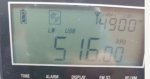
I have tuned to 516 LW and selected USB. I then listened with both android and computer connected at the times that either Crete or Corfu broadcast NAvtex (adding 3 hrs for local time from UT). I do not hear the fax sounds and the programs are not receiving the appropriate signalTecsun.JPG
I did try to fine tune up from 516.00 but still no sounds.
Am I doing something incorrect??? Am I right that LW uses the internal aerial so no advantage to stringing up the long external aerial that I have (which is for SSB)

Thanks

Boyd
 
I have tuned to 516 LW and selected USB. I then listened with both android and computer connected at the times that either Crete or Corfu broadcast NAvtex (adding 3 hrs for local time from UT). I do not hear the fax sounds and the programs are not receiving the appropriate signalView attachment 135975
I did try to fine tune up from 516.00 but still no sounds.
Am I doing something incorrect??? Am I right that LW uses the internal aerial so no advantage to stringing up the long external aerial that I have (which is for SSB)

Thanks

Boyd
Try tuning to 516.50 this is a bit nearer the correct frequency. Please note that when receiving a data signal the frequency given is the true accurate frequency of the signal being received taking into the added frequency of the sounds which is around 1500 Hz. On normal commercial audio signals the frequency quoted is the centre frequency. for USB Navtex the true frequency is around 516.8 however as we do not know how accurate your tuning scale is thn it may be necessary to find a known signal and see if the scale is as the frequency of the signal. Have you tried the other Navtex frequency.

You may be in a weak signal area. Your radio has an antenna jack. Try rigging a long wire outside and connect it to the jack. See if this improves reception in both frequencies above 2MHz as well as your Navtex frequency. It might not as it might think this is a medium wave frequency and switch off the jack socket to use the internal antenna. If your lucky this will not happen.
You have a switch for local and DX signals. Set this to DX

You can check your frequency meter by listening for standard frequency signals on 5 MHZ or 10 MHZ . You will have to correct these to receive Navtex .
 
Last edited:
Also, navtex is a relatively short duration transmission, sometimes one hasn't even got the time to adjust settings it's already finished. And apart from experimenting, once you get the corrects settings, will you leave pc+radio on during most of the day?
Despite having myself a lot of radio equipment onboard to decode almost anything, I think Navtex is one type of transmission where a dedicated receiver has a lot of advantages.
 
To test your equipment you should be able to listen to the busy aircraft control station on Santa Maria in the Azores. you might just hear the selcal dial tone beeps if the signals are weak. they control planes around the equator and communicate with planes approaching the equator . They can be quite busy at times and use.

listen on these 2899 3016. 5598. 8825. 5616. 8864 MHz they will be using one as a primary so just have to find which one

You might pick up Shanwick which is using 6822 today. Suspect Santa Maria is using 5598 or 5616 today as primary.
 
I have a new Tecsun PL-880

FOr the life of me I cannot find how to tune to 516KHz. It keeps tuning to 5160KHz,

Can someone point me to how to select the frequency band that includes 516Hz

Thanks

TS
I’m going through the same process on a SONY-7600 so I share your pain !

You may find the following article helpful which was for a similar radio to yours.

Offshore weather forecasts: An alternative solution for recieving weatherfax

I also found the following helpful with lots of information.

Receiving weather fax at sea (without SSB transceiver)
 
Also, navtex is a relatively short duration transmission, sometimes one hasn't even got the time to adjust settings it's already finished. And apart from experimenting, once you get the corrects settings, will you leave pc+radio on during most of the day?
Despite having myself a lot of radio equipment onboard to decode almost anything, I think Navtex is one type of transmission where a dedicated receiver has a lot of advantages.

The dedicated receiver is best as you can set up filters to exclude the unwanted classes of message. However the OP is interested in the process hence trying this. I found I could leave a radio on 24/7 and would find copious amounts of printer roll on the floor in the morning. The joys of a Commodore 64 and thermal printer. . It worked. However for the boat I would use a Furuno Navtex and they do appear on the second hand market from time to time as do ICS Nav 6 units.
 
I’m going through the same process on a SONY-7600 so I share your pain !

You may find the following article helpful which was for a similar radio to yours.

Offshore weather forecasts: An alternative solution for recieving weatherfax

I also found the following helpful with lots of information.

Receiving weather fax at sea (without SSB transceiver)

The Sony 7600 is excellent. I was lucky enough to pick up its slightly bigger brother the Sony SW 55 which also has fine tuning and preamp control etc.
Weather faxes have to be accurately tuned in to get the correct contrast etc and this can be difficult with some of the cheaper radios as they tune up and down in large steps which are not a problem when listening to audio. The Techsun appears to be OK in this respect.
 
Well, try as I might to listen to the radio at the time that the Navtex is broadcast, I cannot hear it! Maybe it is so short that I miss it of course.

I am in Crete presently, so I am not sure there is a weatherfax for me to receive. Ho hum, back to the 3D printer :)

Thanks for all the input

Boyd
 
I've found Navtex is notoriously difficult to pick up anywhere other than open seas. The Nasa Navtex receiver has an active antenna mounted outside and even with that you mostly get garbled junk in harbour. Out to sea it works well enough though and we pick up several stations from around the med more or less well. I never managed to pick it up at all with any other receiver (SDR, Grundig/Eton or Tecsun SSB receivers), most likely due to the signal being so weak and so prone to interference.
 
Top