bukh?Why bukh?

Is this the record for a resurrected post? 17 years from OP?

Still think Bukh is one of the best marine engines......

Noah once posted in a blog attached to the old testament about his mules eating too much hay per mile, (Specific fuel consumption issue), and the way his mules leaked on occasions, That post was then dug up thousands of years later in the King James Bible blog. No one complained, as like this Beta thread, it was regarded as a real classic worthy of the resurrection.
 
I don't know why the 10 year old DV20 was replaced in my boat but 30 years on the 'new' DV24 still purrs along quietly and vibration free so if one doesn't there must be a reason. It also starts instantly every time, half a turn at most. Stopping it is more of an issue at the moment (see my other post on the subject!).
 
I replaced my DV20 with a Yanmar 3GM30F at coming up to 20 years old. It was reliable but becoming quite rattly and rather corroded due to lack of maintenance by previous owners. The main reason was knowing that we would be reliant on engine for years to come as summer liveaboards.
I don't regret the change at all, the Yanmar has been totally reliable, quieter, smoother and lighter.
 
This is almost certainly the water ingress in this case. No damage is likely. The pump lies off the body of the engine for just this reason and is easily maintained. The whole design is intended for easy access. The build quality is legendary. The weight derives from the thickness of water galleries that do not crumble within a few sesons.
It is not logical to decry lighter build Japanese in boards - the design is the product of many installations. Bukh is different, even over spec for many applications - but never a mistaken choice for small boat propulsion.

PWG
- 10 years experience with Bukh in a Westerly. No commercial connection with the company.

The cooling pump (Johnson F35B) on very old DV20 (40 next birthday) is leaking water on the engine side of the pump. The engine has been run for about 12 hours since the leak was spotted. I think your post has re-assured me that it is not a major problem, though I saw a post from a few years indicating that it might be. At present there are no signs of damage to the engine, but I would welcome any advice on indications that the leak has done any damage. Many thanks David Wood
 
The cooling pump (Johnson F35B) on very old DV20 (40 next birthday) is leaking water on the engine side of the pump. The engine has been run for about 12 hours since the leak was spotted. I think your post has re-assured me that it is not a major problem, though I saw a post from a few years indicating that it might be. At present there are no signs of damage to the engine, but I would welcome any advice on indications that the leak has done any damage. Many thanks David Wood
Problems can occur if the tell-tale hole in the shaft casing between the pump and engine has been blocked with paint, grease, rust or general muck. The seal on the engine side can then be overcome, as it is fitted to prevent oil leakage, with the result that water can enter the engine. Seawater destroys bearings and other parts very rapidly.

Check an oil sample for free water.
 
The cooling pump (Johnson F35B) on very old DV20 (40 next birthday) is leaking water on the engine side of the pump. The engine has been run for about 12 hours since the leak was spotted. I think your post has re-assured me that it is not a major problem, though I saw a post from a few years indicating that it might be. At present there are no signs of damage to the engine, but I would welcome any advice on indications that the leak has done any damage. Many thanks David Wood

I had a similar problem but on a Jabsco pump, what had happened was the polished pump main shaft had developed a couple of small ‘pittings’ at the point where the aft sealing ring is sited, the pitting had slowly damaged the nitrile sealing ring allowing water to drip out.
Small puller is needed to disassemble the pump, but replacing the main shaft and sealing rings is straightforward.
 
Last edited:
Yanmars are very good in fuel economy, weight and noise terms, but they are a fairly close tollerance engine, so can suffer from siezed injection pumps or split head gaskets etc if abused, with bad fuel or overheating.
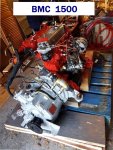
Bukh diesels are incredible in terms of surviving abuse, for example they were designed to start first go in minus 30C, (0W30 oil), with immediate application of full power, BUT they are incredibly heavy. I was thinking of buying a good used DV 24, which is as heavy as my old and sold 35hp BMC 1500D, so in the end I decided not to buy one as it would adversly effect the boats performance under sail.
The BMC is another tough engine, with an injection pump that does not sieze and a real tough head gasket, although I doubt if you would get one to start in minus 30C. I did restore one but it turned out to be a waste of time as I got sponsorship for a new keel cooled Beta 30, and that engine is short enough to allow me to fit a 5kW 48V DC motor with a belt drive just aft of the flexible coupling. So happy with that, but peeved over the time wasted restoring the BMC 1500D.

If you want a reliable marine diesel, forget about suck and spit cooling and get a keel cooled version, then fit dual start batteries and a real good primary fuel filter in a visible location outside the engine bay, (I like the Racor 500FG), with an emergency bypass valve and water sensor warning option. My lifeboat has 2 fuel tanks, so it also has 2 Racors, so if I get a warning or don't like how dirty the filter bowl looks, I just change tanks, but if I only had one tank, I would fit a bypass valve to allow the filter to be changed whilst the engine is running. If you have a CAV 296 fuel filter, give it to some trucker or bin it, and replace it with a Racor if it's used for a primary, or if like the BMC it is used as a secondary, see if you can buy a spin on fuel filter kit. Also check if the plug and socket for the wiring loom is a real good marine one with Gold plated contacts, rather than a car or truck part that will corrode, if it is, cut it out and connected the wires directly.
 

Attachments

  • BMC parts front page..jpg
    BMC parts front page..jpg
    256.6 KB · Views: 4
Problems can occur if the tell-tale hole in the shaft casing between the pump and engine has been blocked with paint, grease, rust or general muck. The seal on the engine side can then be overcome, as it is fitted to prevent oil leakage, with the result that water can enter the engine. Seawater destroys bearings and other parts very rapidly.

Check an oil sample for free water.

Check to see if there is any cofffee cream or mayo on the dipstick and change the oil. Nothing obvious on the dipstick, then it's very unlikly to have done any damage, unless the engine has a turbo. Water is a lot less harmful when it contaminates the oil than anti freeze, as glycol reacts with the oil and dissolves the protection layer of Zinc or Boron Nitride, (Upper cylinder lubricant). If you use a good major brand oil, (Castrol, Mobil, Shell or Liqui Moly), with a high Zinc (DZZP) additive content in particular, the engine will tollerate a surprising amount of water or fuel contamination. It's possible to detect water in the oil well before it becomes visible on the dip stick if you change oil when the sample gets too near any limits. like I do. The UOA below shows zero for water and fuel contamination. The analyst got confused by thinkig I was changing to LM 20W50, when the oil was in fact in the pre abused engine I purchased and I have no idea what it is, although it looks like a real cheap oil, as the figures for Zinc, Boron and Calcium (Detergent) are all rather low. The high lead was from real bad main bearings chewed out by a crank that needed to be reground and polished.
 

Attachments

Check to see if there is any cofffee cream or mayo on the dipstick and change the oil. Nothing obvious on the dipstick, then it's very unlikly to have done any damage, unless the engine has a turbo. Water is a lot less harmful when it contaminates the oil than anti freeze, as glycol reacts with the oil and dissolves the protection layer of Zinc or Boron Nitride, (Upper cylinder lubricant). If you use a good major brand oil, (Castrol, Mobil, Shell or Liqui Moly), with a high Zinc (DZZP) additive content in particular, the engine will tollerate a surprising amount of water or fuel contamination. It's possible to detect water in the oil well before it becomes visible on the dip stick if you change oil when the sample gets too near any limits. like I do. The UOA below shows zero for water and fuel contamination. The analyst got confused by thinkig I was changing to LM 20W50, when the oil was in fact in the pre abused engine I purchased and I have no idea what it is, although it looks like a real cheap oil, as the figures for Zinc, Boron and Calcium (Detergent) are all rather low. The high lead was from real bad main bearings chewed out by a crank that needed to be reground and polished.
DZZP? No such material. ZDDP or ZDTP is the chemical, zinc dialkyl dithiophosphate. Confused post like most of your others.
 
DZZP? No such material. ZDDP or ZDTP is the chemical, zinc dialkyl dithiophosphate. Confused post like most of your others.
Thankyou for your usual polite reply, yep you are correct, I got that one backwards. If you are a go green boater, don't change the oil or filter until they really need changing, just like the truck and bus companies in the US and many other countries do. Just send a 200ml sample off to Blackstones Lab, (They will post free test kits), and wait for the email response. Start with just a 50 hour interval, just in case you have a real contamination issue, then start increasing the oil change interval until near to one of the limits, often fuel in the oil if the injection system is bad, (Including HP and lift pump seals), water or anti freeze, (Often head gasket), insolubles, (General dirt or Carbon), Silicon, (Air filter issue). Contrary to popular belief, longer OCI's are normally better than shorter ones, and the way to figure out the final best oil change interval is from the Iron per hour figure. The final result will be specific to the oil in use only.
For a well worn diesel once you figure out when to change the oil for lowest wear rates using an oil lab that comments on results, think about changing the viscosity or even using a Liqui Moly additive like Ceratec that I got some good results from. In summer go thick and in winter go thin. If you can heat the engine up, try looking for a good major brand single grade SAE 30, 40 or even 50 grade. They can be fairly cheap and last longer than multi grades, and I used SAE 30 for my last trip around, due to the warm conditions and mostly low power settings.
Once you have sorted out the oil service game, try fitting a sump heater if your engine bay gets cold. Wolverine make a real good set of both 12 and 230V heat pads, (Fit an extra earth leakage breaker and fuse), although I just use 2 infra red lamps in some cases. If you can warm the oil up it really helps, but heating up the entire block is even better. Cold starts are attempted murder in long term engine wear terms.
Always use the best most expensive genuine German or US made oil filters. I use Bosch, but Mobil make some good oil filters if you are on the other side of the pond. Don't forget a dirty oil filter of the basic non synthetic media type is often 3 times more effective when nearly full than when new at stopping fine debris. Alas small diesels do not have differential oil pressure gauges to warn when the filter needs changing, so fans of ultra long block life cut them open after use to see how fulln they are.
Anyway back to Zinc compound additives that are often far too low in cheap oils, this is worth reading, BUT don't forget I'm talking about additives included in the oil, not added afterwards. You need to be very careful with additional additives. I do use them, but I also have a direct contact in Liqui Moly R&D who always sends the correct answer, so for the BMC 1500D that I restored, he listed one of their cheaper oils, Super Nova 20W50. The base stock might be cheap but LM are good in inclusive additives.

Benefits of Using Zinc Additives in Engine Oils (machinerylubrication.com)
 

Attachments

  • Lifeboat pub flags.jpg
    Lifeboat pub flags.jpg
    77.9 KB · Views: 3
Last edited:
The cooling pump (Johnson F35B) on very old DV20 (40 next birthday) is leaking water on the engine side of the pump. The engine has been run for about 12 hours since the leak was spotted. I think your post has re-assured me that it is not a major problem, though I saw a post from a few years indicating that it might be. At present there are no signs of damage to the engine, but I would welcome any advice on indications that the leak has done any damage. Many thanks David Wood
I had a similar leak that caused water ingress to the engine mount. Now thats another job this winter as the water has managed to rot the wood under the mounts that are inside the fiberglass :(
 
One point about old diesels that rattle, is that after you have checked it's not something daft like a broken manifold bolt, or some other loose part, try using a thicker oil. In wear terms a diesel might start its life using an SAE 30 grade, or 10W30, but a few ten thousand hours later, finish up produring best results using a high mileage oil like Mobil 10W60 EL, (Make sure you don't get it confused with the 10W60 race oil, as they are both HC, (Hydro crack), so called full synthetic oils in the UK and USA, but not in Germany, Note that some older diesels like BMC, don't like synthetic oils, as their base stocks can act like solvents in combination with the high detergent levels, and that can cause old seals to leak. The Bukh is OK with synthetic high Zinc anti wear and corrsion additive and high Calcium based detergents and with HC synthetc base stocks, but do check the API/Acea requiremts of other engines.
With older diesels, one big cause of rattling that stops when the oil is changed, is fuel contaminating the oil due to a bad injection pump or lift pump seal. You can smell diesel in the oil when it exceeds around 5% if you rub hot oil around your nose, and there is a blotting paper test that can also show fuel in the oil, BUT alas the long life limit is 2%. If that is the case, change the oil more often and use a thicker oil.
The lift pump on my old BMC was an original part and over 60 years old. The HP injection pump had probably been changed before.
 
Top